Estimated read time: 6-7 minutes
This archived news story is available only for your personal, non-commercial use. Information in the story may be outdated or superseded by additional information. Reading or replaying the story in its archived form does not constitute a republication of the story.
SALT LAKE CITY — Katherine Portocarrero has always looked up to her older sister.
It's because of her sister's example — earning two degrees from the University of Utah, working with youth in area schools, serving her family — that Portocarrero went to college to study nursing and has high goals for herself, she says.
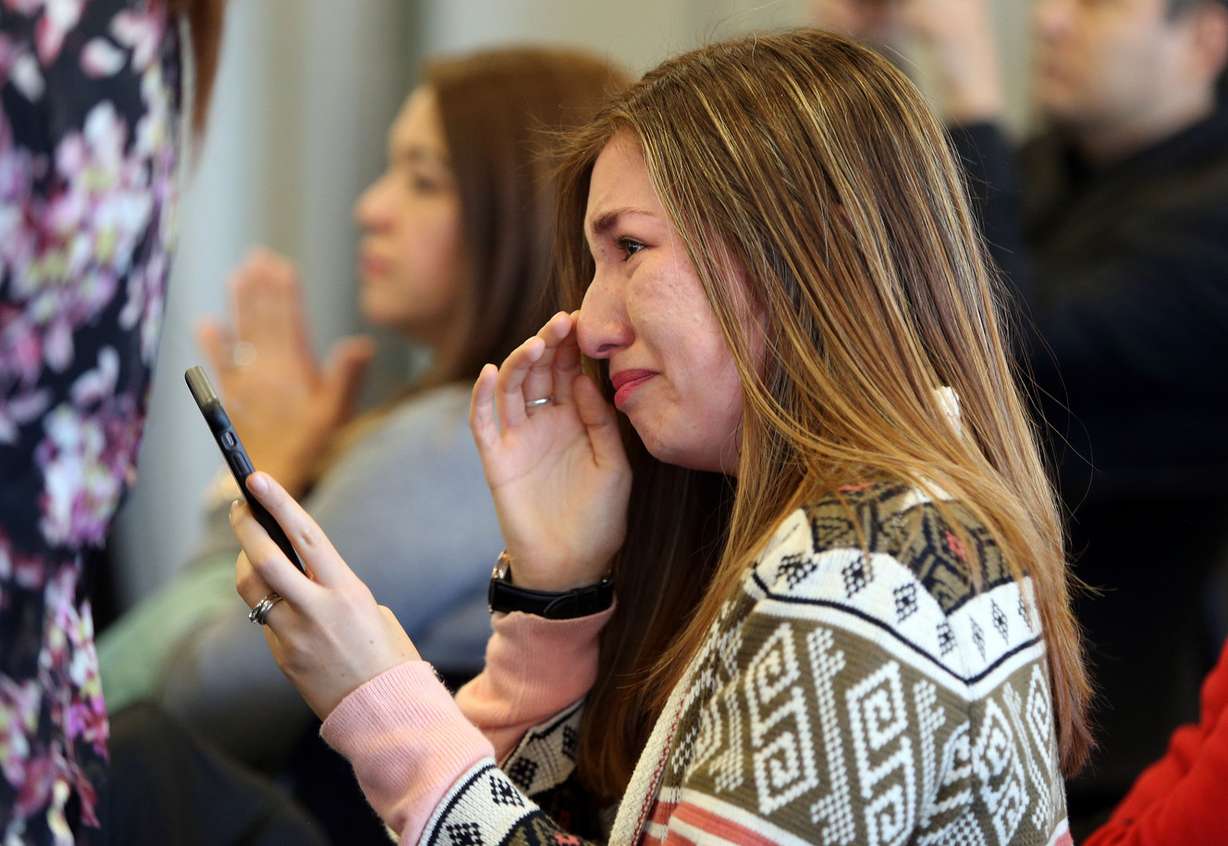
But as Portocarrero and her mother were sworn in as U.S. citizens Wednesday, her sister wasn't standing next to them. Instead, she was seated in the crowd, weeping and waving, but unable to take the oath herself.
"She's amazing. She's done more for the community than I have. If anything, she deserves to be a citizen more than I do, I feel sometimes," a tearful Portocarrero said following the ceremony.
Brought to the U.S. from Peru as children, Utah is the place that feels most like home for Pamela and Katherine Portocarrero, now adults. But by the time their mother gained permanent residency, Pamela Portocarrero was over the age of 18 and therefore ineligible to be part of her mother's application.
It wasn't until former President Barack Obama issued his executive order on DACA, Deferred Action for Childhood Arrivals, that Pamela Portocarrero was able to securely work and study as her sister could.
Under President Donald Trump, Pamela Portocarrero's DACA protection — as well as the life she has built for herself — could disappear.
"This is my home, and I feel an American in every sense of the word, except for that piece of paper that they get to have and I don't," Pamela Portocarrero said.
Bittersweet feelings
Elizabeth Newberry brought her daughters to Utah in February 2000 to join the rest of her family, all of whom had been in the U.S. since the 1980s.
Newberry's parents were overjoyed at the reunion, her daughters flourished, and she fell in love and was married. With support from her husband, a U.S. citizen, Newberry and her younger daughter were granted permanent residency.
As they introduced themselves to the crowd at a naturalization ceremony at Utah's U.S. District Court on Wednesday, Katherine Portocarrero pulled her mother to her feet at her side, and embraced her as they shared their joy at their newfound citizenship.
"We're really grateful for this country, for everything this country gave us," Newberry told the other attendees. "I hope my other daughter, Pamela, can become a citizen, too. We're praying for that."
One notable absence from the ceremony Wednesday was the lack of a welcome video from the newly inaugurated president, traditionally shown after new citizens take the oath of citizenship, recite the Pledge of Allegiance and sing the national anthem.
Debbie Cannon, spokeswoman for U.S. Citizenship and Immigration Services in Colorado, Wyoming, Utah, Montana and Idaho, said that the department has yet to receive information from the White House about when the president will provide his welcome video.
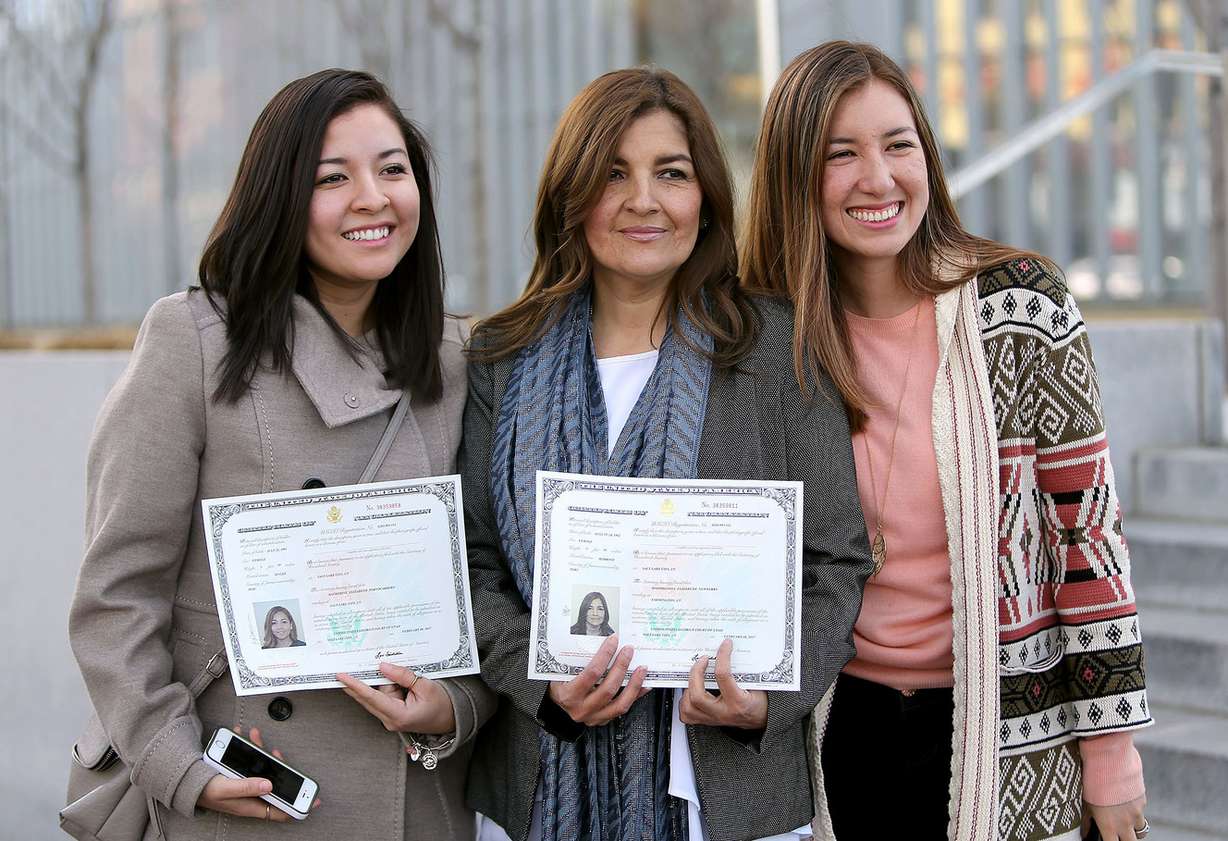
Following the ceremony, Katherine Portocarrero and Newberry were met with a flurry of hugs, congratulations and photos, posing with their citizenship certificates.
"Like they mentioned during the ceremony, there's a freedom you feel after today, there's a freedom of knowing now you're OK," Katherine Portocarrero said.
But that joy is bittersweet, her mother said.
"I'm happy, but at the same time I'm just hoping that my other daughter can become a citizen," Newberry said. "We came together, we did (everything) together to be good citizens here."
With no avenues to seek legal status, Pamela Portocarrero said she is left in limbo.
"There is no line for me, there is no category for me to go and apply. It doesn't matter how many years I have lived here, it doesn't matter that my family are U.S. citizens, none of that matters because there is no category in the current immigration system for me to go and apply," she said.
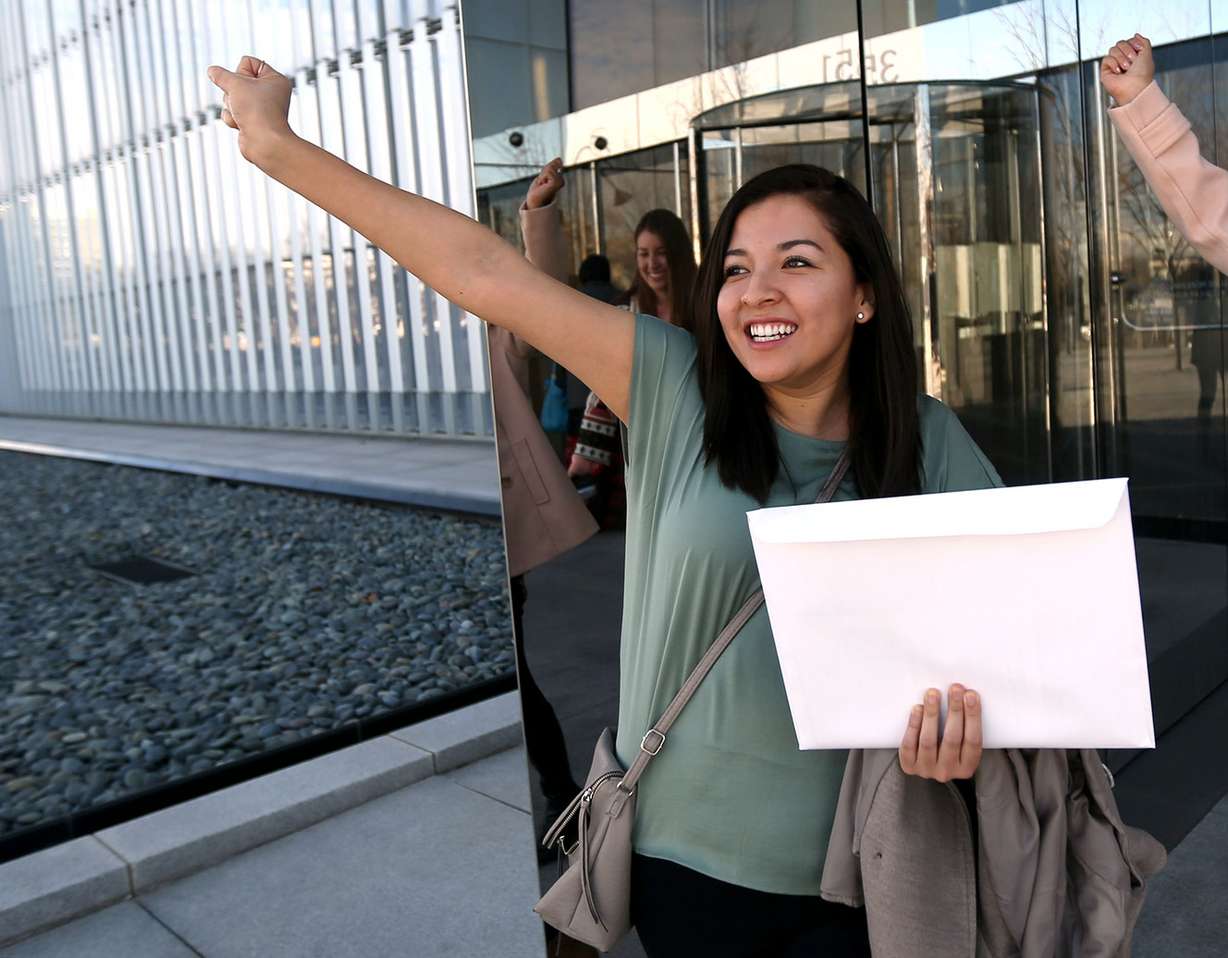
After graduating high school — with honors, her mother boasts, though ineligible for scholarships because she was undocumented — Pamela Portocarrero studied political science and international studies at the University of Utah.
When Obama's executive order on DACA was signed in 2012, deferring removal services and granting the ability to work for two years at a time, she believed she had "a new start."
"My life changed overnight," said Pamela Portocarrero, who went on to finish her undergraduate degree, pursue her master's degree, get married, travel and begin work in a job she loved teaching English as a second language and preparing youth for college.
"I was able to help my community, most of all," Pamela Portocarrero said. "All of those things were available to me because of DACA."
However, campaign comments by Trump saying he would eliminate DACA have left the future of the program uncertain.
"I want people to know that I'm not a criminal, that this is my family, and if President Trump is to revoke DACA, I would be separated from them. I would be separated from my husband," Pamela Portocarrero said. "It's not just me, lot's of families in Salt Lake City and the state of Utah would be separated from their children, from their parents, from their brothers and sisters, and it's unacceptable."
As a U.S. citizen, Newberry now hopes she can petition for legal status on her daughter's behalf. The process, she said, could take years, which is time her daughter may not have.
"If our president decides to undo the executive order tomorrow, that's it for me. I'm eligible for deportation," Portocarrero said.
DACA concerns
Since Trump's election, Kate Barber, an attorney with Immigrant Legal Services in Salt Lake City, has received a flood of calls from people concerned about their immigration status, including many questioning whether it's still advisable to apply for the DACA program or renew their grants if they're about to expire.
For most DACA recipients, Barber said, a life in the United States is all they have known. Their friends are Americans, their families are here, and their goals are built around being part of the communities they were raised in.
While Barber notes there have been suggestions Trump is reconsidering shutting down DACA, or perhaps replacing it with a similar program, she emphasizes that nothing is certain.
Dismantling DACA and then seeking to deport those immigrants who are employed, educated and not involved in criminal activity would come with a huge price tag, tie up the legal system and send away individuals who could offer valuable contributions here, Barber said.
Since its inception, Barber said, DACA has run smoothly. There is no expiration date on the program, so if Trump were to leave it in place, it would continue operating as it has for nearly five years.
"A lot of these kids who had no options and no real home to go to if they had to leave the United States now have work authorization and good jobs, a lot of them now have college degrees and are, in my opinion, contributing a lot to our society," Barber said.
For any immigrants considering consulting an attorney about what Trump's presidency could mean for them or their families, "now is the time," Barber said.
Nonprofit organizations in the Salt Lake area offering legal services for immigrants include Immigrant Legal Services, Catholic Community Services, Holy Cross Ministries, Comunidades Unidas/Communities United, and the International Rescue Committee.