
Estimated read time: 2-3 minutes
This archived news story is available only for your personal, non-commercial use. Information in the story may be outdated or superseded by additional information. Reading or replaying the story in its archived form does not constitute a republication of the story.
LITTLE COTTONWOOD CANYON — Technology sure has changed things.
Utah Department of Transportation's avalanche supervisor Matt McKee still can't believe how much goes into waiting for snow to slide.
"It's amazing. The guys that came before me, the last generation, had to wake up and just drive the road and crane their necks in the middle of the night to see if anything was happening," said McKee, who works in Little Cottonwood Canyon.
Now ground radars listen for movement, and real-time thermal imaging determines if intentional detonations are successful.
"It's important to know we hit it," McKee said.
Avalanches are about as powerful as Mother Nature gets, and that's why UDOT officials sometimes close roads when the conditions are dangerous. This year, the Cottonwood canyons, Logan Canyon, and even Powder Mountain Road were closed because of avalanches.
"It's about safety," McKee said. "Those avalanches we had hit our road last week, if we hadn't closed it down they could have killed people."
An avalanche in Italy last week killed 29 people. As rescuers were looking for survivors, a Utah company was in place to monitor any more avalanches.
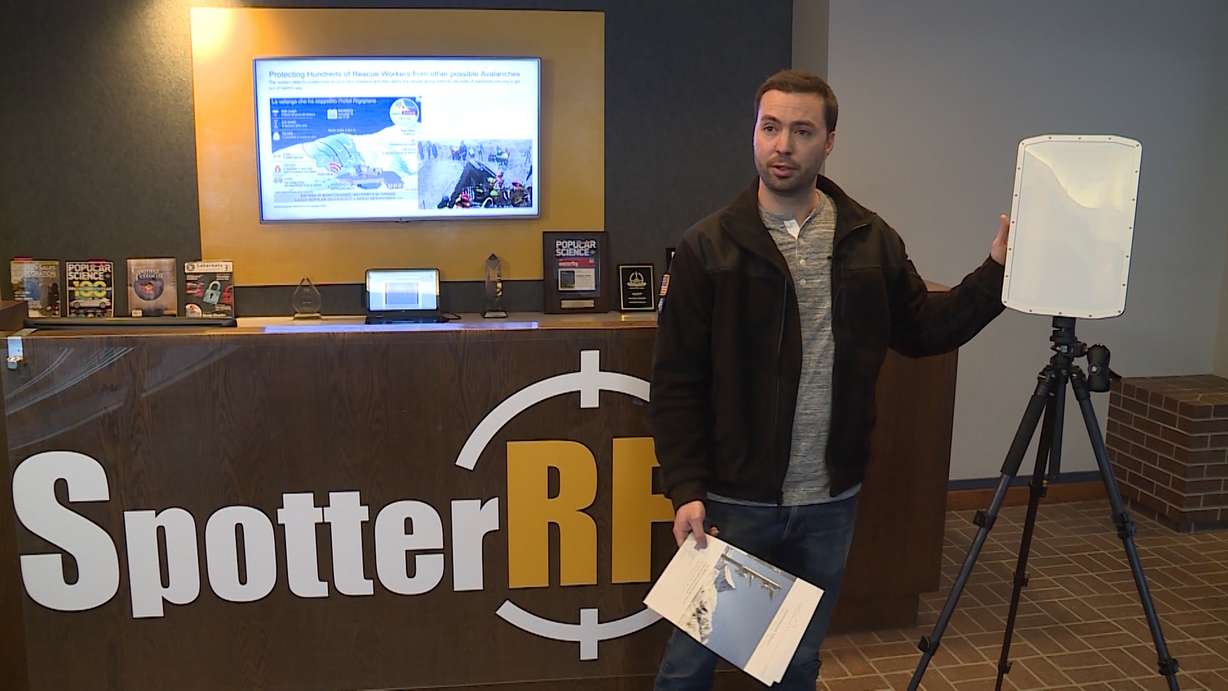
"This is able to detect avalanches out to about 2 kilometers, about a mile and a half," explained Byron Garvin, an engineer with SpotterRF.
The Orem-based company has created a radar it says can detect an avalanche up to 60 seconds before it starts — enough time to close crossing arms on roads or warn people what's about to happen.
The system is already being used in Europe, where "they have detected, successfully, thousands of avalanches," Garvin said.
SpotterRF officials hope to put the monitors to use here in Utah.
"It's a perfect fit, especially (in) places like Utah where we have a lot of avalanches occur," Garvin said.