Estimated read time: 2-3 minutes
This archived news story is available only for your personal, non-commercial use. Information in the story may be outdated or superseded by additional information. Reading or replaying the story in its archived form does not constitute a republication of the story.
SALT LAKE CITY — State legislators may reconsider how clean fuel vehicles are chosen to use express lanes on some Utah freeways.
The Utah Department of Transportation manages the total number of "C Decals" issued that allow drivers of eligible clean fuel vehicles to drive in designated freeway high occupancy lanes with only a single occupant in the vehicle.
Currently, UDOT issues the decals on a first-come, first-served basis. But some policymakers have questioned whether a better approach might be to prioritize who gets the decals, said Linda Hull, director of UDOT legislative and policy issues.
Issuing decals based on emissions or fuel efficiency of each individual vehicle model would make administration challenging, Hull said.
“Our interest is that if we did a prioritization, that it would be easy to administer,” Hull said. “If there were broad categories of vehicles and we were issuing decals across those categories, that would be easiest to administer.”
The agency issues a maximum of 6,650 decals statewide and has a waiting list of 135, with 65 applicants expected to become decal holders this year as an equal number drop out of the program, Hull said.
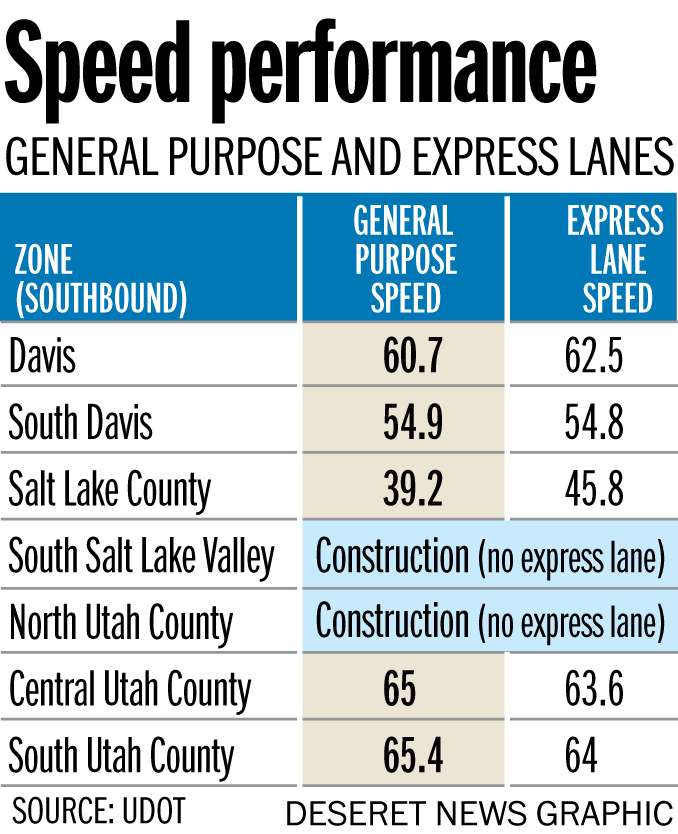
The number of decals issued in the program is dictated by the recorded speeds of vehicle travel in the HOV lanes on state freeways. She said the agency strives to maintain an average speed of at least 55 miles per hour — 10 mph above the federal requirement of 45 mph.
“Our primary interest is ensuring that we’re able to manage the total number of decals that are issued so we can manage the speeds of the (express) lanes,” she said.
The goal is to keep traffic moving at a more efficient pace, rather than slowing down and creating more congestion, she said.
UDOT officials addressed the concerns of lawmakers Wednesday during a meeting of the Interim Transportation Committee at the state Capitol. The committee took the matter under advisement.