
Estimated read time: 6-7 minutes
This archived news story is available only for your personal, non-commercial use. Information in the story may be outdated or superseded by additional information. Reading or replaying the story in its archived form does not constitute a republication of the story.
SALT LAKE CITY — The "Thin Blue Line" is getting thinner.
Fewer people are choosing to become cops, and many Utah police departments that are already seeing consequences are contemplating their next steps to avoid a challenging future.
Changes to retirement rules, low pay, on-the-job hazards and increased public scrutiny are all playing roles in the current situation, multiple chiefs told KSL.
Perhaps nowhere are shrinking recruitment pools as stark as they are at the Utah Highway Patrol.
When Col. Daniel Fuhr was a new hire 20 years ago, there were 2,000 candidates applying for five open positions.
In the latest recruitment pool, Fuhr said 87 people were vying for 23 open spots.
"The recruitment numbers have gone down dramatically," Fuhr said. "We're not going to fill all [23] positions — we're going to get, out of that 87 people, maybe eight to 10 good, qualified candidates."
The road to trooper starts far from the highways, so there is no quick fix.
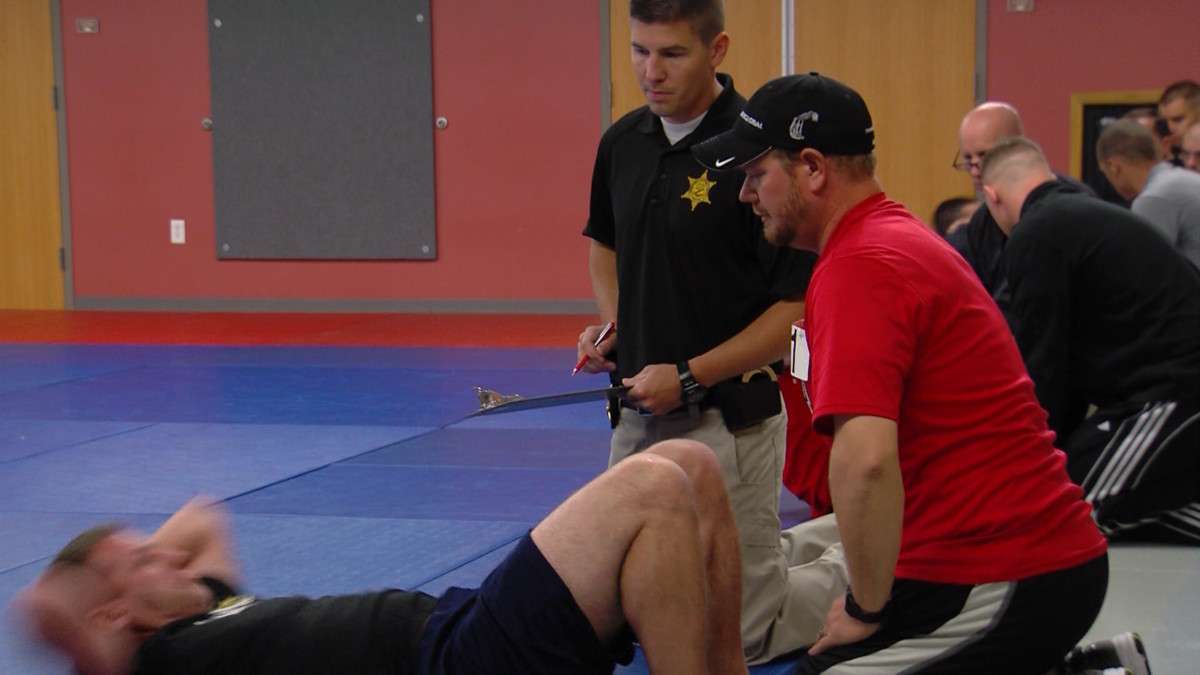
The process, which can take up to a year for individual recruits, starts with fitness tests at UHP.
Highway Patrol brass said the tests tend to weed out the most candidates, with recruitment pools generally cut in half by the end of timed push-ups, sit-ups and a mile-and-a-half run.
After that, applicants must survive aptitude, psychological and polygraph tests, in-depth investigations into their backgrounds must come up clean, and chosen recruits must endure up to four months of training before hitting the streets.
"There's quite an array of different procedures you have to go through to make sure we have good, qualified candidates entering the police departments," Fuhr said.
How departments deal
Police departments are getting by, despite the positions that aren't getting filled.
Sometimes, though, it requires some shifting in duties for officers who remain on payrolls.
In South Salt Lake, Chief Jack Carruth said staffing challenges lead to putting officers with other responsibilities back out on patrol.
"That's taking away from programs like the Good Landlord Program, the PAL [Police Athletic/Activities League] program — all those programs that drive down the crime rate," Carruth said. "Essentially, I'm becoming a reactive police department and my proactivity ability is now lessened."
Carruth said if he loses six to eight officers out of his 59 sworn, that makes a difference.
"It's a community loss," Carruth said. "I look at it as, 'now my community is suffering,' because what they require, what they want for police services has now been diminished to just, 'you call 911 and we'll show up.'"
Grim future?
One thing does appear certain — the future does not look bright if the waning interest in law enforcement careers is not corrected.
Provo Police Chief John King said it's a "huge national problem" and "almost a perfect storm" for police recruiting, and would be "devastating" if the current trends persisted for a decade.
"I think this is a very unique time with the problems of recruiting, and it's because, first of all, the pay is medium to low across the state of Utah," King explained. "I think what the public sees in the relationship across the country — how police are viewed now, where their authority and their professionalism is being questioned affects those numbers. And I think other people – family members – are influencing them and saying 'you may not want to go in there because there are all these difficult challenges.'"
Carruth also predicted a "huge crisis" if the pattern continues over the next five to 10 years.
"I don't know that a society can exist without public order in law enforcement, and if we can't attract quality people — people that are service-minded individuals — to serve as public safety officers, we're opening the door for a lot of risk in communities," Carruth said.
West Valley City incentives
Some departments are getting creative to position themselves above others for qualified candidates.
The West Valley City Police Department has taken an aggressive approach in hopes of luring more officers there.
Officers can earn $1,000 for recommending a candidate who ends up getting hired.
Chief Lee Russo said the department is also offering new hires $10,000 for a down payment if they move into the city, and also $200 per month in housing assistance for the first three years on the job.
"For an applicant, I guess it's a buyer's market," Russo chuckled. "It's become very competitive, and that's why we're constantly trying to re-engineer and re-invent ourselves."
Broader solutions
There may not be any fast solutions.
King said municipalities need to take the current issues seriously.
"We need to advertise more, we need to recruit actively," he said.
In some departments, increased pay may ease some of the troubles.
"We know that they're shrinking because for us, personally, they're going to higher paying agencies at this time," Fuhr said of UHP. "That's why a big push for us is to increase our wages as state troopers."
Some police officials have suggested a reversal in retirement rules could make a difference.
Officers used to be able to retire at 20 years with 50 percent of their salary. Now, new officers must work 25 years to retire at 37.5 percent of their pay in their three highest years.
"There's no way to actually retire on that pension, so that's a hard incentive to sell to a new recruit — as they're coming in, saying 'we're asking you to give 25 years of your life for this,'" Carruth said. "I don't know that I would do it if I knew that at 25 years, I'd have to go out and seek a new job or continue to work and that retirement life — the 'American way' — was no longer an option for me."
Inherent perks
Agencies, for now, continue to point to some of the reasons to become law enforcement officers that are not connected to money and benefits.
"Every single day, you can make a huge difference in somebody's life, and how many professions can you say that?" Fuhr asked. "How many professions can you go home and say to your husband or wife or your family, 'hey, today I made a huge difference and somebody is better off because of my efforts.' That's what law enforcement is all about."
Despite the detractors, many people are still opting for police life.
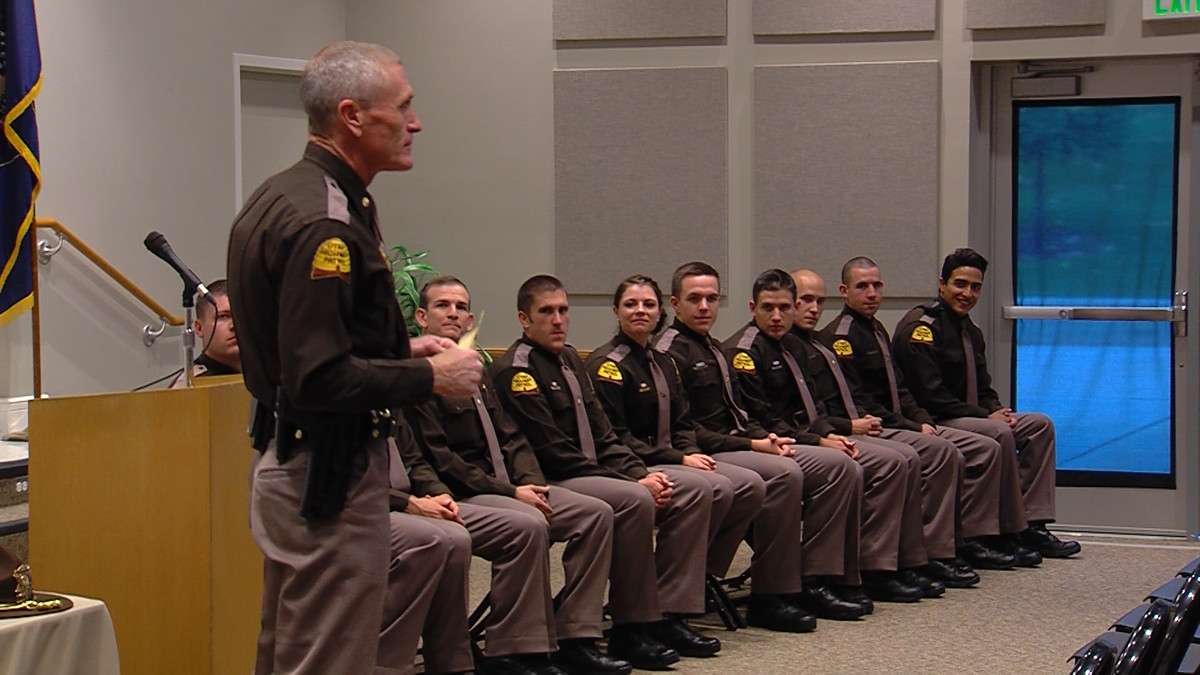
New trooper hires Tara Moss and Jason Cosby, after being sworn-in, pointed to their ability to improve the communities in which they'll serve.
"My family's young and it's a great opportunity for us to get off to a new start and start a new chapter in our lives, and I couldn't be happier," Cosby said.
Now a five-year veteran, trooper Andy Battenfield made the switch from commercial photographer at age 44.
"I went down that path, and I haven't regretted it," Battenfield said. "You don't have to be perfect to work in law enforcement, but you have to be teachable and you have to be honest, and law enforcement, especially Highway Patrol, will give you that training that you need to have to work in this field day-in and day-out."