'%3e%3cpath%20d='M34.1406%205.85938C30.3906%202.10547%2025.3047%200%2020%200C14.6953%200%209.60938%202.10547%205.85938%205.85938C2.10938%209.61328%200%2014.6953%200%2020C0%2025.3047%202.10547%2030.3906%205.85938%2034.1406C9.61328%2037.8906%2014.6953%2040%2020%2040C25.3047%2040%2030.3906%2037.8945%2034.1406%2034.1406C37.8906%2030.3906%2040%2025.3047%2040%2020C40%2014.6953%2037.8945%209.60938%2034.1406%205.85938ZM37.0117%2023.543H31.1602V13.5391H27.6328V19.9414C28.1211%2020.6914%2028.3711%2021.582%2028.3711%2022.5625V22.625C28.3711%2023.668%2028.1172%2024.6055%2027.6328%2025.4297V26.6094H36.082C33.4883%2032.9375%2027.2891%2037.3789%2020.0039%2037.3789C10.3711%2037.3789%202.62109%2029.6289%202.62109%2020C2.62109%2010.3711%2010.3711%202.62109%2020%202.62109C29.6289%202.62109%2037.3789%2010.3711%2037.3789%2020C37.3789%2021.1484%2037.2617%2022.2656%2037.0508%2023.3477C37.0391%2023.4141%2037.0234%2023.4766%2037.0117%2023.543Z'%20fill='white'/%3e%3cpath%20d='M22.3086%2018.5352C20.4336%2018.125%2019.9531%2017.8398%2019.9766%2017.1836V17.1406C19.9766%2016.6992%2020.3477%2016.2148%2021.4023%2016.2148C22.582%2016.2148%2023.8867%2016.6797%2025.0781%2017.4766L26.8516%2015.0195C25.4453%2013.8906%2023.707%2013.3398%2021.5547%2013.3398C18.5195%2013.3398%2016.4375%2015%2016.4063%2017.4766V17.5352C16.3633%2020.2617%2018.5859%2020.9805%2021.293%2021.6016C23.0391%2021.9766%2023.5703%2022.3164%2023.5703%2022.9609L23.5469%2022.9766C23.5469%2023.3906%2023.2578%2023.7031%2022.7852%2023.8359C22.5742%2023.9062%2022.1289%2023.9727%2021.5156%2023.9727C20.7617%2023.9727%2019.7539%2023.8633%2018.6328%2023.4844C18.0898%2023.2891%2017.4727%2023.0039%2016.8047%2022.6133L20.1406%2026.625C20.2813%2026.6602%2021.0977%2026.8516%2021.7734%2026.8516C25.0039%2026.8516%2027.0859%2025.2461%2027.1094%2022.6328V22.5703C27.1602%2020.1133%2025.2148%2019.1719%2022.3086%2018.5352Z'%20fill='white'/%3e%3cpath%20d='M5.24219%2013.5664V26.6133H8.75391V23.7578L10.2969%2021.9531L14.2031%2026.6133H18.3867L12.3555%2019.5195L17.4023%2013.5664H13.4531L8.75391%2019.0586V13.5664H5.24219Z'%20fill='white'/%3e%3c/g%3e%3cdefs%3e%3cclipPath%20id='clip0_97_2430'%3e%3crect%20width='40'%20height='40'%20fill='white'/%3e%3c/clipPath%3e%3c/defs%3e%3c/svg%3e)




Estimated read time: 3-4 minutes
This archived news story is available only for your personal, non-commercial use. Information in the story may be outdated or superseded by additional information. Reading or replaying the story in its archived form does not constitute a republication of the story.
SALT LAKE CITY — Utah members of Congress say the United States must be more vigilant about screening Syrian refugees and take a larger role in fighting terrorism after the attacks in Paris, including sending troops to Syria.
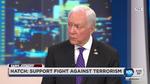
"I think it's going to come to that," said Sen. Orrin Hatch, R-Utah, adding that it's more important for the U.S. to support countries willing to put boots on the ground. "This is not a JV team that is doing this around the world."
Rep. Chris Stewart, R-Utah, was more specific, saying some military plans call for as many as 25,000 special forces in Syria and more aggressive air strikes numbering 60,000 to 70,000 sorties.
"If we had a policy and we had an objective, I think that's something we would have to consider," he said, adding the White House strategy in Syria has failed the past four years.
President Barack Obama said Monday that sending troops into Syria to fight ISIS would be a "mistake."
"Not because our military could not march into … Raqqa and temporarily clear out ISIL, but because we would see a repetition of what we've seen before," he said in a speech at the G-20 meeting in Turkey. "If you do not have local populations that are committed to inclusive governance and who are pushing back against ideological extremes, then they resurface."
Stewart and Hatch expressed no confidence in Obama's policies in the Middle East.
"This is a war," Hatch told KSL Newsradio. "It's going to be a bigger war than you ever thought if we don't get some strong presidential leadership and we don't get cooperation from all kinds of other states, including maybe even Russia, to go after these people."
U.S. warplanes for the first time attacked hundreds of trucks Monday that ISIS has been using to smuggle the crude oil it has been producing in Syria. Plans for the strike were developed well before the terrorist attacks in and around Paris, officials familiar with the operation told the New York Times.
Stewart, a member of the House Intelligence Committee and former Air Force pilot, said he started calling for bombing oil trucks after returning from a trip to the region 16 months ago.
"Why in the world aren't we targeting these vehicles? Why are we allowing them to finance what has become the largest terrorist organization in the world with impunity? It makes no sense at all to me," he said.
The congressman called Monday's air strikes "far too little, too late."
Hatch, who served for years on the Senate Intelligence Committee, said with the mass exodus of Syrian refugees, the U.S. must also do a better job of vetting who comes into the country.
"We cannot allow terrorists to take advantage of our benevolence," the seven-term senator said. "To have a flock of refugees come into this country, it's always a very dangerous thing."
Hatch lamented Congress curtailing the National Security Agency's bulk data collection program, saying "we'll have a rough time picking these people up" and pinpointing where terrorism might blossom.
"We're just wide open for this type of attack," he said.
Sen. Mike Lee, R-Utah, wrote on his Facebook page that "Islamic terrorism" is a threat to national security, and leaders must be willing to call it by its name and understand its nature if they're serious about protecting American lives.
"I am particularly concerned about the limitations of the United States and other Western countries to appropriately vet Syrian and Iraqi refugees, especially since ISIS has already declared its intention to use the refugee crisis as a means to infiltrate Western nations," he said.
Stewart said if the Obama administration says it can screen Syrian refugees, "it's not being honest. … Someone could show up to these processing centers and be whoever they want to be."
Rep. Rob Bishop, R-Utah, believes the acceptance of Syrian refugees should be halted until the administration can demonstrate the ability to effectively conduct security checks on Syrian nationals and ensure they don't pose a threat to the U.S., according to his office.
Contributing: Sam Penrod