Estimated read time: 2-3 minutes
This archived news story is available only for your personal, non-commercial use. Information in the story may be outdated or superseded by additional information. Reading or replaying the story in its archived form does not constitute a republication of the story.
NIBLEY, Cache County — For years, the Blacksmith Fork River has been lined with old cars — clunkers that weren't good for anything else, and so were used to shore up the banks of the river in times of flooding.
After decades, these cars are starting to fall apart and rust away. That means the cars — dozens of them — are being removed in a $10 million project designed to not only make the river look a bit nicer, but also more safely secure the shore.
In one Nibley neighborhood, the crunching and rumbling sounds of the deteriorating cars are a daily occurrence, but many homeowners don't consider that a nuisance, either. They've seen their fair share of trobles with the river, including back in 2011.
"We had to put over 900 sandbags down here when the river flooded" in 2011, said resident Jodi Barnes.
"The river actually had pushed this bank about 60 to 70 feet from where it used to be," said Josh Runhaar with Cache County Development Services, "and had made a sheer cliff along where you can see the grass line now."
Related:
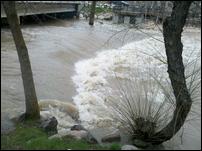
Ogden, Blacksmith Fork rivers remain at flood stage
Flood warnings remain in effect for parts of northern Utah Monday morning although some water levels have decreases since Sunday.Workers have been digging out and filling in the riverbed while strengthening the banks. But a lot of the work includes clearing up the old clunkers that were used as a cheap form of flood control. They have pulled about 50 cars out of one site and about 30 from another.
"You had banks like this eroding away, and it was a lot cheaper to take a car and tie it to the bank with a thick cable than it was to do a rock protection like this," Runhaar said.
Runhaar said there are still many more left, and many that they won't get to. It's a costly process that can actually destabilize the bank, but they are able to do it right because project restoration funding was approved after the flooding of 2011.
Homeowners out here say there's now a good chance they won't have to deal with that again.
"You want your place to look good," said resident Kendal Welker. "You want it to last."
Work on the project got underway back in January. It's expected to wrap up toward the end of the year. Of the $10 million cost, about $8 million came from federal funds.