'%3e%3cpath%20d='M34.1406%205.85938C30.3906%202.10547%2025.3047%200%2020%200C14.6953%200%209.60938%202.10547%205.85938%205.85938C2.10938%209.61328%200%2014.6953%200%2020C0%2025.3047%202.10547%2030.3906%205.85938%2034.1406C9.61328%2037.8906%2014.6953%2040%2020%2040C25.3047%2040%2030.3906%2037.8945%2034.1406%2034.1406C37.8906%2030.3906%2040%2025.3047%2040%2020C40%2014.6953%2037.8945%209.60938%2034.1406%205.85938ZM37.0117%2023.543H31.1602V13.5391H27.6328V19.9414C28.1211%2020.6914%2028.3711%2021.582%2028.3711%2022.5625V22.625C28.3711%2023.668%2028.1172%2024.6055%2027.6328%2025.4297V26.6094H36.082C33.4883%2032.9375%2027.2891%2037.3789%2020.0039%2037.3789C10.3711%2037.3789%202.62109%2029.6289%202.62109%2020C2.62109%2010.3711%2010.3711%202.62109%2020%202.62109C29.6289%202.62109%2037.3789%2010.3711%2037.3789%2020C37.3789%2021.1484%2037.2617%2022.2656%2037.0508%2023.3477C37.0391%2023.4141%2037.0234%2023.4766%2037.0117%2023.543Z'%20fill='white'/%3e%3cpath%20d='M22.3086%2018.5352C20.4336%2018.125%2019.9531%2017.8398%2019.9766%2017.1836V17.1406C19.9766%2016.6992%2020.3477%2016.2148%2021.4023%2016.2148C22.582%2016.2148%2023.8867%2016.6797%2025.0781%2017.4766L26.8516%2015.0195C25.4453%2013.8906%2023.707%2013.3398%2021.5547%2013.3398C18.5195%2013.3398%2016.4375%2015%2016.4063%2017.4766V17.5352C16.3633%2020.2617%2018.5859%2020.9805%2021.293%2021.6016C23.0391%2021.9766%2023.5703%2022.3164%2023.5703%2022.9609L23.5469%2022.9766C23.5469%2023.3906%2023.2578%2023.7031%2022.7852%2023.8359C22.5742%2023.9062%2022.1289%2023.9727%2021.5156%2023.9727C20.7617%2023.9727%2019.7539%2023.8633%2018.6328%2023.4844C18.0898%2023.2891%2017.4727%2023.0039%2016.8047%2022.6133L20.1406%2026.625C20.2813%2026.6602%2021.0977%2026.8516%2021.7734%2026.8516C25.0039%2026.8516%2027.0859%2025.2461%2027.1094%2022.6328V22.5703C27.1602%2020.1133%2025.2148%2019.1719%2022.3086%2018.5352Z'%20fill='white'/%3e%3cpath%20d='M5.24219%2013.5664V26.6133H8.75391V23.7578L10.2969%2021.9531L14.2031%2026.6133H18.3867L12.3555%2019.5195L17.4023%2013.5664H13.4531L8.75391%2019.0586V13.5664H5.24219Z'%20fill='white'/%3e%3c/g%3e%3cdefs%3e%3cclipPath%20id='clip0_97_2430'%3e%3crect%20width='40'%20height='40'%20fill='white'/%3e%3c/clipPath%3e%3c/defs%3e%3c/svg%3e)




- Salt Lake City agrees to allocate $400,000 to help plan 50 artistic beehive-themed lamp posts downtown.
- The project aims to attract visitors during the Salt Lake Temple open house.
- Business leaders and other organizations have pledged to cover more than $3 million in remaining costs.
SALT LAKE CITY — Millions of people are expected to descend on Utah's capital city for a six-month open house for the remodeled Salt Lake Temple.
It's a moment that will put a spotlight on what might be the crown jewel of downtown Salt Lake City, but local business leaders also believe it's a moment that could rejuvenate lagging parts of downtown.
"I think this is really the moment we are looking for," Scott Anderson, former president at Zions Bank, said to the members of the Salt Lake City Community Reinvestment Agency on Tuesday, as he proposed a unique way to keep people downtown for a little longer when they come for the open house celebration.
Members of the Reinvestment Agency board voted Tuesday to direct $400,000 toward the planning of 50 new artistic, beehive-themed lamp posts to assist a business-led effort. The business community has already pledged $3 million toward the project, while another $400,000 is expected to be matched by other organizations, Anderson said.
The permanent lamps would be installed along Main Street as a tourist attraction of sorts and wouldn't replace the existing historic lamps found across the street, but members of the Reinvestment Agency's board of directors, who are all members of the Salt Lake City Council, also voiced concerns about other elements of the project moving forward.
A new way to light up downtown
The Church of Jesus Christ of Latter-day Saints anticipates that next year's open house will attract 3 million to 5 million visitors over six months, prompting extensive logistical planning.
Anderson spoke on behalf of a community group that includes Salt Lake City Mayor Erin Mendenhall and Salt Lake County Mayor Jenny Wilson, as well as local business and philanthropic leaders. The group has explored ways to keep temple visitors downtown longer and provide a positive experience to inspire future visits.
Recent conversations touched on a survey that found nearly half of Wasatch Front residents polled said that they were less likely to visit downtown Salt Lake City now than in recent years over various concerns. The group sees the lamp posts as a "dynamic, safe, fun and joyful" way to reintroduce the region — and others — to Main Street and the greater downtown area.
"The goal is to create a vibrant downtown for visitors and local residents alike. … We hope that people will get a flavor of this, love it and come back down here," Anderson said, adding that the proposal is part of an overarching concept to see the city "in bloom."
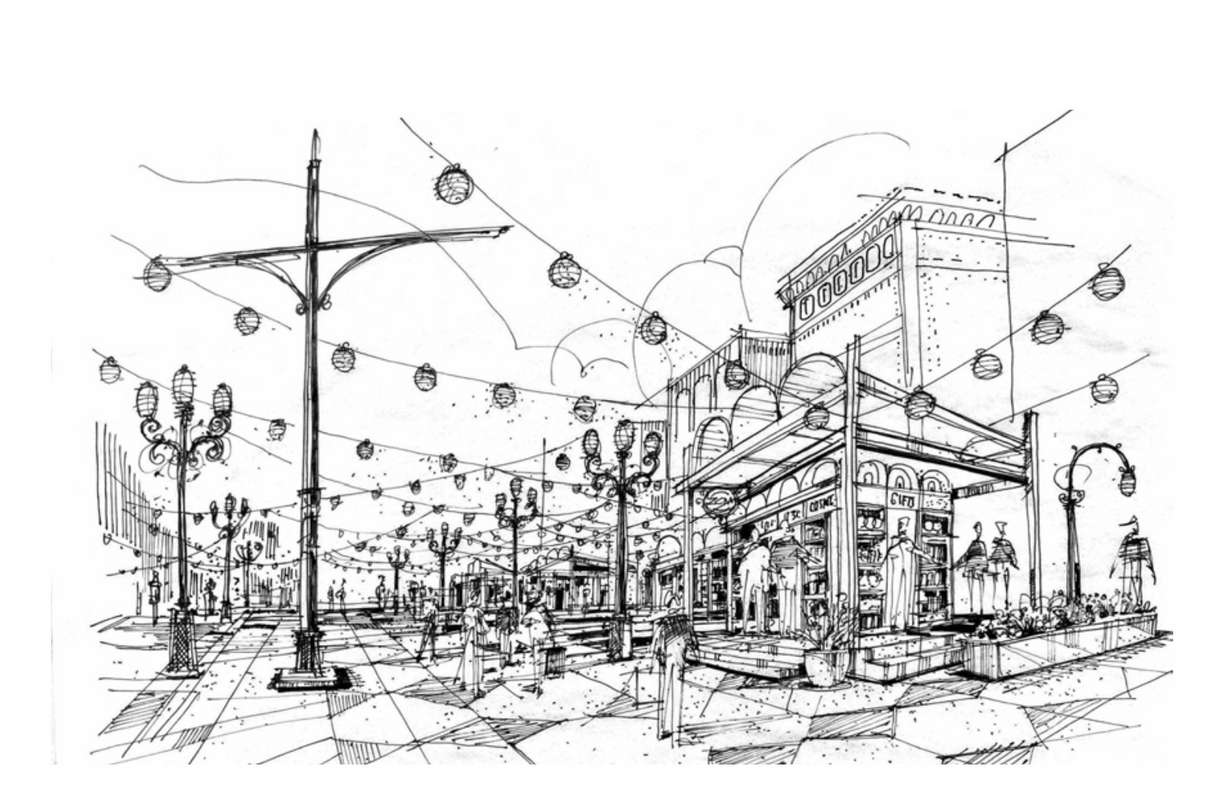
The series of artistic lamps and string lights would provide a historical flair, with a beehive design to honor the city's pioneer heritage, said Brent Watts, chief creative officer of Struck, a marketing firm that helped in the design. They'd be made of iron, steel and other sturdy materials to avoid damage, and shine in a "honeyed light" to reflect a warmer glow.
Each post would be about 11 to 12 feet high, shorter than the current lights on the street, and placed in a way to coexist with the existing lighting, he added.
Business leaders hope to have the posts designed and installed by March 2027, in time for the open house. They'd join kiosks, street entertainment and other concepts that the Salt Lake City Downtown Alliance previously unveiled.
Potential drawbacks?
While members of the Reinvestment Agency's board of directors were generally enthusiastic about the proposal, they were also hesitant to green-light everything amid several questions and concerns brought up throughout Tuesday's meeting.
"How did this become a priority ... in terms of activation and vibrance? … Lighting isn't generally my primary concern," said Councilwoman Victoria Petro, saying there are different elements that the city could explore to enhance the open house experience downtown.
Others expressed concerns over the project's timeline, such as what would happen if tariffs or supply chain issues disrupt it before the open house, as well as any safety liabilities or having enough resources to regularly maintain them.
Related:
Conference Center closing as church, city, state officials plan for Salt Lake Temple reopening
Downtown Salt Lake business leaders and state tourism officials are preparing for what could be the biggest event to happen in Utah since the 2002 Winter Olympics.There were also questions about what it means for the city's goal to turn Main Street into a walkable promenade.
The board ultimately agreed to direct $400,000 from the more than $2 million left in a strategic fund it manages, which will go into design planning. The money raised by business leaders and other organizations will cover the rest of the costs, including manufacturing and installation.
All the other elements and concerns brought up before the vote will be hashed out in the coming months while the project is pieced together, said Councilman Dan Dugan, who also chairs the board. That includes mapping out their place in short-term maintenance and long-term projects, which is where planning matters.
"The design of these lights needs to work with the design of the promenade," he told KSL after the meeting, adding that he believes it will improve lighting safety along Main Street in the near-term.
Still, board members agree that it could add to what figures to be a monumental event in Salt Lake history.
"This is a big opportunity for our city," said Councilman Chris Wharton.
Handling other streets
The vote came before the City Council weighs a proposal to close a few streets surrounding Temple Square for about six months to help manage pedestrian traffic during next year's event.
A handful of residents expressed concerns about the impacts on through traffic in the area, especially for any east-west travel for key locations like West High School or LDS, Holy Cross and University of Utah hospitals, during a public hearing on the proposal Tuesday night. Sarah Jamieson, owner of Grimm Ghost Tours, said it would hurt her business, too, because vital points on her normal route would be blocked off.
"We have already experienced the impact of temporary street closures in the past. When customers cannot reach us, we lose bookings and revenue," she said, noting that many previous closures were short-term constraints while this would be a larger burden.
Others came to the meeting to support the measure, though, saying it could open the door to making downtown more walkable and memorable.
Leaders of other faiths in the city were among the group that came to support the measure, saying they understand the challenges the Church of Jesus Christ is facing right now.
"We do large events ourselves, and we understand the importance of security, safety, logistics and flow," said George Karahalios, parish council president of the Greek Orthodox Church of Greater Salt Lake. "If you don't have a perimeter where you can do your security and safety checks, then your logistics inside don't work, your flow just gets hammered."
A vote on the request is expected later this month.
It's one of many transportation elements being considered for 2027. Others include more parking options near Temple Square, as well as a shuttle service with park-and-ride facilities along North Temple west of I-15, according to The Church of Jesus Christ of Latter-day Saints.