- Rep. Blake Moore opposes adding culture-war issues to the election reform bill.
- Trump urges Republicans to include transgender restrictions in the SAVE America Act.
- Adding issues may hinder Senate passage, facing Democratic opposition and Senate hurdles.
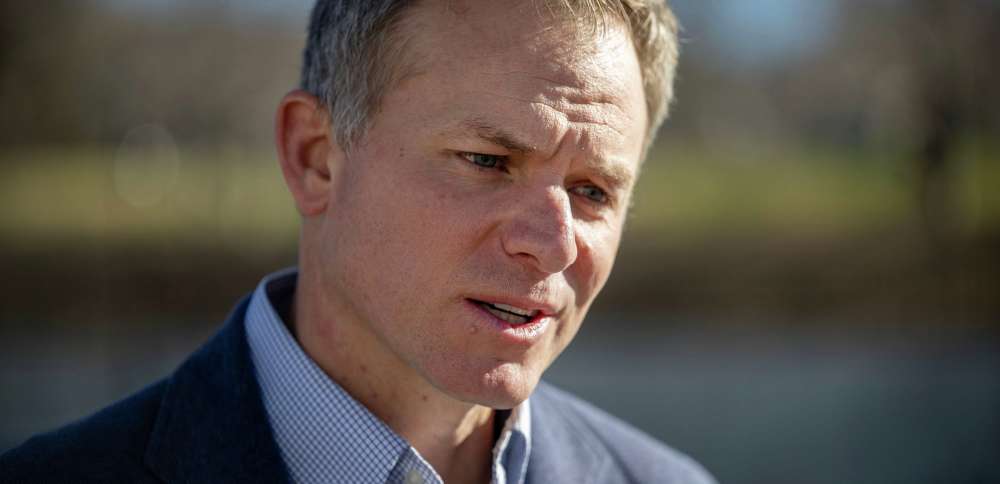
SALT LAKE CITY — Utah Rep. Blake Moore is expressing skepticism about adding unrelated provisions to Republicans' major election reform package despite demands from President Donald Trump that the party should include as many policy wins as possible to the legislation.
As part of his push to pass the SAVE America Act, the party's proof-of-citizenship and voter ID proposal, Trump directed Republicans to expand the legislation to include some of his top wish-list items: restrictions on transgender surgeries for children and a ban on "men in women's sports." But doing so would transform the legislation into a megabill of sorts, which Moore warned could backfire.
"One fundamental thing that Republicans have told me for my 5½ years in this world, is they like single-issue bills," Moore told the Deseret News Tuesday in an interview in Florida. "So we can't be the party that starts doing a bunch of multiple-issue bills, leveraging this to get this. It's not necessarily the best approach to be able to get some of these key must-pass pieces of legislation done."
In remarks to House Republicans during their annual issues conference in Doral, Florida, on Monday, Trump pushed the party to make the election integrity bill the "No. 1 focus" — while also including a number of policies the president has separately advocated for.

"We've added two things," Trump said in his nearly hourlong speech. "No men in women's sports and no transgender mutilation of our children."
But doing so could make it more difficult to pass the bill, which already faces an uphill battle in the Senate, where it has stalled for over a year due to Democratic opposition. Senate Majority Leader John Thune, R-S.D., said on Tuesday he would bring the bill to the floor next week for a vote, but its future is still uncertain.
Adding the culture-war issues would make it a definite nonstarter for Democrats, and it could prompt vulnerable Republicans to be more hesitant to support it.
And while most House Republicans would likely support those changes, they acknowledge the challenge will likely become more difficult in the Senate.
"They're not things I'm against, so I don't have any problem," House Appropriations Chairman Tom Cole, R-Okla., told the Deseret News on the sidelines of the retreat. "The real thing is, can you get the votes for it? I see that as probably more of a Senate problem."
For most pieces of legislation to pass the Senate, it must overcome a 60-vote threshold to avoid a filibuster — meaning it would require bipartisan support. That's caused the bill to stall out as Democrats refuse to back it.
But Trump is imploring Republicans to make it a priority, even going so far as to say he would not enact any laws until the flagship election bill is passed. When asked if he would still approve some legislation, such as a bill to reopen the Department of Homeland Security, the president sidestepped questions on specifics.
That threat doesn't seem to be landing the way Trump has intended, as some Republicans appear to acknowledge it's more about messaging than anything else.
"I think he's making that point to tell us how important it is to him, and to make that point emphatically, and to send the same message to the Senate," Cole said. "To me, it's just, 'Hey, I want this done PDQ (please do quickly).' But that doesn't mean 'I wouldn't sign.' I take that as a rhetorical flourish, not as a line in the sand. But that's up to the president."