'%3e%3cpath%20d='M34.1406%205.85938C30.3906%202.10547%2025.3047%200%2020%200C14.6953%200%209.60938%202.10547%205.85938%205.85938C2.10938%209.61328%200%2014.6953%200%2020C0%2025.3047%202.10547%2030.3906%205.85938%2034.1406C9.61328%2037.8906%2014.6953%2040%2020%2040C25.3047%2040%2030.3906%2037.8945%2034.1406%2034.1406C37.8906%2030.3906%2040%2025.3047%2040%2020C40%2014.6953%2037.8945%209.60938%2034.1406%205.85938ZM37.0117%2023.543H31.1602V13.5391H27.6328V19.9414C28.1211%2020.6914%2028.3711%2021.582%2028.3711%2022.5625V22.625C28.3711%2023.668%2028.1172%2024.6055%2027.6328%2025.4297V26.6094H36.082C33.4883%2032.9375%2027.2891%2037.3789%2020.0039%2037.3789C10.3711%2037.3789%202.62109%2029.6289%202.62109%2020C2.62109%2010.3711%2010.3711%202.62109%2020%202.62109C29.6289%202.62109%2037.3789%2010.3711%2037.3789%2020C37.3789%2021.1484%2037.2617%2022.2656%2037.0508%2023.3477C37.0391%2023.4141%2037.0234%2023.4766%2037.0117%2023.543Z'%20fill='white'/%3e%3cpath%20d='M22.3086%2018.5352C20.4336%2018.125%2019.9531%2017.8398%2019.9766%2017.1836V17.1406C19.9766%2016.6992%2020.3477%2016.2148%2021.4023%2016.2148C22.582%2016.2148%2023.8867%2016.6797%2025.0781%2017.4766L26.8516%2015.0195C25.4453%2013.8906%2023.707%2013.3398%2021.5547%2013.3398C18.5195%2013.3398%2016.4375%2015%2016.4063%2017.4766V17.5352C16.3633%2020.2617%2018.5859%2020.9805%2021.293%2021.6016C23.0391%2021.9766%2023.5703%2022.3164%2023.5703%2022.9609L23.5469%2022.9766C23.5469%2023.3906%2023.2578%2023.7031%2022.7852%2023.8359C22.5742%2023.9062%2022.1289%2023.9727%2021.5156%2023.9727C20.7617%2023.9727%2019.7539%2023.8633%2018.6328%2023.4844C18.0898%2023.2891%2017.4727%2023.0039%2016.8047%2022.6133L20.1406%2026.625C20.2813%2026.6602%2021.0977%2026.8516%2021.7734%2026.8516C25.0039%2026.8516%2027.0859%2025.2461%2027.1094%2022.6328V22.5703C27.1602%2020.1133%2025.2148%2019.1719%2022.3086%2018.5352Z'%20fill='white'/%3e%3cpath%20d='M5.24219%2013.5664V26.6133H8.75391V23.7578L10.2969%2021.9531L14.2031%2026.6133H18.3867L12.3555%2019.5195L17.4023%2013.5664H13.4531L8.75391%2019.0586V13.5664H5.24219Z'%20fill='white'/%3e%3c/g%3e%3cdefs%3e%3cclipPath%20id='clip0_97_2430'%3e%3crect%20width='40'%20height='40'%20fill='white'/%3e%3c/clipPath%3e%3c/defs%3e%3c/svg%3e)




Estimated read time: 2-3 minutes
This archived news story is available only for your personal, non-commercial use. Information in the story may be outdated or superseded by additional information. Reading or replaying the story in its archived form does not constitute a republication of the story.
SALT LAKE CITY — Scientists believe they have found what has been described as the long-sought Holy Grail of the sub-atomic world, with the loftiest of names, the "God particle."
The particle cannot be seen with the human eye, but the tiny thing may help explain some of the biggest concepts in science, and is regarded as "the missing cornerstone" to understanding why matter has mass, which combines with gravity to give all objects weight — it may also help shape our understanding of how the universe began.
The theory was proposed in the 1960's by Scottish physicist Peter Higgs and nicknamed the "Higgs boson."
The new particle was discovered at the world's biggest atom smasher when two independent teams observed a new particle consistent with a Higgs boson at the facility outside Geneva along the Swiss-French border.
As the announcement was made in Geneva, Switzerland, Utah Valley University physicist Steve Wasserbaech anxiously followed the news via computer in Utah.
Related:
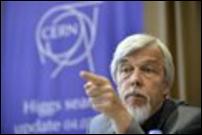
Eureka! Physicists celebrate evidence of particle
Scientists at the world's biggest atom smasher hailed the discovery of "the missing cornerstone of physics" Wednesday, cheering the apparent end of a decades-long quest for a new subatomic particle called the Higgs boson, or "God particle.""The family was asleep so I was doing quiet fist pumps when I saw the plots on the screen," Professor Wasserbaech said.
Wasserbaech is one of just a few U.S. scientists to have been awarded an appointment at the European Center for Nuclear Research, or CERN, where the particle was discovered in the 17-mile long underground atom smasher.
"This was a really important discovery because it was the remaining missing undiscovered particle of our so-called standard model," Wassherbaech said.
While Wasserbaech is not wild about the "God particle" nickname, he is excited scientists have found a missing piece to a theory of the universe itself.
"It's misleading," he said. "It gives the impression that scientists are entering the domain of religion somehow, which is not what this is at all."
Wasserbaech says we won't know what kind of real-life applications this will have for years.
But he says things like the World Wide Web and medical imaging followed on the heels of research like this, as did solar energy advances, and proton therapy used in the fight against cancer.
Contributing: The Associated Press