
Estimated read time: 3-4 minutes
This archived news story is available only for your personal, non-commercial use. Information in the story may be outdated or superseded by additional information. Reading or replaying the story in its archived form does not constitute a republication of the story.
LAYTON -- In an emergency every second counts. When paramedics arrive on scene, those first moments can be crucial.
"It can be a matter of just a few minutes that can be the difference between life and death," said Mark Oraskovich, Emergency Room physician.
Now Layton Firefighters have new technology to help them save lives in ways they never could before. Breathing tubes, equipped with small fiber-optic cameras, are helping them clear the airways for patients suffering from some traumatic. What they're now doing at the scene of accidents is called "paralytic intubation," where in some of the more extreme cases, paramedics are able to paralyze the patient and quickly provide an oxygen supply. This is something that would normally have to wait for the Emergency Room.
"What we're trying to do with this is really re-produce what they're doing in emergency rooms," said Capt. Jason Cook, of the Layton Fire Department.
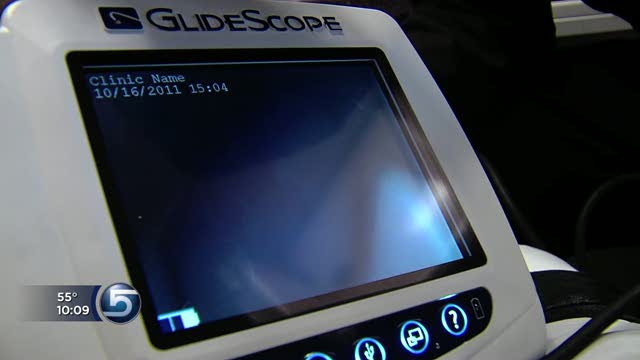
The Layton Fire Department is the first agency in the state to use this high-tech device, called the GlideScope, to help patients breathe.
"I think there's no doubt whatsoever that eventually all the EMS agencies in Utah will be using a device similar to this if not the same device," Cook said.
With the help of a tiny camera and a high-definition screen, paramedics can actually see where the breathing tube is going and making sure it ends up in the right place quickly. In many cases it's something they otherwise couldn't do right on scene.
"We have to wait for a helicopter to arrive, or else we have to load the patient in the ambulance and drive rapidly to the hospital, and that costs us a lot of time," Cook said.
The Davis County Sheriff's Department is next in line for the GlideScope. They've already trained deputies to use the device and hope to buy some with the help of a grant.
"We feel that what we deliver to the hospital, is a more secured, more stable patient to the Emergency Room for them to deal with it," said Cory Cox, Davis County deputy and paramedic.
Before, paramedics could only treat the less severe cases, using their own eyesight to install the tubes. Now, they can treat those more seriously injured with the help of the GlideScope, and drugs that both paralyze and sedate the patient to install the tubes relatively easily.
"What's unique about these medications is they start really fast, and they go away really fast," Cox said.
Some ER doctors say a little more help in the field can go a long way back in the operating room.
"Minutes matter here," said Oraskovich, "so to have that done before they get to the ER, I think can make all the difference in the world."
Cook said that once the device drops in price -currently costing about $10 thousand each --more agencies will likely start buying them. The Davis County Sheriff's Department already has eight deputies trained and ready to use them in the field once they get them.
Email:manderson@ksl.com.