Estimated read time: 2-3 minutes
This archived news story is available only for your personal, non-commercial use. Information in the story may be outdated or superseded by additional information. Reading or replaying the story in its archived form does not constitute a republication of the story.
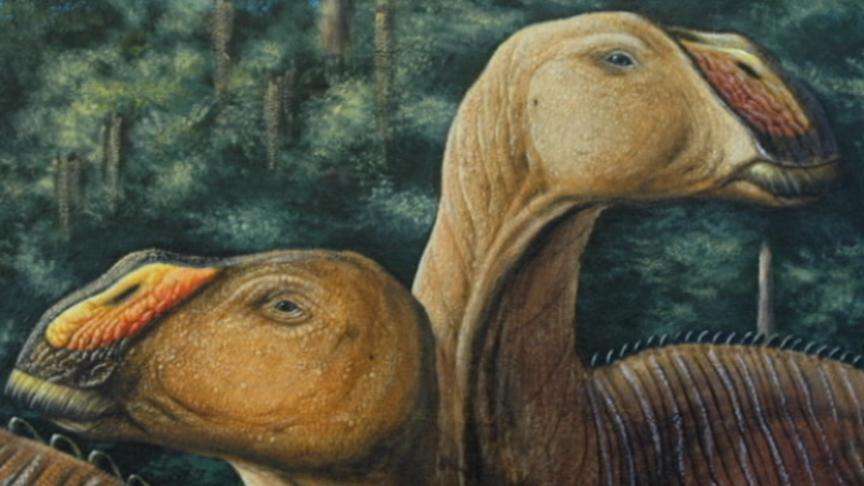
PLEASANT GROVE -- The fossilized remains of a Gryposaurus duck-billed dinosaur were in a jumbled pile when they were first discovered in southern Utah in 2007.
The process of placing each of the approximately 200 bones in the right order, and on a welded steel frame that puts the ancient creature in good form for viewing, is well under way in the shop of Vertebrata Reproductions in Pleasant Grove. In about two weeks, the dinosaur skeleton will be transported to the new Utah Museum of Natural History, which is scheduled to open in November.
The specimen is exceptionally large among its 75-million-year-old kin, and remarkably complete, said museum paleontologist Eric Lund. A number of bones were missing, but museum staff were pleased to end up with a skeleton that is more complete than most once it was finally liberated from limestone in the Kapirowits Formation with the Grand Staircase National Monument.
Once the recoverable bones were freed, they were sent to Vertebrata Reproductions, which fills in the missing pieces using casts from other dinosaurs, scientific drawings and other data, said Brock Sisson, the company's owner.
Sisson's life-long ambition was to be an archeologist, but owning a company that actually gets to put the puzzle pieces of ancient fossils together is the next best thing. He said he has museum clients around the globe, and estimates his shop has about 50 ongoing projects.
Sisson and welder Brannigan Hunter worked together to mount a casting replica of the duck-billed dinosaur's skull on Wednesday as Lund supervised the angle of the skull and jaw for the best display.
The same resin that is used to fix dents in cars is used to fill in the voids of bones that are missing or incomplete. Sissions said he often employs artists for that work.
#dinosaur
Across the room, one such artist, BYU graduate student Maddison Colvin, was covered in resin dust as she used a rotary drill to carve crack lines in the resin to make it look like the rest of the casting of an incomplete piece of bone.
Sisson said each specimen has to have a custom-built steel frame, and that work on the duck-bill dinosaur has taken about five months. The frame is built so that each individual bone can be removed for scientific study. Resin parts and pieces of the skeleton made from casts, like the skull, will be painted to match the fossilized bones once all of the structure is finished. Then the entire skeleton will be removed from the welded frame, the frame dismantled, and crates carrying the pieces will be transported to the new museum.
Of the 30 to 40 skeleton "mounts" arranged in lifelike positions in the new museum, only the duck-bill is built from the original fossilized bones. The rest are made from casts of bone fossils.
Email:sfidel@ksl.com
View New Utah Museum of Natural History in a larger map