
Estimated read time: 3-4 minutes
This archived news story is available only for your personal, non-commercial use. Information in the story may be outdated or superseded by additional information. Reading or replaying the story in its archived form does not constitute a republication of the story.
SALT LAKE CITY — A bill eliminating in-state college tuition for illegal immigrants cleared a legislative committee Friday.
The House Revenue and Taxation Committee passed the bill 10-5.
Currently, 643 undocumented illegal immigrants attend Utah colleges and universities on in-state tuition.
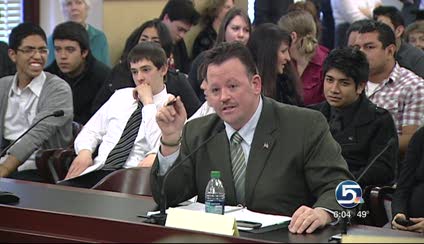
HB191 sponsor Carl Wimmer, R-Herriman, said Utah taxpayers should not subsidize in-state tuition for illegal immigrants. Since 2002, students who complete three years of high school in Utah and graduate are eligible.
Currently, 643 undocumented illegal immigrants attend Utah colleges and universities on in-state tuition. Wimmer told fellow lawmakers this tuition costs the state $5.5 million annually.
Wimmer also said illegal immigrant students who earn college degrees can't get jobs due to their status. "In order for them to work they have to commit identity theft," he said.
People on both sides packed the room for this House Revenue and Taxation Committee hearing.
"This bill was put into effect (in 2002) against the will of the Legislature," he said. The law wasn't supposed to go into effect until Congress approved the Dream Act, he said.
We believe the legislation is inconsistent with the principles of the Utah Compact and would harm Utah's economy.
–Wesley Smith, Salt Lake Chamber
But Rep. Dave Clark, R-St. George, recalled the Legislature's intent differently. He said it was clear at that time the law was to go into effect immediately.
Federal law doesn't allow states to offer the tuition break for those in the country illegally, Wimmer said.
Gayle Ruzicka, with the Utah Eagle Forum, agreed with Wimmer. She asked the panel why her out-of-state grandchildren shouldn't get the same benefit.
"If we're going to allow non-citizens and non-residents of this state to have in-state tuition, then we should open it up for everybody," she reasoned.
But ACLU legislative and policy analyst Marina Lowe disagreed. "(The law) is indeed legally sound," she said. And for that reason, she said, the federal government has not challenged Utah in court.
Some testified ending the policy would be a mistake, unfair to those students and bad for the economy.
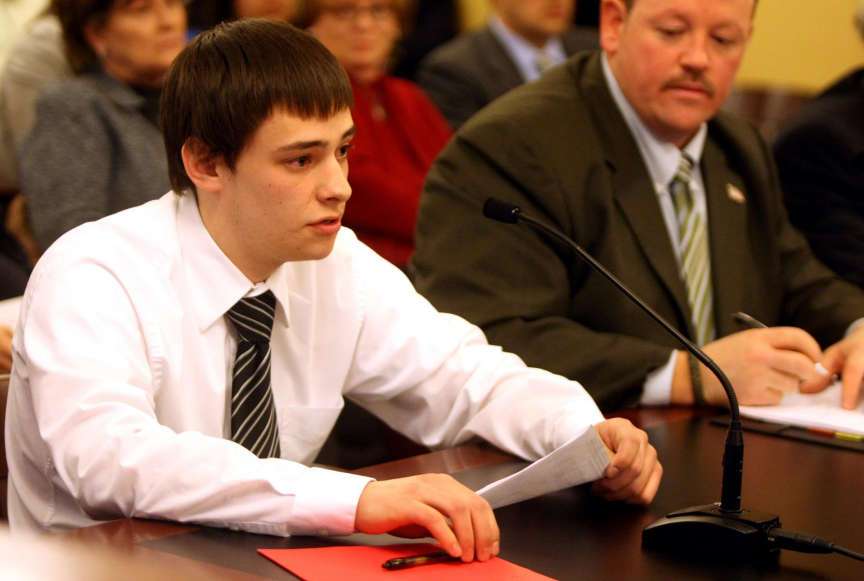
"The Chamber opposes HB191," said Salt Lake Chamber Director of Public Policy Wesley Smith. "We believe the legislation is inconsistent with the principles of the Utah Compact and would harm Utah's economy."
Utah Young Republican delegate Keith Kuder is in favor of the repeal. "The current consensus is that we don't want this state to be a welfare state," he said. "To allow in-state tuition to illegal immigrants is appalling."
Some undocumented students told the panel their parents brought them here at a young age. High school junior Daniel Reyna said without the help, he won't qualify for grants, loans or scholarships.
"I grew up in this state. I have been here for the last 10 years, and as far as I'm concerned I'm from this country," Daniel Reyna said.
"I know how many lives would be shattered and how many dreams would be lost of individuals that wouldn't be able to further their education and contribute to society," said Alexis Santayo, a student at the University of Utah.
HB191 now goes on to the full House for debate.
------
Story compiled with contributions from Dennis Romboy and John Daley.