
Estimated read time: 2-3 minutes
This archived news story is available only for your personal, non-commercial use. Information in the story may be outdated or superseded by additional information. Reading or replaying the story in its archived form does not constitute a republication of the story.
SOUTH JORDAN -- A South Jordan man is pain-free after almost 35 years of battling numerous health problems.
David Morrison had nerves in both sides of his neck "stunned" by a technique some might compare to a safe non-electrical form of tasing.
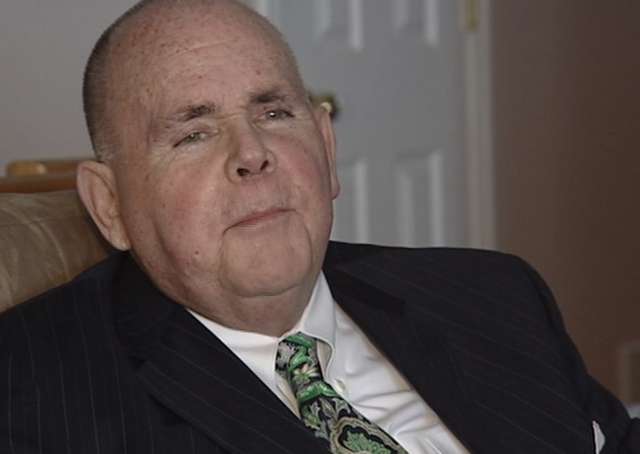
Numerous health challenges and more than three decades of chronic pain had become a way of life for Morrison. A non-smoker's lung cancer took him down in 2002. Surgeons removed the left lung and almost half of the right lung.
A massive heart attack left only 10 percent of Morrison's heart functioning, and he's been hospitalized numerous times for pneumonia. Osteoarthritis has destroyed almost all the cushioning in his spine.
"I have no washers between any of my vertebrae," Morrison explains. "All the discs are bulging; three of them are herniated."
Nerve blocks, methadone, morphine and other drugs gave only temporary relief to his 24/7 pain, ranging from four to 10 on the pain scale. But then a local pain management group offered an option that neurosurgeons have used for years during brain surgeries.
David went to the Summit Pain Clinic for a procedure that's been around for a long time. The technique is unique, and not all patients or doctors are aware of it.
Dr. Stephen Lordon, who heads up the Summit Pain Management Group, says, "The analogy I like to use is almost like a Taser. It doesn't actually kill the nerve but stuns it."
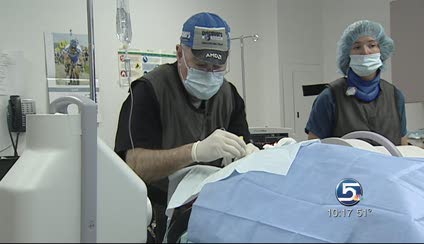
In a simple outpatient setting, Lordon inserts needles through the back of Morrison's neck, positioning them close to nerves that are sending the pain messages. Morrison is under local anesthetic but able to respond to test stimulation.
When ready, a radio frequency machine that delivers 50 to 500,000 hertz frequencies per second stuns the nerves through the tips of the needles.
"We stun five nerves at a time, and that gets at the majority of the arthritic, if not all of the usual arthritic facets," Lordon explains.
- 60% of patients achieve at least 90% pain relief 12 months after procedure
- 87% of patients achieve at least 60% pain relief 12 months after procedure
- Patients can suffer 10-20% increase in pain for 1-4 weeks after procedure
- It can take 2-6 weeks to experience decreased pain
Most patients remain pain-free for one to three years before needing a repeat treatment.
Like many of his colleagues, Lordon has been using this technique now for 10 years.
"At first I said, ‘How can this work?' This is very different than anything I was taught, and I'll just have to say that it's a pretty amazing procedure," he says.
Morrison thinks it's amazing too. He's working 30 hours a week, pain-free, not needing pain or anti-inflammatory drugs.
"Wonderful," he says. "I'm ready to begin a new life."
That, he adds, is a far cry from where he was in 2002, when doctors told his wife he had only hours to live.
While the radio frequency technique doesn't work for everybody, more than 60 percent of treated patients get about 90 percent pain relief.
E-mail: eyeates@ksl.com