
Estimated read time: 2-3 minutes
This archived news story is available only for your personal, non-commercial use. Information in the story may be outdated or superseded by additional information. Reading or replaying the story in its archived form does not constitute a republication of the story.
SALT LAKE CITY -- Despite a severe injury, a Utah teacher and opera singer is using his voice again after years of therapy and determination. His singing voice, though not where it could be, has come a long way.
Opera singing is a challenge, whether you're soloist front stage or a chorus member backstage.
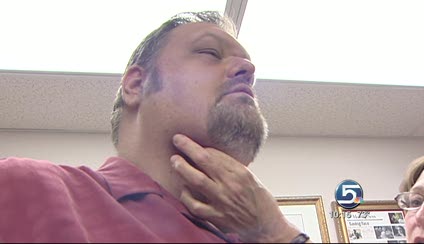
As Matthew Graham walks into the Capitol Theatre these days to sing with Utah Opera, he looks back at a fall from a ladder six years ago. He hit hard on the narrow edge of a chair directly on his throat.
Approximately 6 percent of the general population has a current voice disorder with women being more at risk. 45 percent of women will have a voice disorder in their lifetime versus 37 percent of men.
"This happened and I just remember thinking, that's it," Graham says.
The impact triggered what is called muscle tension dysphonia where the voice becomes pitch locked in a tonic or rigid state. He was unable to produce much sound at all, even while speaking.
"It took me three years just to get back to being able to sing again," Graham says, "and then it's taken another three years to get to where I feel comfortable singing in public."
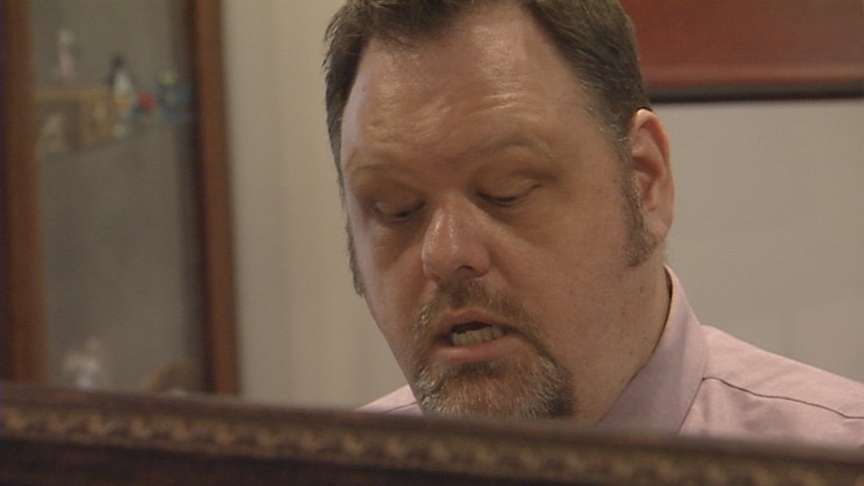
University of Utah clinicians came to the rescue. Since Graham's injury in 2004, the university's Voice Disorders Clinic and Surgical Center has become like a second home. Between the actual clinic and therapy, Graham has had more than a hundred sessions so far.
Treatments include massage to reposture the muscles and extensive therapy -- retraining the brain to allow the components of sound and tone to relax again.
Clinical director Dr. Kristine Tanner says, "[Graham] literally had to retrain how to produce voice just like someone in a car accident might have to retrain to walk."
Singing voice specialist Faye Muntz says the disorder has unpredictable outcomes.
"We don't have a lot of data on this type of an injury to say, ‘Yes, you're going to fully get it back or you're not," she says.
- Hoarseness
- Effortful talking
- Persistent pain or sore throat with voice use
- Reduced volume, chronic cough or throat clearing
- Reduced vocal endurance
Graham had planned to go to New York for a doctorate in vocal performance, but because of the accident, that never happened.
Though he's as assistant principal now in the Granite School District, Graham still sings with Utah Opera. As a dedicated educator he teaches young people like 15-year-old Josh Gandy at Eisenhower Junior High the art of the voice.
Meanwhile, this baritone, still recovering from that six-year-old injury, continues modifying the art within his own voice. He's singing to an "F" above middle "C" and pushing, though slowly, upward.
Experts at the University of Utah's Voice Disorders Clinic and Surgical Center say even with surgery now, the injured singing voice is 90 to 100 percent recoverable.
-----
E-mail: eyeates@ksl.com