- Chief Justice Matthew Durrant will retire from Utah Supreme Court on Aug. 31.
- Durrant, appointed in 2000, is Utah's longest-serving chief justice with 26 years total.
- The high court faces four vacancies, giving Utah's governor an opportunity to overhaul the Supreme Court.
SALT LAKE CITY — Chief Justice Matthew Durrant announced Friday he is retiring from the Utah Supreme Court.
He will officially retire on Aug. 31 after 14 years as chief justice and 26 years since joining the Utah Supreme Court. Durrant is the longest-serving chief justice in Utah's history.
His departure means Utah Gov. Spencer Cox now has four vacancies to fill after already nominating a new justice on the court seven months ago in October.
Durrant said serving Utah and working with other judges and court employees "has been the honor of a lifetime."
"I am deeply grateful for the opportunity to help strengthen the administration of justice in Utah," he said.
Cox called Durrant an "incredible human being" and "one of the best people I've ever met," when asked about the justice's announcement Friday.
"He's led the court with integrity for many years," the governor said. "I know he's had some health problems over the past few years. I was hoping he wouldn't be retiring anytime soon. ... We love him. We wish him well. We're grateful for his service to the state, and we look forward to working with him until the end of August."
Durrant was appointed in January 2000 by Gov. Michael Leavitt. Before his position on the Supreme Court, Durrant served as a 3rd District Court judge beginning in 1997. He graduated from Harvard Law School in 1984.
In 2024, Durrant was elected president of the Conference of Chief Justices, a national organization designed to strengthen and support state courts.
4 vacancies
Cox will now have a chance to overhaul the high court. It comes at a time when there has been rising anger from some GOP leaders toward Utah Supreme Court decisions on abortion and redistricting. The governor nominates judges, but the Utah Senate confirms them.
The Supreme Court will now have four vacancies after the Utah Legislature voted to increase the number of seats from five to seven earlier this year. Justice Diana Hagen resigned from her seat earlier this month following a complaint to the state's Judicial Conduct Commission alleging she had an improper relationship with an attorney who argued cases before the court.
Justice John Nielsen was confirmed to the Utah Supreme Court in November to fill a spot left by the resignation of Associate Justice John Pearce. That means Cox will have the opportunity to nominate five of the seven justices within 12 months and remake the court in his image.
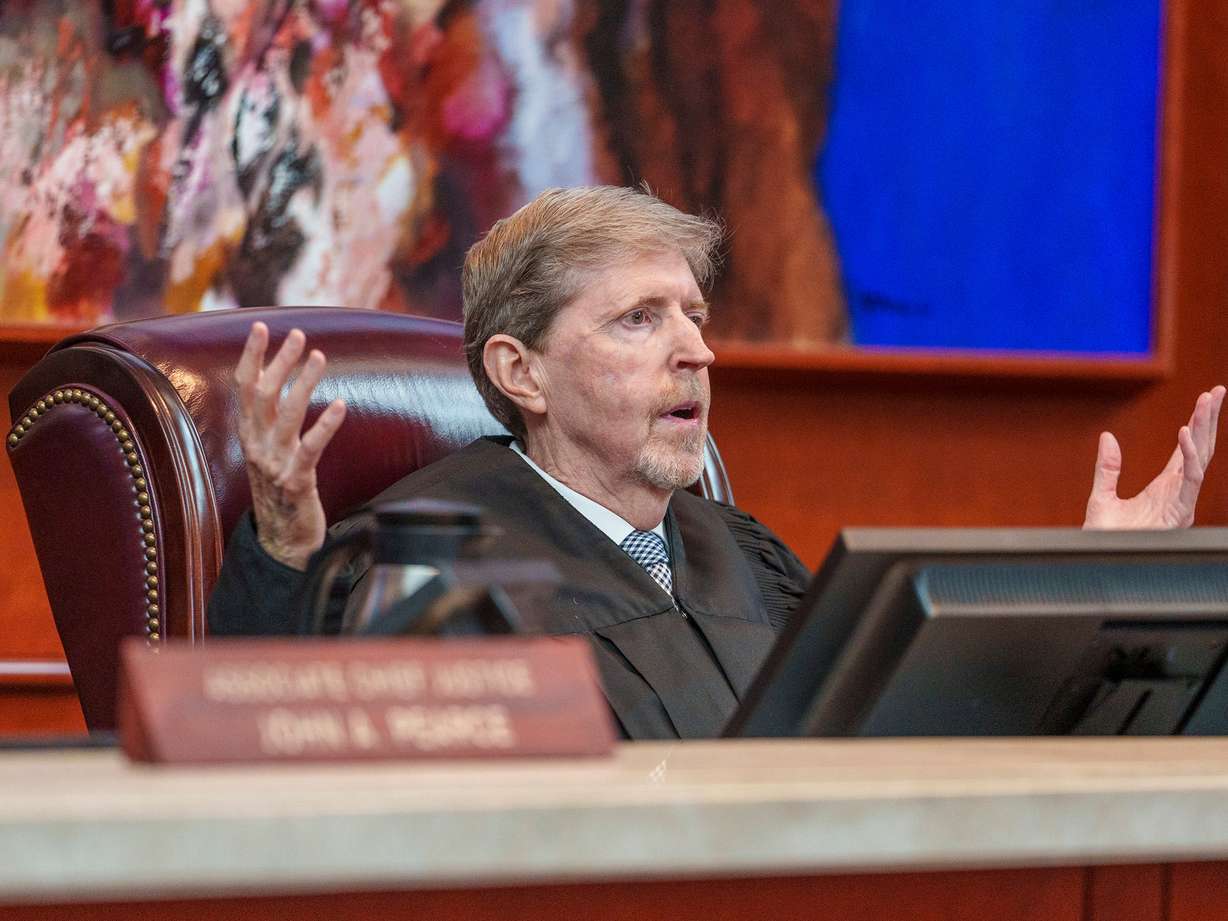
Associate Chief Justice Jill M. Pohlman and Justice Paige Petersen will be the only two remaining members who were on the high court before last year. Both were appointed by Gov. Gary Herbert.
While all justices have been appointed by Republicans and confirmed by the GOP-dominated state Senate in recent years, the court's pushback against the Legislature on redistricting and abortion rights will likely subject future appointees to intense scrutiny from lawmakers.
GOP lawmakers have proposed several changes to the court in recent years, and succeeded in adding additional justices to the Supreme Court and created a new panel of judges to hear cases involving constitutional issues.
Cox expressed disappointment with the Supreme Court's ruling in 2024 that opened the door to the congressional districts being redrawn, and supported efforts to appeal recent decisions against the Legislature and to qualify a constitutional amendment for the ballot that would have allowed lawmakers to draw districts however they want. That effort ultimately fell short of the threshold required for ballot access.
Durrant addressed the tension between the two branches of government in his State of the Judiciary speech earlier this year and pushed backed on some Republicans who have accused judges of acting as activists from the bench.
"There can and should be substantive disagreements, both within our respective institutions and between them," he said. "These disagreements are to be celebrated. And valid criticisms should always be welcome. They are signs of healthy institutions."
Durrant went on to say he applied "a presumption of good faith" to work done by lawmakers, and asked the Legislature to "afford us that same presumption."
Innovation and conviction
During his time as chief justice, Durrant was recognized for modernizing the courts and improving public access, a statement from the courts said. He oversaw the creation of the Office of Fairness and Accountability, which seeks to make the judicial branch of the government "more open, fair and efficient."
The Utah State Bar said he brought wisdom and integrity to the bench, and that the legal profession and its organization are "better for his involvement."
"What he built here, in the culture of the courts, in the careers he shaped, in the decisions that now anchor our jurisprudence, will not fade. Utah was fortunate to have him," the attorneys said.
He led by example, mentored other attorneys and judges and made all who appeared before him in court feel like they had been heard, the Utah State Bar said. Those who worked with him, the statement said, could tell Durrant's title did not matter to him, but the work did.
"Few judges leave a mark on a state's legal system the way Chief Justice Matthew B. Durrant has," the bar said. "He understood that the courthouse must be a place where ordinary people feel the law is working for them, not just a forum for those who can afford to navigate it. That conviction shaped his approach to administration, to technology, and to the culture of the court itself."