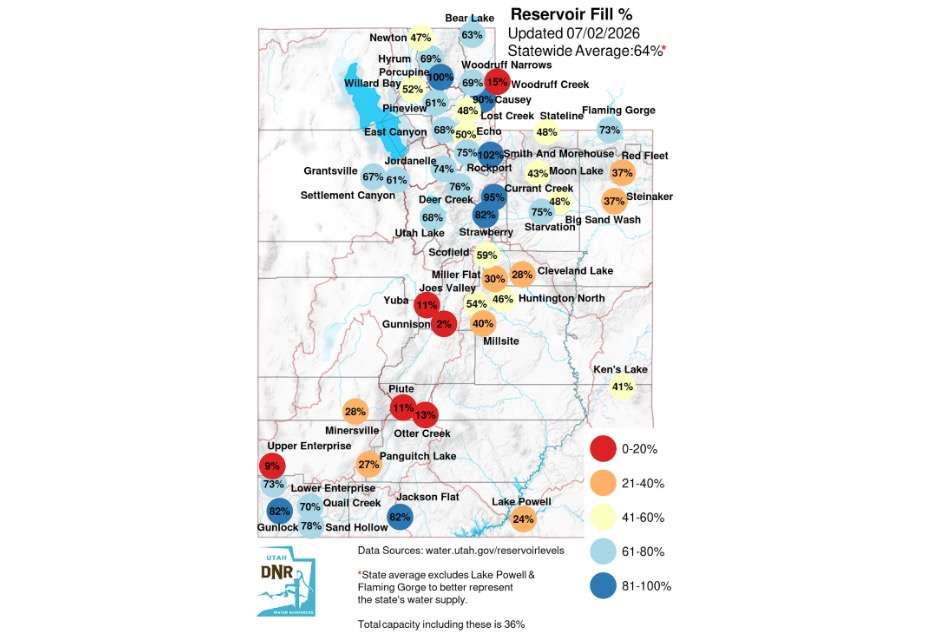
- Utah reservoirs are at 64% capacity, 11 points below July's median average.
- Six reservoirs, including Gunnison, have dropped to 15% or lower capacity.
- Over 40% of Utah is in extreme drought, impacting water levels and wildfire risks.
SALT LAKE CITY — Utah's reservoir system has fallen to a little less than two-thirds capacity at the midway point of the year as drought lingers, some construction projects begin and some serve as "dip sites" for the state's active wildfire season.
Utah's reservoir system entered July at 64%, which is 11 percentage points below its median average for July. It's also 15 percentage points below where it was in July last year, according to Utah Division of Water Resources data.
Six of the state's few dozen largest reservoirs have dropped to 15% or lower, including Otter Creek, Upper Enterprise Woodruff Creek and Yuba, while Gunnison Reservoir in Sanpete County has dropped to 2% capacity. State wildlife officials increased fishing limits at Otter Creek Reservoir and two others on Thursday because of low levels caused by drought, as well as four other bodies of water for upcoming construction.
The Great Salt Lake's southern arm has dropped to 4,191 feet elevation, over 1 foot below its spring peak, as well. It's about ½-foot above its northern arm, as both remain in the "serious adverse effects" range outlined in the state's management plan for the lake.
Lake Powell remains at 24% capacity, despite receiving increased inflows from extra releases at Flaming Gorge this year.
The decreases come as drought intensity has increased somewhat over the past week. Over 40% of Utah is now in extreme or exceptional drought, almost 2 percentage points above last week's U.S. Drought Monitor report. Almost 95% of the state is at least in severe drought, which hasn't changed.
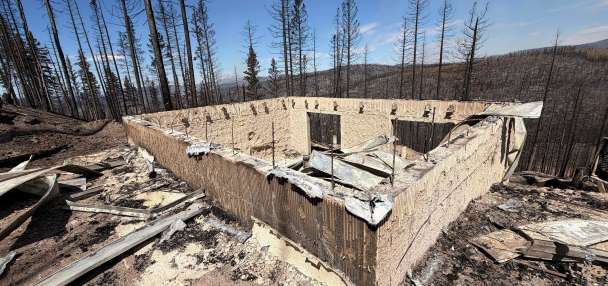
Wildfire impacts
While lake and reservoir levels typically drop in the summer months because of consumptive use and evaporation, Utah's active fire season has also factored in lowering water levels.
Kent's Lake, Minersville Reservoir, Millard County Road Reservoir, Scipio Reservoir and Utah Lake are among reservoirs that are predetermined "dip sites" for wildfires, and they're located next to some of this year's biggest fires.
"By mapping out approved water sources and establishing clear protocols with our partners and landowners well in advance, we ensure our aerial and ground crews can respond quickly," said Brianne Emery, deputy director of program services for the Utah Division of Forestry, Fire and State Lands, in a statement. "In a year like this one, our planning and relationships are more important than ever."
More than 335,000 acres have already burned from close to 400 different fires this year, state and federal firefighters reported Thursday afternoon. It's more acreage than the last four years combined and moving up in the history books, surpassing 2020's total this week as the most since 485,989 acres burned in 2018.
Hope for July
Hot and dry conditions are forecast to linger through the Fourth of July weekend into next week, but National Weather Service long-range outlooks still point to Utah having stronger odds for above-normal precipitation this month and over the next three months, offering hope for a robust monsoon season.
There are still questions about El Niño and how that will factor into everything this season. It can potentially delay the arrival of the monsoon until later in July or even August in Utah, Utah State University Extension experts point out.
"If this is the case, there will likely be heightened fire danger continuing into the beginning of July, but the risk of large wildfires may decrease further into July, depending on how the monsoon develops and progresses," they wrote on Thursday.
A good season would slow down, if not end, the fire season, as the remnants of Hurricane Hilary did in 2023. If storms don't come through, the fire season could continue into late summer and even fall. It could make this year one of the worst wildfire seasons in state history.
This will require Utahns to keep tabs on the conditions to help reduce human-caused wildfires this summer, university experts added.