- A Salt Lake City school launched a garden that educates about Utah native plants.
- The garden replaced unused lawn areas, promoting water conservation and local ecosystem.
- Utah's April 'Native Plant Month' encourages replacing nonnative plants with native species.
SALT LAKE CITY — Sonia Woodbury stood in front of a crowd of students and gardeners outside of City Academy to formally dedicate the Salt Lake City charter school's newest feature.
The "Go Native! Community Garden" was actually created outside of the school, 555 E. 200 South in the Central City neighborhood, in September, but this spring marks its first bloom. A little more than two dozen students helped select native plants like wild blue flax, western goldenrod and pineleaf penstemon, and designed how to plant them in a garden that replaces the park strips and unused parts of the property's lawn.
"We hope we have created a beautiful space where people will be able to connect, to learn and to grow alongside the plants for years to come," she said, as the sun tried to peek through the clouds on a warm spring afternoon, Wednesday.
Woodbury, the charter school's co-founder and recently retired executive director, had grander plans for the moment. She wanted to release a handful of butterflies that thrive on these plants but opted against it with freezing conditions in the forecast that would threaten their survival.
However, that didn't detract from the moment about two years in the making.
It all started when members of the Salt Lake City Garden Club discussed their desire for a community garden that highlights native plants to inspire residents to do the same in their own yards. Woodbury learned about it and suggested bringing it to the school she helped oversee at the time, while also making it an educational moment for her students.
Native plants are vital for water conservation because they thrive in the drier conditions, and they're important for other environmental factors, such as pollinator species, said Kjori Boyd, the club's president. The organization collaborated with Gov. Spencer Cox to have April designated as "Native Plant Month" in Utah, where the state encourages replacing nonnative invasive plants with more native trees and flowers.
City Academy, Woodbury said, has partnered with other outside organizations in the past on various other hands-on educational opportunities. The garden could help them learn about their home's native ecosystem, the power of plants and design planning.
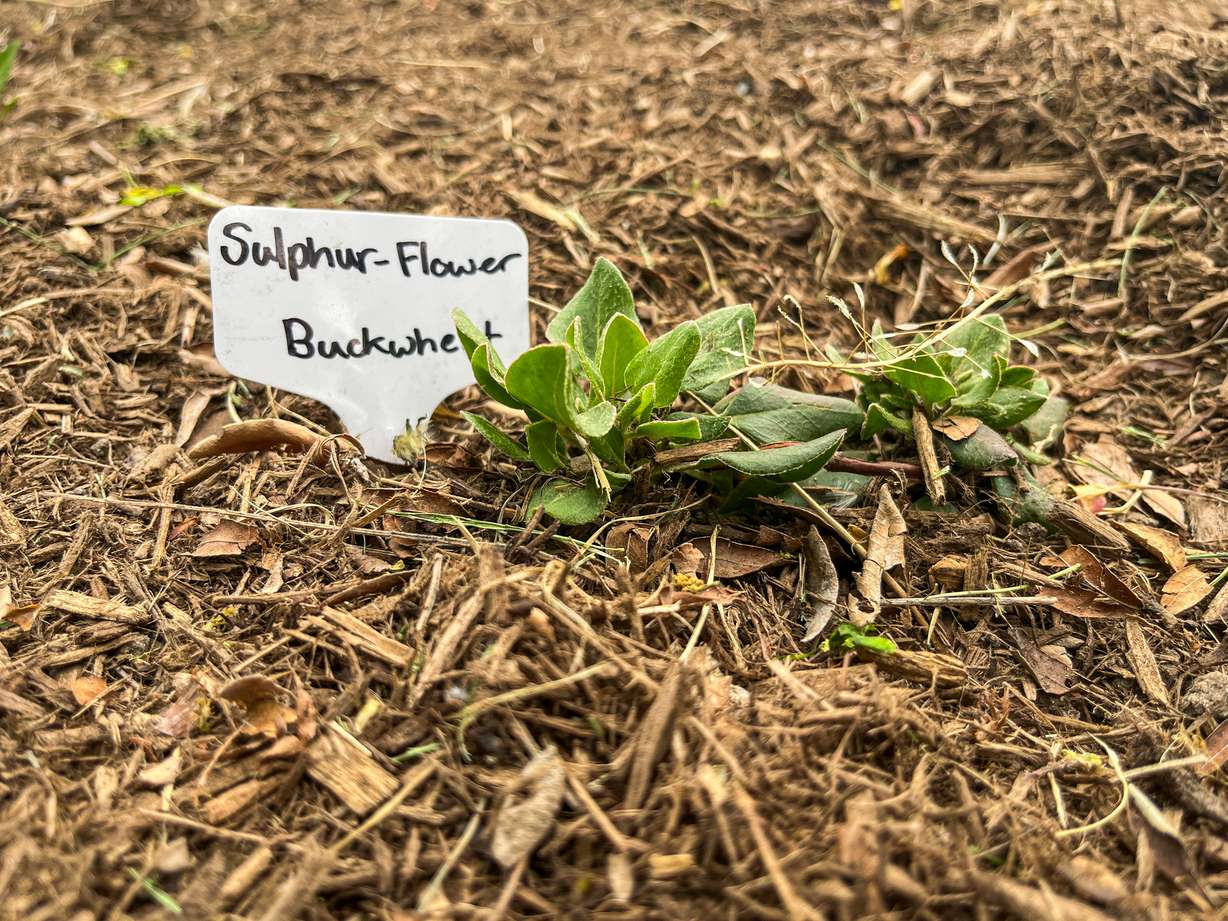
Beyond student education, it could attract people who enjoy gardening or native plants, or people who care about the environment or pollinators, or are just passing by to take a moment to enjoy the garden as it grows — and possibly take an idea back home with them. A sign was placed alongside every plant to identify them, in case someone wanted to do the same in their yard.
Woodbury says students will continue to maintain the garden for years to come, while also possibly taking similar measures inside their own homes now and in the future.
"This is meant to be something that can help change our community, and be beautiful, supportive and therapeutic," she said. "It's a lot for the future."
Trying it at home
It's what one of Utah's top landscape conservation experts would like to see, especially as conservation returns to the public focus. The state is prone to drought cycles, but this year's record-low snowpack and snap drought combination heading into the planting season is a new hurdle to understand, said Cynthia Bee, a sustainable landscapes expert for Slow the Flow, Utah's water conservation campaign.
She admires how students flipped unused lawn spaces into a garden, which she said is a common situation at many Utah homes. Park strips and side yards are usually the top offenders.
"We're not telling everyone they have to get rid of all their lawn ... but we want people to start thinking that a lawn is a recreation surface. We're only going to use it in places that we can actively recreate. If that's not the case, there are better ways to use that space," she told KSL.
This water year has already renewed interest in water-wise landscaping, which is normally the case during drought, she added. She recommends that residents explore newer water technologies like smart sprinklers. For those looking to xeriscape, it's best to start small and do research to see what the best option is.
Utah provides incentives for certain projects, tools to explore native plant options and access to experts. These aim to help residents afford projects, while coaching them through the process. A xeriscaped lawn done right usually ends up encouraging neighbors to join, driving down future water demand.
"If people are in a position to make a change, we want them to make a change," Bee said. "At the end of the day, we are all equally obligated ... to do the best (we) can to be a good steward of the resource for which (we) have control."