- Over 150 scientists sent a letter to federal officials defending protections on Grand Staircase-Escalante National Monument on Thursday.
- The letter called on Congress to vote against use of Congressional Review Act introduced by Rep. Celeste Maloy and Sen. Mike Lee.
- The letter claims the act threatens scientific research and sets a dangerous precedent for land management.
SALT LAKE CITY — More than 150 scientists, researchers and educators representing 32 states and 13 different scientific organizations sent a letter to federal officials Thursday defending protections for Grand Staircase-Escalante National Monument.
Referring to it as "the science monument," an "unparalleled living laboratory" and "one of the most important living laboratories in North America," they called on Congress to vote against use of Congressional Review Act introduced by Rep. Celeste Maloy and Sen. Mike Lee to overturn the monument's land management plan.
"We write to reaffirm our deep concern regarding threats to the scientific integrity, management, and long-term protection of Grand Staircase-Escalante National Monument," reads the opening paragraph of the letter addressed to the Trump administration, the Department of the Interior and to each member of the Utah congressional delegation.
"Specifically, the Utah delegation's reckless gambit to toss out the monument's management plan using the Congressional Review Act risks not only the scientific objects of interest within the boundaries, but also the future of research and scientific discovery in this unique landscape."
Lee and Maloy say the land-use plan represents an overreach of the federal government that did not do enough to prioritize the sentiment of people who live adjacent to the monument and was too restrictive of the Bureau of Land Management's "multiple use and sustained yield" mandate.
"Grand Staircase-Escalante is worthy of protection. It's one of the last places that still feels truly untouched by modern life. But its future cannot be dictated by distant officials who will never bear the costs of their decisions," Lee wrote in an op-ed for the Deseret News.
Related:
How Utah Republicans are undoing the Grand Staircase-Escalante management plan
The Utah congressional delegation took steps last month to overturn the current Grand Staircase–Escalante National Monument management plan under the Congressional Review Act."The Congressional Review Act exists for moments like this. When agencies impose rules with generational consequences without the consent of the American people or their representatives, Congress has the authority and the responsibility to review them and ensure that the people are not simply presented with a fait accompli."
What is Grand Staircase-Escalante's scientific value?
The letter lists some of the region's most significant impacts to global scientific discovery, including findings since the group last wrote to the Trump administration in 2017, asking for the monument's protections to remain in place.
According to the letter, the monument's impacts to planetary science, archaeology, biodiversity research, and dark sky science can not be overstated. Nor can its value for bee populations responsible for pollinating the agriculture of the broader region.
"From unique, high scientific value fossil deposits, to irreplaceable archaeological and cultural sites, to critical populations of plants that may yield medical discoveries and provide knowledge to deal with our planet's increasing temperatures, the Grand Staircase-Escalante National Monument has rare and vital scientific value to benefit human communities," Len Broberg, a University of Montana emeritus environmental studies professor, said in a statement.
"These resources are found throughout the monument and should continue to be protected."
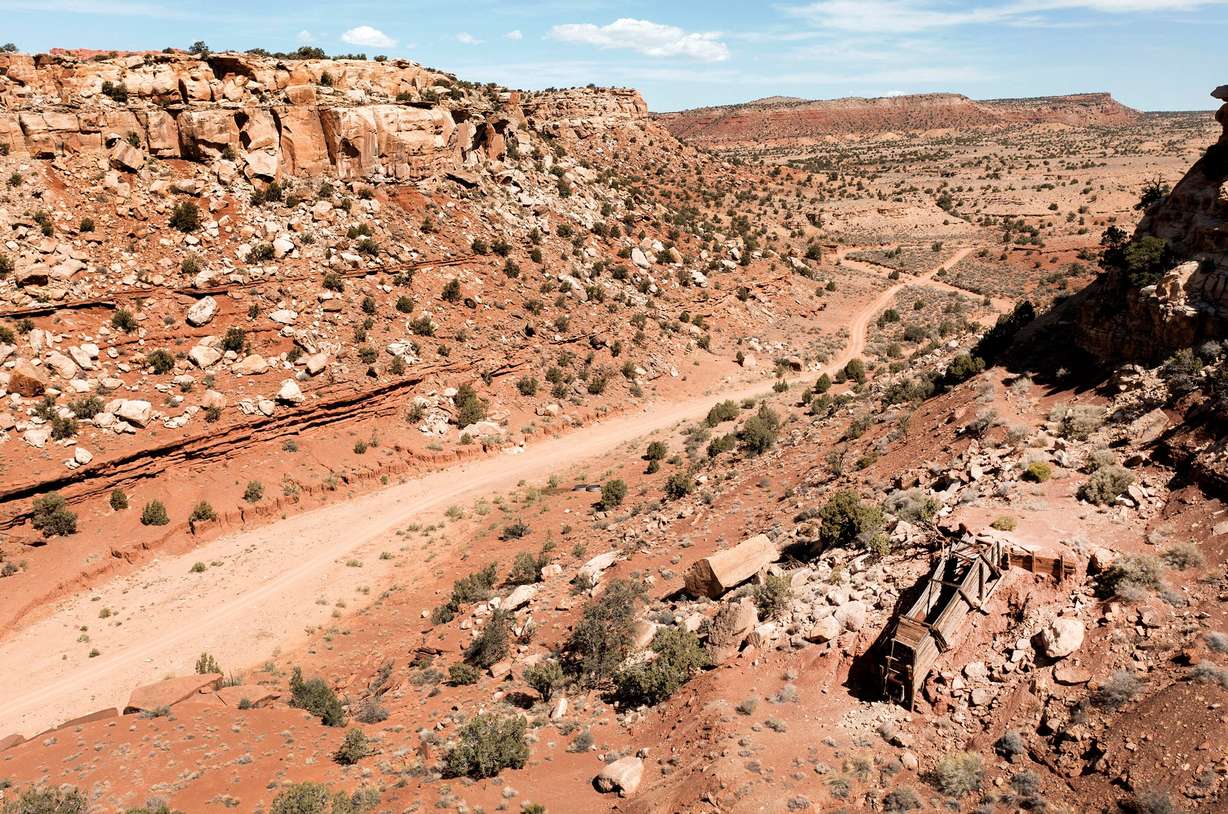
Regarding paleontology, the letter highlights how Grand Staircase-Escalante remains one of the best repositories of the planet's prehistory. Recent dinosaur findings include the flying pterosaurs and the "incredible large-bodied lizards known as 'monstersaurs.'"
"This proposed legislation would cause irreparable damage to Utah's, until now, preeminent position as one of the world's most important centers of dinosaur and other paleontological research," Stuart S. Sumida, president of the Society of Vertebrate Paleontology, said in a statement.
A dangerous precedent?
The letter also strongly emphasizes the dangers posed by using the Congressional Review Act to overturn the monument's land-use plan.
"Using the CRA to remove public and scientific input on management plans represents a dangerous precedent," reads the letter. "The CRA has historically not been used to nullify public lands management plans, and its application in this context threatens not only Grand Staircase-Escalante, but the stability of science-based land management across the United States ... Scientific advancements depend on consistency."
Sumida called the use of the Congressional Review Act "legislative trickery" that is "a shortsighted land grab," and said its use in this instance will hurt ecotourism and its positive impact on Utah and the American West, but also demonstrates a lack of respect for indigenous communities' work to establish and protect the monument.
It ended with the signers urging federal leaders to reject the use of the Congressional Review Act and maintain protections and science-based management for the monument.