- Rubio denies offering Iran sanctions relief for reopening Strait of Hormuz.
- Sanctions relief is tied to Iran abandoning its nuclear program, Rubio states.
- Trump administration seeks foreign affairs budget cuts and increased military spending.
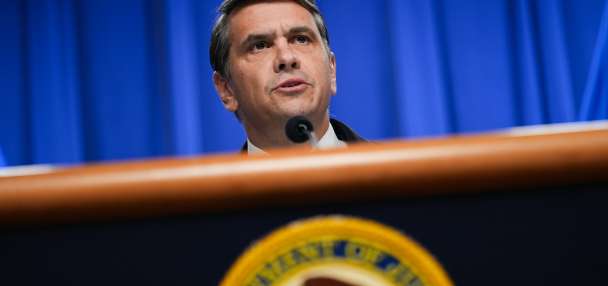
WASHINGTON — Secretary of State Marco Rubio said on Tuesday that President Donald Trump's negotiating team has not offered Iran sanctions relief in exchange for reopening the Strait of Hormuz and insisted that any sanctions relief was tied to Tehran giving up its nuclear program.
"Right now, everything that's been discussed with them (Iran) is that … any sanctions relief is condition-based, which means it has to be in return for the reason why those sanctions were put in place in the first place, which is their nuclear program," Rubio told a Senate hearing.
Testifying in Congress publicly for the first time since the Iran war began, Rubio said there will be sanctions relief for Iran if they agree to give up their nuclear activities.
"Iran is being sanctioned because they've highly enriched uranium. Iran is being sanctioned because of their nuclear activities. If they agree to give up those things, there will be sanctions relief associated with their commitment and compliance with those agreements," he said.
Rubio testified to the Senate Foreign Relations Committee on Tuesday morning as the Trump administration seeks congressional approval for its proposed 30% cut to the foreign affairs budget and a 50% increase in military spending.
He was to appear at three other hearings later on Tuesday and on Wednesday, as his fellow Republicans have been showing signs of concern about the Iran war.
Rubio, who also serves as Trump's national security adviser, was a senator from Florida until January 2025, and lawmakers said they hoped their former colleague would spell out a strategy for ending the Iran conflict, which started with strikes by the U.S. and Israel on Feb. 28.
Senator: Constituents didn't ask for regime change
Rubio has joined other top administration officials in speaking to members of Congress about the Iran war behind closed doors, but has not testified publicly on the conflict.
Sen. Jeanne Shaheen, the top Democrat on the foreign relations panel, blasted Rubio for failing to provide information to Congress about the administration's plans.
"When I talk to my constituents, they asked for economic relief at home, not regime change in Havana or Caracas or Tehran," she said.
"Instead, you sent Congress a war powers notification saying we are not in active hostilities with Iran, while the U.S. was conducting strikes against Iran, and Iran was bombing U.S. embassies and bases throughout the Middle East. That was not consultation, it was an attempt to avoid answering to this committee and this Congress about this war."
Americans have voiced mounting frustration over rising prices, and Trump's fellow Republicans hope he can get the Strait of Hormuz reopened and lower U.S. gasoline prices before November elections that will decide whether the party retains its slim majorities in Congress.
Trump must also contend with Iran hawks in his party who oppose any concessions to Tehran.
Will there be a deal to end war?
Trump and his supporters insist the war will have been worthwhile if it keeps Iran from obtaining a nuclear weapon. Trump also insists that gasoline prices will come down and has insisted for weeks that he will reach a good deal to end the conflict.
Iran wants an interim agreement with sanctions relief that would allow it access to billions of dollars in oil revenue, but Washington has continued to add sanctions against Iranian actors while talks have taken place.
Rubio did not specify when there might be such a deal. He said Iran had intended to build up its conventional weapons capabilities as a "shield" for its nuclear program. "What they tried to do is they were going to try to build a conventional shield and hide behind that conventional shield," he said, spelling out why Trump felt it was imperative to launch the war.
Lawmakers, including some of Trump's fellow Republicans, have been increasingly questioning the fighting, as the Iran conflict enters its fourth month.
Last month, the Senate voted to advance a war powers resolution that would end the Iran conflict unless Trump obtains Congress' authorization. Days later, House leaders abruptly postponed a vote on a similar resolution when it looked likely to pass.
Senators also asked about U.S. forces firing on boats off Venezuela since September, in a campaign the administration says is intended to stop "narco-traffickers" that has killed more than 200 people.
Some criticized the administration for sharp cuts to U.S. foreign aid, citing reports saying hundreds of thousands of children have died since the U.S. abruptly ended foreign aid programs last year, and the severity of an Ebola outbreak in Africa.
Rubio said the U.S. would re-engage with the global vaccine alliance Gavi. He said the decision to re-engage had been made a few weeks ago, after the Trump administration pulled funding from Gavi last year.