
Estimated read time: 3-4 minutes
This archived news story is available only for your personal, non-commercial use. Information in the story may be outdated or superseded by additional information. Reading or replaying the story in its archived form does not constitute a republication of the story.
CAMP WILLIAMS -- In 2001, Congress created a program to address the issue of unexploded bombs and artillery shells and near military bases. In some places, land previously used for live-fire exercises is no longer used. That's also the case at Utah's Camp Williams.
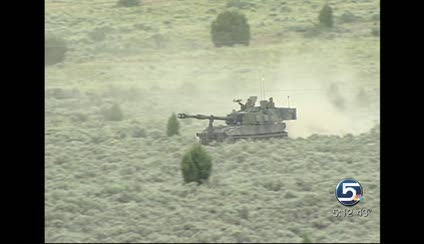
The facility has been used by the army for training exercises for about 100 years. For much of that time, it was a long way from any city or town: a perfect location to conduct live artillery training.
Now cities and towns and people are creeping closer, so the federal government created the Military Munitions Response Program. With that, Camp Williams has just formed an advisory board, which will work to educate citizens about what to look for.
During training exercises, sometimes the bombs don't explode when fired from a tank or large gun. Through the years, those numbers have added up.
"The importance has increased dramatically over the last several years because of development. So we need to be more able to assess, evaluate and clean up any leftover munitions that may be there in areas where we don't train anymore," said Lt. Col. Hank McIntire, spokesman for the Utah National Guard.

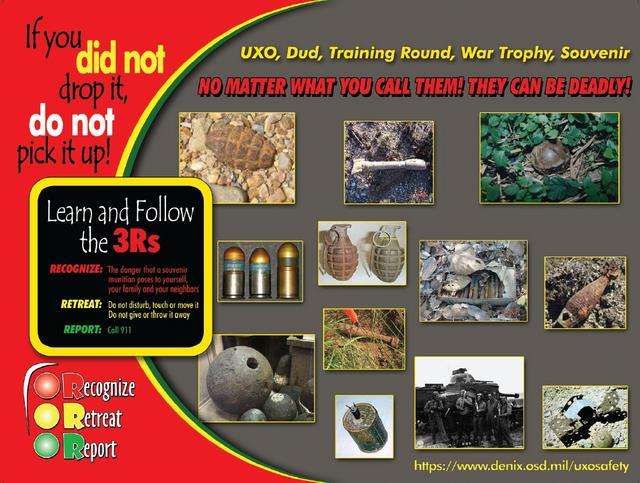
- Pointed pipe
- Soda can
- Baseball
- Muffler
The federal government has provided funding and equipment to 300 military installations in the country to take care of the problem.
At Camp Williams, there are six locations, covering about 6,300 acres, that are no longer used. The guard turned the land over the private developers, farmers and ranchers. These areas are located very close to the expanding communities of Bluffdale, Herriman, Lehi, Eagle Mountain and Saratoga Springs.
"Even though we don't control the land anymore, we did have access to it at one time, and we want to make sure that land is safe," McIntire said.
Unexploded shells have been found at Camp Williams in the past.
"We're confident that whatever's on the surface has been cleaned up, but there may be things below the surface that, because of accumulation of soil, winds, those factors, that we need to detect. And now we have the resources and the funding to be able to do that," McIntire said.
Recognize: Recognize when you may have encountered a munition
Retreat: Do not touch, move or disturb it, but carefully leave the area the way you entered
Report: Call 911! Immediately notify local law enforcement of what you saw and where you saw it
The newly-formed Camp Williams Restoration Advisory Board is made up of citizens of the nearby communities and the Utah National Guard. Their job is to help educate the public about what to watch for on these lands, and what to do in case they find something.
McIntire wants citizens to remember what he calls "The Three Rs:" recognize, retreat and report.
"So, if we can help instill those Three Rs in the surrounding communities, if there's a munition that's been discovered, we're more likely to make sure that it's rendered safe," he said.
The first meeting of the Camp Williams Restoration Advisory Board is scheduled for Feb. 25 at 6 p.m. at South Hills Middle School in Riverton. The public is invited to attend and provide input.
E-mail: kmccord@ksl.com
---