Estimated read time: 4-5 minutes
This archived news story is available only for your personal, non-commercial use. Information in the story may be outdated or superseded by additional information. Reading or replaying the story in its archived form does not constitute a republication of the story.
SALT LAKE CITY -- A Utah couple recalls what happened when their son became addicted to pain pills, what they did to try to help him beat his addiction and how he lost his battle with prescription drugs.
A family's fight to save their son comes up short
When Murray Mayor Dan Snarr returns home from work, a typical evening might find his son-in-law shooting hoops in the backyard and his wife April Snarr cleaning around the house or watching a grandchild. But as normal as everything looks, there is a piece of the family missing. The Snarr's son Denver died in 2007 after eight years of battling a prescription drug addiction.
"He was always out doing things for others, always helping people in need," said Dan Snarr.
"And you know it's your child, and you want to think the best of them. I remember thinking, 'Oh, he's OK. He'll be fine.' We were in la-la land. We didn't get it," said April Snarr.
The Snarrs say their son became addicted to pain pills after multiple surgeries, some sports related. They say he was an active person that became depressed when his injuries kept him from joining the Marines and participating in his normal activities.
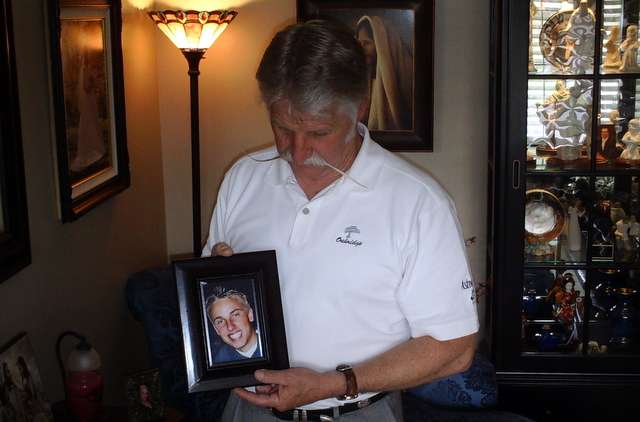
April Snarr said it was hard to think her son was addicted, even after some of her own pain medication started disappearing after a back surgery. At first she called the pharmacy thinking they hadn't given her enough pills, but eventually Denver confessed to his pill problem.
"He comes to us and says, ‘Oh, I'm hooked on Loritabs. I take 40 Loritabs at a time.'"
From there the Snarrs tried to help their son overcome his addiction with various stays in rehab.
Dan Snarr recalls many talks with Denver trying to reassure him it was OK that he had made mistakes in life, and that he needed to get over the addiction.
He was always out doing things for others, always helping people in need.
–Dan Snarr.
One morning, after a few months where they thought their son had been doing better and getting off the pills, April Snarr found their son dead in his room. He had overdosed.
Now the Snarr family is calling on parents, doctors, pharmacists and law enforcement to do what they can to stop the growing prescription abuse problem in Utah.
The state's efforts at stopping prescription drug abuse
Drug Enforcement Administration Special Agent in Charge of the Denver Field Office Jeffery Sweentin recently announced the start of what is being called the "Utah Pharmaceutical Drug Crime Project." It's a collaboration of law enforcement agencies, state agencies and medical professionals to try to stop the flow of prescription drugs to abusers around the state.
"Utah is seen throughout this country as a leader in an area we don't want to be a leader in, and that's the abuse of pharmaceuticals," said Sweentin. "Hopefully from this partnership will come severe criminal liability for people that don't operate in the gray area, people that operate so far into the organized crime area of distribution of these substances that it is clearly in need of prosecution."
Department of Commerce Executive Director Francine Giani says they've been working to fix the slow entry. She says in the coming months, they're trying to make the system work in real time, perhaps using an iPhone application.
Giani said, "An emergency room doc can just pull up John Doe's name on his iPhone and take a look at what scripts he's been on. "
She says doctors are so busy there has to be a way they can look up the information quickly and know the patient hasn't been shopping around for pills at other medical offices. Giani says it will take a lot of cooperation from pharmacists to make the system work at real time, but they're optimistic it can be done.
E-mail: rjeppesen@ksl.com