Estimated read time: 3-4 minutes
This archived news story is available only for your personal, non-commercial use. Information in the story may be outdated or superseded by additional information. Reading or replaying the story in its archived form does not constitute a republication of the story.
KSL Newsradio's Marc Giauque reportsEfforts announced this week to reshape downtown are not the first over the decades. But backed by more than $1 billion, this is one prompting a lot of optimism.
But there are also efforts beyond the footprint of the Church of Jesus Christ of Latter-day Saints' development.

In 1973, KSL Television put together a documentary on downtown, titled "Finally a Skyline". "The old appears to be competing with the new in downtown Salt Lake City," said Channel 5 anchor Dick Nourse in that documentary, "but it's the old which is giving way."
"The other evening I was up at the University Club Building, looked out at the skyline and I counted 11 cranes," said Zions Bank's Fred Ball in that documentary.
Back then, the downtown Hilton was about to be built, new office towers like the JC Penney building were going up. The ZCMI mall was under reconstruction. A little ahead of that time, people like Walker Wallace were trying to bring new life to downtown in other ways.
"Salt Lake has had a hard time maintaining itself as the heart of the region," said Wallace, "and it has successfully done that, I think, primarily because of the LDS church."
Still Wallace says geographically, downtown might have fared better had it been in the center of the valley.

In the 60s Wallace was part of the city's so-called Second Century plan, which he says contained some of the ideas drawn for today's makeover, open space, not necessarily what he calls fortress malls, and places to live downtown.
"Interestingly, that's a kind of throwback to a condition that existed in the 19th Century, when wealthy people lived close to the middle of downtown," said historian and author Thomas Alexander.
Alexander, a history professor and the author of "Grace and Grandeur", a history of downtown, says with plans announced this week, Salt Lake has suddenly become a leader in a new downtown trend. That's all fine for retail.
But what about night-life? That's where people like Bill Zierle may figure into the equation. He runs a quaint Hawaiian sushi shop, on Broadway. Zierle, by the way, rides a bamboo bike.

"This is number two of the bamboo bicycle line," said Zierle.
Daytime business right now is good. But at night... "Sometimes it's really good, and sometimes it's not."
Zierle's Aloha Sushi is in an area some want to create as a night-time destination, an entertainment district.
"People like to go where people area," said Scott Beck, of the Salt Lake Convention and Visitor's Bureau, "so the idea is to create a concentration or a density of places like restaurants, bars and night-clubs."
Beck said he's not necessarily talking about bars, but something centered around entertainment. He envisions a stretch of Broadway, between the Rio Grande and Main Street, where tourists could be directed at night.
"If you ever walk from Broadway to Rio Grande, there's some real neat things you walk by," he said. Among the attractions are an increasing number of restaurants, like PF Chang, Iggys, Squatters, Christopher's Steakhouse and others. Beck says the idea of filling many vacant properties with similar businesses is moving ahead.
"The beginning stages were talking about the need for such a district, the desire for the community to embrace it. We're now to the point were we are two weeks away form endorsing the location as an organization," he said.
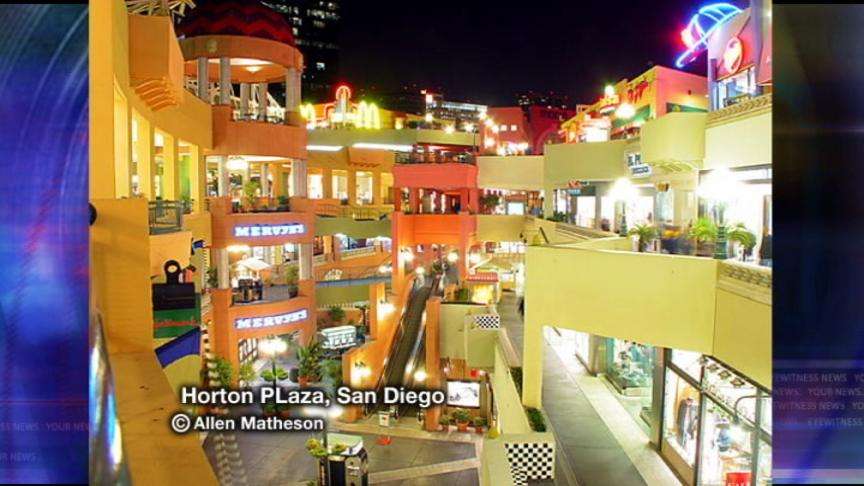
Beck envisions something like San Diego's Gas Lamp district, or Seattle's Pike Street. He likes Broadway, because it's a respectful distance from LDS Church properties. But he admits it won't be a slam dunk.

For one thing, the city, not the state, would have to change an ordinance limiting the density of businesses serving liquor.