'%3e%3cpath%20d='M34.1406%205.85938C30.3906%202.10547%2025.3047%200%2020%200C14.6953%200%209.60938%202.10547%205.85938%205.85938C2.10938%209.61328%200%2014.6953%200%2020C0%2025.3047%202.10547%2030.3906%205.85938%2034.1406C9.61328%2037.8906%2014.6953%2040%2020%2040C25.3047%2040%2030.3906%2037.8945%2034.1406%2034.1406C37.8906%2030.3906%2040%2025.3047%2040%2020C40%2014.6953%2037.8945%209.60938%2034.1406%205.85938ZM37.0117%2023.543H31.1602V13.5391H27.6328V19.9414C28.1211%2020.6914%2028.3711%2021.582%2028.3711%2022.5625V22.625C28.3711%2023.668%2028.1172%2024.6055%2027.6328%2025.4297V26.6094H36.082C33.4883%2032.9375%2027.2891%2037.3789%2020.0039%2037.3789C10.3711%2037.3789%202.62109%2029.6289%202.62109%2020C2.62109%2010.3711%2010.3711%202.62109%2020%202.62109C29.6289%202.62109%2037.3789%2010.3711%2037.3789%2020C37.3789%2021.1484%2037.2617%2022.2656%2037.0508%2023.3477C37.0391%2023.4141%2037.0234%2023.4766%2037.0117%2023.543Z'%20fill='white'/%3e%3cpath%20d='M22.3086%2018.5352C20.4336%2018.125%2019.9531%2017.8398%2019.9766%2017.1836V17.1406C19.9766%2016.6992%2020.3477%2016.2148%2021.4023%2016.2148C22.582%2016.2148%2023.8867%2016.6797%2025.0781%2017.4766L26.8516%2015.0195C25.4453%2013.8906%2023.707%2013.3398%2021.5547%2013.3398C18.5195%2013.3398%2016.4375%2015%2016.4063%2017.4766V17.5352C16.3633%2020.2617%2018.5859%2020.9805%2021.293%2021.6016C23.0391%2021.9766%2023.5703%2022.3164%2023.5703%2022.9609L23.5469%2022.9766C23.5469%2023.3906%2023.2578%2023.7031%2022.7852%2023.8359C22.5742%2023.9062%2022.1289%2023.9727%2021.5156%2023.9727C20.7617%2023.9727%2019.7539%2023.8633%2018.6328%2023.4844C18.0898%2023.2891%2017.4727%2023.0039%2016.8047%2022.6133L20.1406%2026.625C20.2813%2026.6602%2021.0977%2026.8516%2021.7734%2026.8516C25.0039%2026.8516%2027.0859%2025.2461%2027.1094%2022.6328V22.5703C27.1602%2020.1133%2025.2148%2019.1719%2022.3086%2018.5352Z'%20fill='white'/%3e%3cpath%20d='M5.24219%2013.5664V26.6133H8.75391V23.7578L10.2969%2021.9531L14.2031%2026.6133H18.3867L12.3555%2019.5195L17.4023%2013.5664H13.4531L8.75391%2019.0586V13.5664H5.24219Z'%20fill='white'/%3e%3c/g%3e%3cdefs%3e%3cclipPath%20id='clip0_97_2430'%3e%3crect%20width='40'%20height='40'%20fill='white'/%3e%3c/clipPath%3e%3c/defs%3e%3c/svg%3e)




- Salt Lake City reduced tax incentives for a Utah development by $1 million for demolishing a historic building.
- Blaser Ventures demolished the Utah Pickle Company building last year, citing preservation challenges.
- It was rebuilt using some of the old materials for project on track to open in August.
SALT LAKE CITY — Leaders of Utah's capital city found themselves in a pickle as they reviewed a "blemish" in the much-anticipated Pickle & Hide project, in that it offered city funds to preserve a building that ultimately ended up demolished before their approval.
That blemish will ultimately cost the developer, Blaser Ventures, about $1 million in incentives, which its founder says will sting but allows him to continue developing as both sides learn from what went wrong.
"The only finger I can point at is myself," Brandon Blaser, the company's founder and CEO, told KSL after members of the Salt Lake City Community Reinvestment Agency's board of directors finalized the project's tax incentives on Tuesday.
"There was no malintent," he added. "It was not anything dishonest, so hopefully people will be able to judge us from the end product, which I think will be unique and additive to the Granary and overall Salt Lake City market."
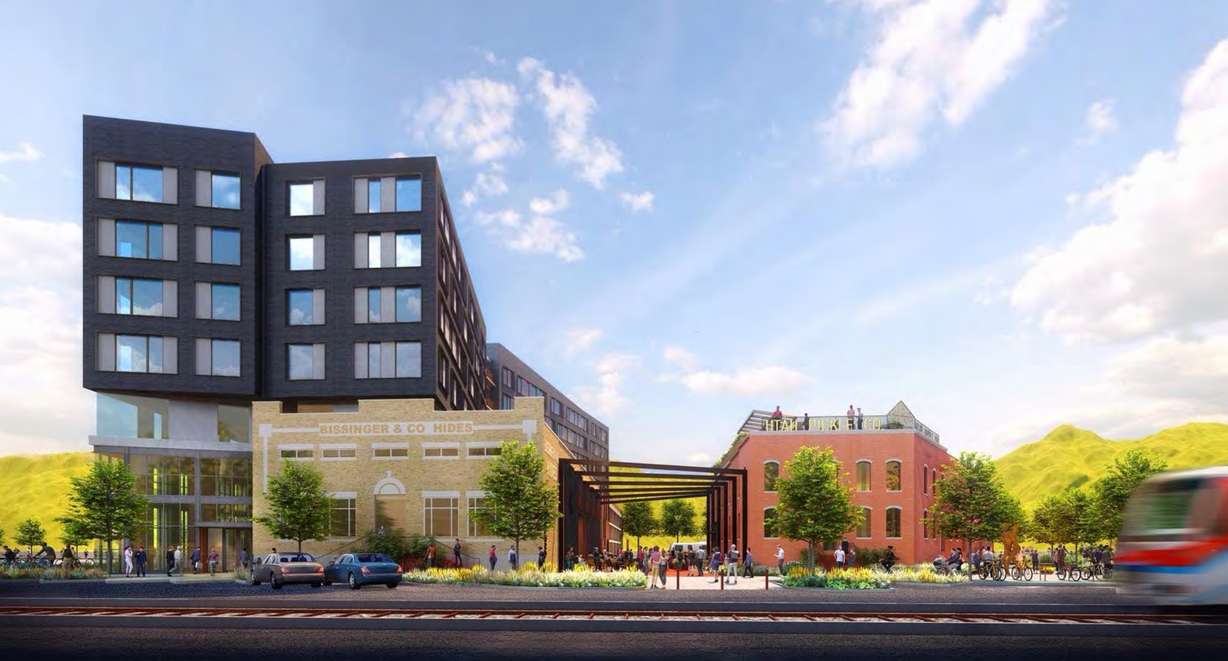
The drama revolves around the historic Utah Pickle Company building, 741 S. 400 West, in the city's Granary District, which had stood near downtown since 1894. Salt Lake City agreed last year to offer incentives to preserve the building — and ensure it included other measures — within Blaser's mixed-use development planned in and around the building.
The project, also wrapping in the historic Bissinger Company Hides building, required affordable housing, an "activated" ground-floor space plan and other city policies to qualify for tax reimbursement from the city's 900 South Housing & Transit Reinvestment Zone program.
Blaser said his company "fought hard" to preserve the Pickle building as part of a project that cost more than $90 million, but it was determined that the only feasible option was to demolish the building and rebuild it with as many original materials as possible.
It was torn down shortly after the agreement and rebuilt to resemble the old structure with a large chunk of its old materials.
What happened between the agreement and demolition boiled over into Tuesday's meeting.
Blaser obtained the proper demolition permits from the city, while his staff alerted city employees to their project shift before demolition, moving quickly to avoid costly delays.
That message apparently did not reach the Reinvestment Agency's board of directors, which is composed entirely of City Council members, until it was too late. They heard from neighbors and preservationists who were upset that the historic building was torn down, or from a closed session on the matter.
"It is very disappointing to see what we consider a partner not respect this partnership in a way that was not transparent and fair to the city," said Salt Lake City Council Chairman Alejandro Puy, pointing out that the city waived many other elements it normally requires in incentives to preserve the building.
"When people are being dishonest, I struggle with that," he later added, saying he appreciates that the structure was rebuilt, but the meeting could have been avoided if Blaser had contacted the board before knocking down the building.
The board agreed to maintain a 90% reimbursement on tax increments for up to 15 years, but reduced Blaser's maximum reimbursement rate cap from nearly $6.1 million to almost $5.1 million.
It accounts for money associated with preserving the building, though the board still acknowledged benefits from affordable housing and other elements of the project.
A 'learning experience'
Other board members appeared more forgiving, as Tuesday's meeting turned into more of a postmortem than a sentencing hearing. The city brainstormed ways to ensure that term sheets aren't changed unless approved by the board beforehand, so that what happened last year doesn't happen elsewhere in the city.
Part of the confusion may have come from the lack of experience. Blaser is a relatively new Utah developer, and the project was the first to test the reinvestment zone, which was established in 2023 to spur redevelopment in an old industrial core.
"It's definitely a learning experience, I think, for the city and for ourselves," Blaser said.
The building is on track to open in August. Culinary Dropout and Uchi, a pair of higher-end chains that will be new to Utah, have already signed leases to operate out of the complex. The sales tax from those alone should help balance out incentives, he said.
It's just an unfortunate situation. I'm glad we can move forward on this."
–Salt Lake City Councilman Chris Wharton
While they all agreed on the frustration and that it must remain a one-time mishap, some on the board credited Blaser for remedying the situation through adaptive reuse. Others said they didn't want a single mishap to ruin partnerships with developers who have committed to affordable housing and other key needs.
The experience may help future communications, especially with projects involving historic buildings.
"I think we are all trying to do the right thing here, which I think is build something that adds to the vitality of our city, and adds to the affordability of our city," said City Councilman Chris Wharton. "There's just no way to do that and still have the city maintain its character if you lose the historic landmarks, so I think we missed the mark. ... It's just an unfortunate situation. I'm glad we can move forward on this."