'%3e%3cpath%20d='M34.1406%205.85938C30.3906%202.10547%2025.3047%200%2020%200C14.6953%200%209.60938%202.10547%205.85938%205.85938C2.10938%209.61328%200%2014.6953%200%2020C0%2025.3047%202.10547%2030.3906%205.85938%2034.1406C9.61328%2037.8906%2014.6953%2040%2020%2040C25.3047%2040%2030.3906%2037.8945%2034.1406%2034.1406C37.8906%2030.3906%2040%2025.3047%2040%2020C40%2014.6953%2037.8945%209.60938%2034.1406%205.85938ZM37.0117%2023.543H31.1602V13.5391H27.6328V19.9414C28.1211%2020.6914%2028.3711%2021.582%2028.3711%2022.5625V22.625C28.3711%2023.668%2028.1172%2024.6055%2027.6328%2025.4297V26.6094H36.082C33.4883%2032.9375%2027.2891%2037.3789%2020.0039%2037.3789C10.3711%2037.3789%202.62109%2029.6289%202.62109%2020C2.62109%2010.3711%2010.3711%202.62109%2020%202.62109C29.6289%202.62109%2037.3789%2010.3711%2037.3789%2020C37.3789%2021.1484%2037.2617%2022.2656%2037.0508%2023.3477C37.0391%2023.4141%2037.0234%2023.4766%2037.0117%2023.543Z'%20fill='white'/%3e%3cpath%20d='M22.3086%2018.5352C20.4336%2018.125%2019.9531%2017.8398%2019.9766%2017.1836V17.1406C19.9766%2016.6992%2020.3477%2016.2148%2021.4023%2016.2148C22.582%2016.2148%2023.8867%2016.6797%2025.0781%2017.4766L26.8516%2015.0195C25.4453%2013.8906%2023.707%2013.3398%2021.5547%2013.3398C18.5195%2013.3398%2016.4375%2015%2016.4063%2017.4766V17.5352C16.3633%2020.2617%2018.5859%2020.9805%2021.293%2021.6016C23.0391%2021.9766%2023.5703%2022.3164%2023.5703%2022.9609L23.5469%2022.9766C23.5469%2023.3906%2023.2578%2023.7031%2022.7852%2023.8359C22.5742%2023.9062%2022.1289%2023.9727%2021.5156%2023.9727C20.7617%2023.9727%2019.7539%2023.8633%2018.6328%2023.4844C18.0898%2023.2891%2017.4727%2023.0039%2016.8047%2022.6133L20.1406%2026.625C20.2813%2026.6602%2021.0977%2026.8516%2021.7734%2026.8516C25.0039%2026.8516%2027.0859%2025.2461%2027.1094%2022.6328V22.5703C27.1602%2020.1133%2025.2148%2019.1719%2022.3086%2018.5352Z'%20fill='white'/%3e%3cpath%20d='M5.24219%2013.5664V26.6133H8.75391V23.7578L10.2969%2021.9531L14.2031%2026.6133H18.3867L12.3555%2019.5195L17.4023%2013.5664H13.4531L8.75391%2019.0586V13.5664H5.24219Z'%20fill='white'/%3e%3c/g%3e%3cdefs%3e%3cclipPath%20id='clip0_97_2430'%3e%3crect%20width='40'%20height='40'%20fill='white'/%3e%3c/clipPath%3e%3c/defs%3e%3c/svg%3e)



- Intermountain Health's iCARE study improved patient outcomes and costs by using AI to provide caregivers information about what happens between appointments.
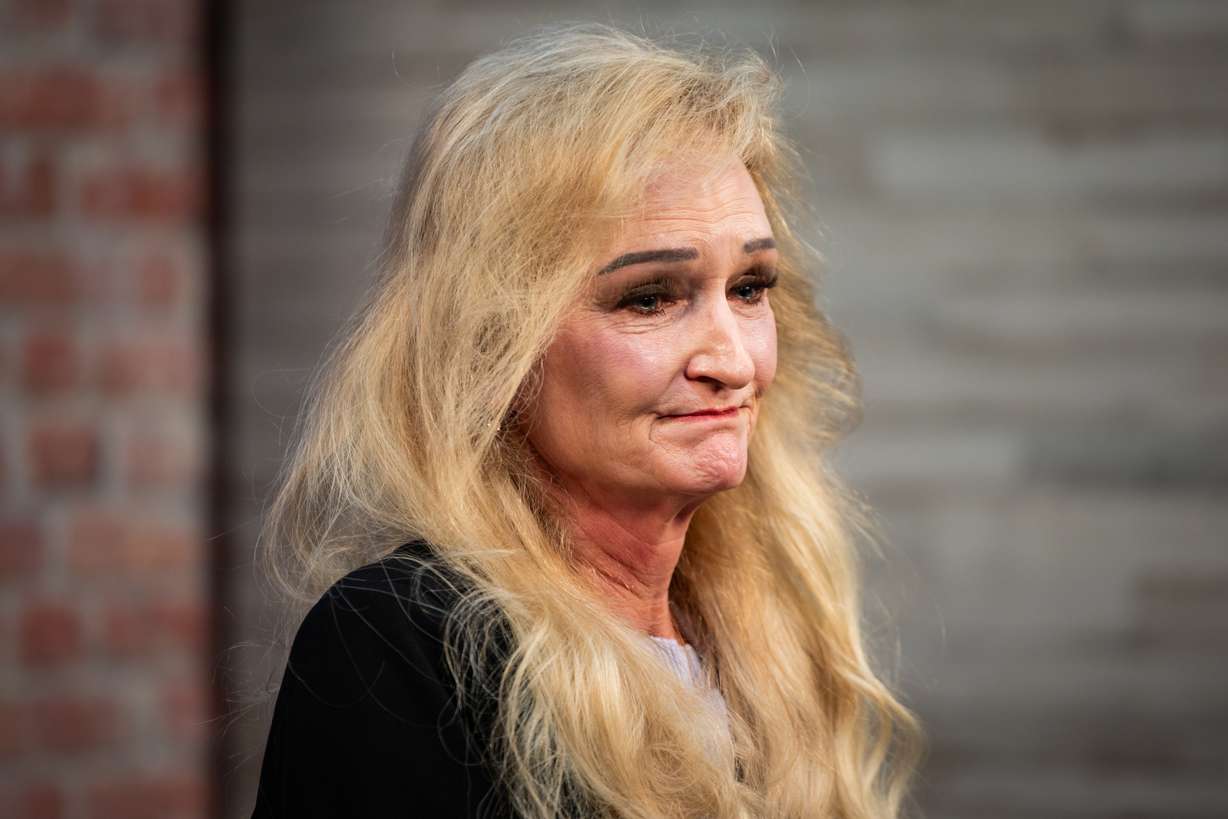
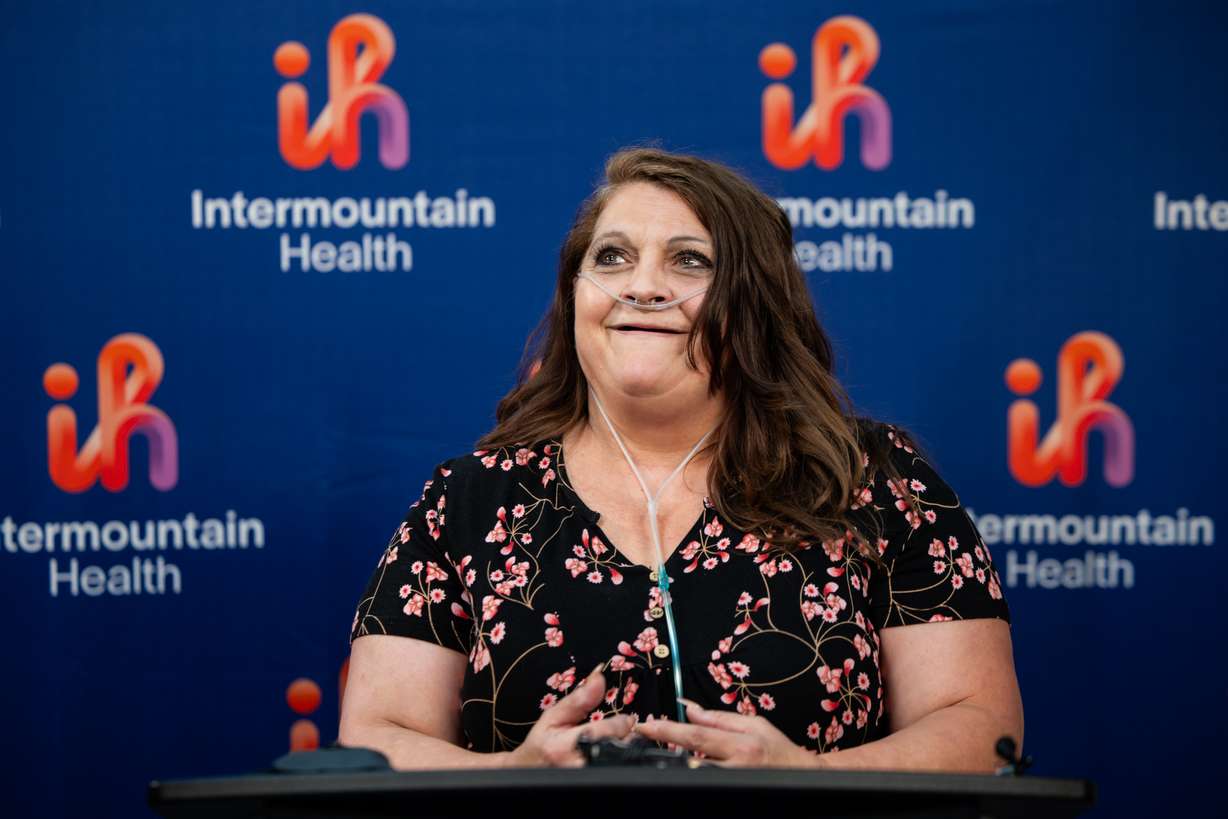
- Jill Bailey, a patient with asthma, talked about how the app developed through the study has improved her life.
MURRAY — Jill Bailey has had asthma her whole life and has been hospitalized many times, and intubated nine times, as doctors have tried to care for her.
She said she didn't want to spend her whole life thinking about her lung problems.
"I was in the hospital more than I was out, I was at the doctor's more than I was home, it was a lot of expense, a lot of time, a lot of energy, and we just never could like stay on top of it," she said.
But now, she said an app has saved her life. Bailey is 61-year-old patient who benefited from an iCARE study for an artificial intelligence monitoring technology led by Intermountain Health and CareCentra. At a press event on Tuesday, she said she no longer needs to live on steroids and spend so much time seeking medical care.
"I was really glad that I made it through all those times to see technology help us live," Bailey said.
Innovation
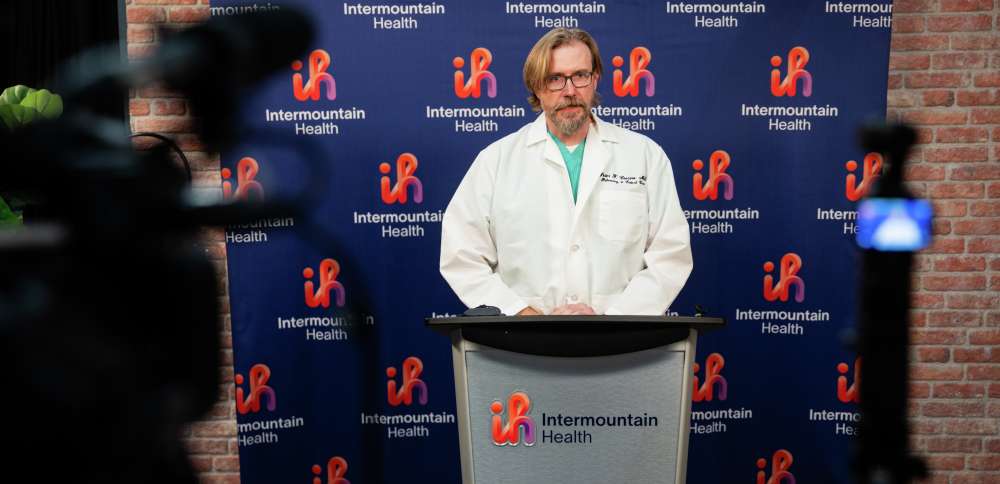
Dr. Peter Crossno, senior medical director of respiratory care at Intermountain Health and director of the study, said about three years ago, they combined a respiratory therapist program that had reduced cost and risk for some patients, with artificial intelligence — and it reduced cost even more, by 57%. Researchers said the study is a "game changer" for the 1 out of every 13 adults with asthma or chronic obstructive pulmonary disease, also known as COPD.
He said they used home monitoring devices, like inhaler jackets and home oximetry, and patient reports to give suggestions for patient behavior and a "birds' eye view" for the respiratory therapist to be able to better see signals that a patient needed help. The program was implemented in five Intermountain Health sites over two years.
Crossno said it reduced how frequently patients would have acute health events and the overall cost for patients — saving an average of $10,000 in costs per patient.
"We really think that this is a first time in the respiratory and pulmonary care space that we've been able to essentially combine AI technology with this remote patient monitoring technology, with existing clinical resources … to better the outcomes of patients with COPD," Crossno said.
He said these patients have significantly limited function while dealing with coughs and shortness of breath. The program provided caregivers insight into what happens for those patients between hospitalizations and visits.
Proactive care
According to Crossno, the AI is able to take into account air quality, show real-time lung function decreases, and find small signals that healthcare providers might miss — ultimately predicting which patients are declining before they need to seek emergency care.
He said the system for patients is not hard — they found older patients are actually more engaged in the app.
"It's kind of like having a digital twin in your pocket that's helping you understand your COPD, your asthma, and then reacting proactively," he said.
Kim Bennion, director of respiratory research at Intermountain Health, said the AI will not remove the need for pulmonary disease navigators,
She went into respiratory therapy when her mother was diagnosed with COPD, and she said the system was frustrating with different medications and messages. Her son later had similar frustrations before his death.
She thanked Crossno for listening to the problems and finding a solution.
"I'm extremely, forever grateful that he made my mom and my son's wish come true," she said.
Bennion also said the app was able to identify four patents with suicidal ideation to get them referred for care as they added questions about mental health.
A brighter future
Bailey said the app has helped educate her about her own condition and help her stay in control. It allows her to show a summary of her health to doctors in an emergency room when needed — recently using it to convince medical providers she needed more care based on what it said.
"I'm focusing on what's important, and I keep very close tabs with my respiratory team, and they keep really close tabs on me," she said.
Sometimes she doesn't realize her health needs attention as quickly as the app does; other times it is reassuring because she knows she doesn't need to seek care yet.
"I don't get nervous anymore," Bailey said.
The patient said she hopes the technology "spreads like wildfire" and continues to give others the ability to run their lives.
"Nobody wants to be a victim or a patient all the time. People want to be a mother or a daughter, and we want to be grandmas. We want to take care of our families. And these guys have really made my future a lot brighter, and they've made my life expectancy a lot better," Bailey said.