'%3e%3cpath%20d='M34.1406%205.85938C30.3906%202.10547%2025.3047%200%2020%200C14.6953%200%209.60938%202.10547%205.85938%205.85938C2.10938%209.61328%200%2014.6953%200%2020C0%2025.3047%202.10547%2030.3906%205.85938%2034.1406C9.61328%2037.8906%2014.6953%2040%2020%2040C25.3047%2040%2030.3906%2037.8945%2034.1406%2034.1406C37.8906%2030.3906%2040%2025.3047%2040%2020C40%2014.6953%2037.8945%209.60938%2034.1406%205.85938ZM37.0117%2023.543H31.1602V13.5391H27.6328V19.9414C28.1211%2020.6914%2028.3711%2021.582%2028.3711%2022.5625V22.625C28.3711%2023.668%2028.1172%2024.6055%2027.6328%2025.4297V26.6094H36.082C33.4883%2032.9375%2027.2891%2037.3789%2020.0039%2037.3789C10.3711%2037.3789%202.62109%2029.6289%202.62109%2020C2.62109%2010.3711%2010.3711%202.62109%2020%202.62109C29.6289%202.62109%2037.3789%2010.3711%2037.3789%2020C37.3789%2021.1484%2037.2617%2022.2656%2037.0508%2023.3477C37.0391%2023.4141%2037.0234%2023.4766%2037.0117%2023.543Z'%20fill='white'/%3e%3cpath%20d='M22.3086%2018.5352C20.4336%2018.125%2019.9531%2017.8398%2019.9766%2017.1836V17.1406C19.9766%2016.6992%2020.3477%2016.2148%2021.4023%2016.2148C22.582%2016.2148%2023.8867%2016.6797%2025.0781%2017.4766L26.8516%2015.0195C25.4453%2013.8906%2023.707%2013.3398%2021.5547%2013.3398C18.5195%2013.3398%2016.4375%2015%2016.4063%2017.4766V17.5352C16.3633%2020.2617%2018.5859%2020.9805%2021.293%2021.6016C23.0391%2021.9766%2023.5703%2022.3164%2023.5703%2022.9609L23.5469%2022.9766C23.5469%2023.3906%2023.2578%2023.7031%2022.7852%2023.8359C22.5742%2023.9062%2022.1289%2023.9727%2021.5156%2023.9727C20.7617%2023.9727%2019.7539%2023.8633%2018.6328%2023.4844C18.0898%2023.2891%2017.4727%2023.0039%2016.8047%2022.6133L20.1406%2026.625C20.2813%2026.6602%2021.0977%2026.8516%2021.7734%2026.8516C25.0039%2026.8516%2027.0859%2025.2461%2027.1094%2022.6328V22.5703C27.1602%2020.1133%2025.2148%2019.1719%2022.3086%2018.5352Z'%20fill='white'/%3e%3cpath%20d='M5.24219%2013.5664V26.6133H8.75391V23.7578L10.2969%2021.9531L14.2031%2026.6133H18.3867L12.3555%2019.5195L17.4023%2013.5664H13.4531L8.75391%2019.0586V13.5664H5.24219Z'%20fill='white'/%3e%3c/g%3e%3cdefs%3e%3cclipPath%20id='clip0_97_2430'%3e%3crect%20width='40'%20height='40'%20fill='white'/%3e%3c/clipPath%3e%3c/defs%3e%3c/svg%3e)




- Salt Lake City Mayor Erin Mendenhall said immigration officials envision an immigration detention center in the city that could house 7,500-10,000 people.
- That's on the larger end of a series of new facilities planned by federal authorities as part of the crackdown on illegal immigration.
- Mendenhall met with immigration officials last week.
SALT LAKE CITY — Immigration and Customs Enforcement officials plan to build an immigrant detention center in Salt Lake City that would house 7,500 to 10,000 people, according to Salt Lake City Mayor Erin Mendenhall.
The agency's plans in Utah would put the Salt Lake facility on the large end of a series of planned facilities around the country envisioned as part of the crackdown on illegal immigration by the administration of President Donald Trump. According to an ICE memo from February, the new facilities could materialize by November.
"I was told ICE plans for Salt Lake City to host one of its 'mega centers,' with capacity for approximately 7,500 to 10,000 individuals. It would represent a hub in the 'hub and spoke' model," Mendenhall said in a statement Monday. She met virtually last week with ICE Deputy Director Charles Wall and Tim Kaiser, deputy chief of staff for U.S. Citizenship and Immigration Services.
ICE has provided limited information about its plans in Utah, and Mendenhall's statement offers additional insight about what the agency, responsible for the enforcement of U.S. immigration law, has in the works in Utah. She said ICE officials hope to start work "in the weeks and months ahead" on the 24.9-acre site in an industrial area west of Salt Lake City International Airport, where an unused 833,000-square-foot warehouse sits.
In a statement Tuesday, the Department of Homeland Security offered conciliatory words about working with local officials, though it didn't provide new information about its detention center plans in Utah.
"As Secretary Mullin said in his confirmation hearing: 'I will work with the community leaders and make sure that we are delivering for the American people what the president set out … We want to work with community leaders. We want to be good partners,'" reads the DHS statement. Markwayne Mullin was sworn in last week as the new DHS secretary.
Nevertheless, Mendenhall opposes the plans and says an immigrant detention center isn't an appropriate fit for the area where it's envisioned and that the water, sewer and roads infrastructure is insufficient to serve such a facility. In her 30-minute meeting with Wall and Kaiser, Mendenhall said she asked the officials about their plans to abide by city codes.
"They said they plan to consult our fire marshal on these issues but did not commit to any other city review on the building. They did not provide information about the anticipated environmental and traffic impacts to the area, nor did they have specific information on utility needs for the site," Mendenhall said.
In the wake of last week's meeting, the mayor said she's still concerned about the proposed detention center and its potential impact on public safety, air quality and, given the water it would need, the Great Salt Lake.
"I have heard from neighboring business operators who understandably have serious questions about the strain such a facility would have in the area," she said.
While Mendenhall didn't provide additional specifics about what ICE has planned at the site at 6020 W. 300 South, a February ICE memo released by New Hampshire Gov. Kelly Ayotte, a Republican, offers insights. Department of Homeland Security officials had been considering building an immigration detention center in New Hampshire but later scrapped the plans.
According to the Feb. 12 memo, titled "ICE Detention Reengineering Initiative," eight large-scale detention centers, like the one proposed for Salt Lake City, are envisioned along with 16 processing sites to help facilitate the ongoing immigration crackdown. Ten other facilities where ICE officials already operate would also figure in the initiative.
According to the memo, plans are to be implemented by the end of November.
"For ICE to sustain the anticipated increase in enforcement operations and arrests in 2026, an increase in detention capacity will be a necessary downstream requirement. ICE plans to activate all facilities by Nov. 30, 2026, ensuring the timely expansion of detention capacity," the memo reads. The new model aims to bolster capacity in the network of U.S. immigration facilities by 92,600 beds.
Read more:

Voces de Utah
Looking for more news from Utah's Latino community? Visit our Voces de Utah section for more stories, events and features.The large-scale detention centers, like the proposed Salt Lake site, would be equipped to house 7,000-10,000 detainees, typically for less than 60 days on average. "These sites will serve as the primary locations for international removals," according to the memo.
The smaller processing centers would be able to house 1,000-1,500 detainees for three to seven days and would serve as "staging locations" for transfers or removals.
Mendenhall's concerns notwithstanding, the ICE memo says it reviewed the water, sewer and power capacity at each of the locations where it's considering detention facilities to make sure they were feasible sites.
"The due diligence review included thorough site inspections, analysis of utility services and testing and inspection of mechanical and electrical systems. Our teams also reviewed zoning reports, conducted site fit testing and reviewed power supply systems, water supply infrastructure and wastewater exportation based on estimated usage," it reads.
Though Mendenhall, immigrant advocates and many others oppose plans for a facility in Salt Lake City, Gov. Spencer Cox and others favor the plans and see them as a necessary element of moves to detain and deport those in the country illegally. The memo stressed it aims to build "safe and humane" facilities.
"This model will incorporate all existing detention standards and will maximize operational efficiency, minimize costs, shorten processing times and promote the safety, dignity and respect of all aliens in ICE custody," reads the February ICE memo.
Cox and other Republican leaders in the Utah Legislature didn't immediately respond to queries Monday seeking comment. Brittney Nystrom, executive director of the American Civil Liberties Union in Utah, however, offered tough words. The group opposes the plan, saying ICE detention centers are inhumane and that those held in them are often denied due process rights.
"This enormous warehouse was purchased with the intent to detain our neighbors, friends and families in an industrial building without any public notice or community input. Retrofitting an urban warehouse to detain over 7,500 people calls for greater transparency and oversight, not less," she said.
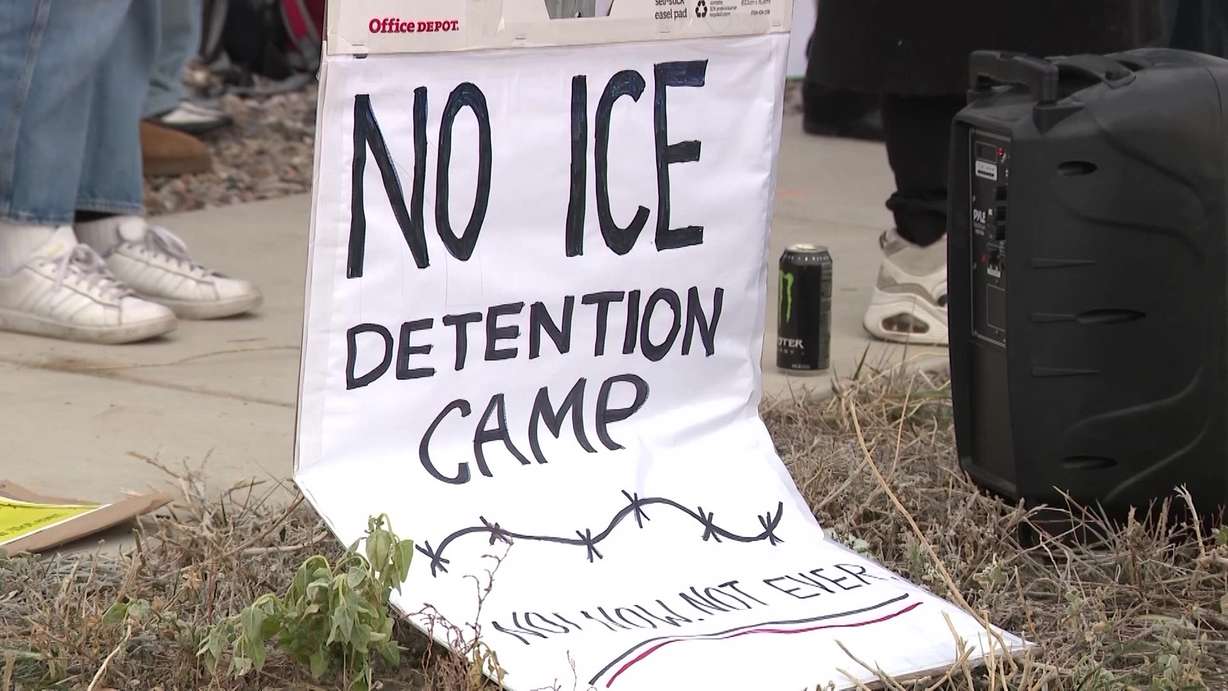
The plans in Salt Lake City have prompted protests by some. Last week, Salt Lake officials adopted new restrictions on water use given dry conditions that, if enforced on ICE, could hamper its ability to develop its proposed detention center.
Contributing: Daniel Woodruff