'%3e%3cpath%20d='M34.1406%205.85938C30.3906%202.10547%2025.3047%200%2020%200C14.6953%200%209.60938%202.10547%205.85938%205.85938C2.10938%209.61328%200%2014.6953%200%2020C0%2025.3047%202.10547%2030.3906%205.85938%2034.1406C9.61328%2037.8906%2014.6953%2040%2020%2040C25.3047%2040%2030.3906%2037.8945%2034.1406%2034.1406C37.8906%2030.3906%2040%2025.3047%2040%2020C40%2014.6953%2037.8945%209.60938%2034.1406%205.85938ZM37.0117%2023.543H31.1602V13.5391H27.6328V19.9414C28.1211%2020.6914%2028.3711%2021.582%2028.3711%2022.5625V22.625C28.3711%2023.668%2028.1172%2024.6055%2027.6328%2025.4297V26.6094H36.082C33.4883%2032.9375%2027.2891%2037.3789%2020.0039%2037.3789C10.3711%2037.3789%202.62109%2029.6289%202.62109%2020C2.62109%2010.3711%2010.3711%202.62109%2020%202.62109C29.6289%202.62109%2037.3789%2010.3711%2037.3789%2020C37.3789%2021.1484%2037.2617%2022.2656%2037.0508%2023.3477C37.0391%2023.4141%2037.0234%2023.4766%2037.0117%2023.543Z'%20fill='white'/%3e%3cpath%20d='M22.3086%2018.5352C20.4336%2018.125%2019.9531%2017.8398%2019.9766%2017.1836V17.1406C19.9766%2016.6992%2020.3477%2016.2148%2021.4023%2016.2148C22.582%2016.2148%2023.8867%2016.6797%2025.0781%2017.4766L26.8516%2015.0195C25.4453%2013.8906%2023.707%2013.3398%2021.5547%2013.3398C18.5195%2013.3398%2016.4375%2015%2016.4063%2017.4766V17.5352C16.3633%2020.2617%2018.5859%2020.9805%2021.293%2021.6016C23.0391%2021.9766%2023.5703%2022.3164%2023.5703%2022.9609L23.5469%2022.9766C23.5469%2023.3906%2023.2578%2023.7031%2022.7852%2023.8359C22.5742%2023.9062%2022.1289%2023.9727%2021.5156%2023.9727C20.7617%2023.9727%2019.7539%2023.8633%2018.6328%2023.4844C18.0898%2023.2891%2017.4727%2023.0039%2016.8047%2022.6133L20.1406%2026.625C20.2813%2026.6602%2021.0977%2026.8516%2021.7734%2026.8516C25.0039%2026.8516%2027.0859%2025.2461%2027.1094%2022.6328V22.5703C27.1602%2020.1133%2025.2148%2019.1719%2022.3086%2018.5352Z'%20fill='white'/%3e%3cpath%20d='M5.24219%2013.5664V26.6133H8.75391V23.7578L10.2969%2021.9531L14.2031%2026.6133H18.3867L12.3555%2019.5195L17.4023%2013.5664H13.4531L8.75391%2019.0586V13.5664H5.24219Z'%20fill='white'/%3e%3c/g%3e%3cdefs%3e%3cclipPath%20id='clip0_97_2430'%3e%3crect%20width='40'%20height='40'%20fill='white'/%3e%3c/clipPath%3e%3c/defs%3e%3c/svg%3e)


- Federal judges heard arguments in Utah's redistricting case involving Reps. Burgess Owens and Celeste Maloy on Wednesday.
- Judges questioned the state court's authority to impose electoral maps under Proposition 4.
- A ruling is expected soon, which could impact Utah's 2026 elections and congressional district boundaries.
SALT LAKE CITY — Federal judges heard arguments on Wednesday in the case brought by Reps. Burgess Owens and Celeste Maloy asking to restore a congressional district map approved by Utah lawmakers instead of one chosen by a state court.
The federal district court for Utah could issue a ruling on Friday, following an expected decision from the Utah Supreme Court in a related lawsuit, or on Monday, the deadline to switch to 2021 electoral boundaries before the candidate filing period for House seats.
During nearly three hours of questions, the federal judges appeared undecided about how to resolve Utah's unique redistricting confrontation between the state Legislature and state courts, centered on the Proposition 4 ballot initiative passed in 2018.
But they did indicate the state was in uncharted constitutional territory.
"I'm not aware of any state that actually empowers state courts to do anything in redistricting," said Judge Timothy Tymkovich, who was nominated to serve on the 10th Circuit of the U.S. Court of Appeals by President George W. Bush.
Over the past 18 months, Utah courts have interpreted the state Constitution to give Prop 4 quasi-constitutional status, allowing courts to reinstate the original law approved by voters and to reject legislative reforms and the maps that flowed from them.
Wednesday's hearing was the latest step in what has become a multifront legal battle after District Judge Dianna Gibson discarded the Legislature's attempt to comply with Prop 4 and instead installed a map submitted by the advocacy groups suing the state.
The arguments made in federal court by attorneys representing these groups and state elected officials focused on what the Constitution says about the legislative role of map-drawing and how Gibson's decision directly impacts Owens and Maloy.
A constitutional violation?
On Feb. 2, Owens, who represents Utah's 4th Congressional District, and Maloy, who represents Utah's 2nd District, joined 11 local leaders in filing a federal lawsuit alleging that the state's court-ordered congressional map violated the Constitution.
The lawsuit accused Gibson of breaching the Elections Clause, which gives election authority to state legislatures. Plaintiffs requested that Utah Lt. Gov. Deidre Henderson be allowed to administer the 2026 election using the 2021 map approved by lawmakers.
Related:

Reps. Owens, Maloy take Utah's redistricting battle to federal court
Reps. Burgess Owens and Celeste Maloy of Utah joined 11 local leaders in filing a federal lawsuit alleging that the state's court-ordered congressional map violates the Constitution.Those arguing in favor of Gibson's "Map 1" have not "identified even one case in which a state court has created and imposed a map without finding any of the legislature's existing districts subsequently unlawful," said Gene Schaerr, representing the plaintiffs.
In August, Gibson voided the 2021 map because it was approved after the Legislature amended Prop 4 in a compromise deal with Prop 4 sponsors. The Utah Supreme Court ruled in 2024 that these changes had violated voters' right to engage in ballot initiatives.
Based on this, Gibson asked the Legislature to draw a new map complying with the original version of Prop 4 approved by voters. The law established an appointed commission to recommend maps to the Legislature based on rules to prevent undue favoring of parties.
While the law empowers state courts to block maps that violate its redistricting criteria, it does not say anything about courts crafting or selecting electoral boundaries. Under Prop 4, the Legislature would continue to have the final say over choosing maps.
But Gibson ruled the map proposed by lawmakers in October was a partisan gerrymander that failed to reflect Prop 4's priorities of avoiding county splits and splitting up Democratic voters, which the map appeared to do, though less than the 2021 map.
Since the Legislature did not comply with Prop 4, Gibson said she was required by federal statute to ensure a lawful map was in place before 2026. So she picked a map submitted by the League of Women Voters and Mormon Women for Ethical Government.
"The state court at that point was obligated to impose a map," said Mark Gaber, representing the groups. "Both state and federal courts, when they are in this predicament, have an obligation ... to ensure that there is a lawful, single-member district plan in place."
The federal judges questioned Schaerr and Gaber about whether Supreme Court precedent allows court-ordered changes to maps this late in the process and whether Gibson should have given lawmakers an additional opportunity to submit a lawful map.
How will this impact 2026 election?
The judges also asked both sides whether Owens and Maloy had standing to bring a lawsuit about Gibson's redistricting ruling, and how Democratic candidates in the new deeply blue 1st District would be impacted by reversing Gibson's August and November decisions.
At the center of Utah's legal tug-of-war are the state's four members of the House. Gibson's map reduces the state's Republican-leaning seats from four to three, greatly expanding Maloy's southern Utah district and all but eliminating Owens' central Utah seat.
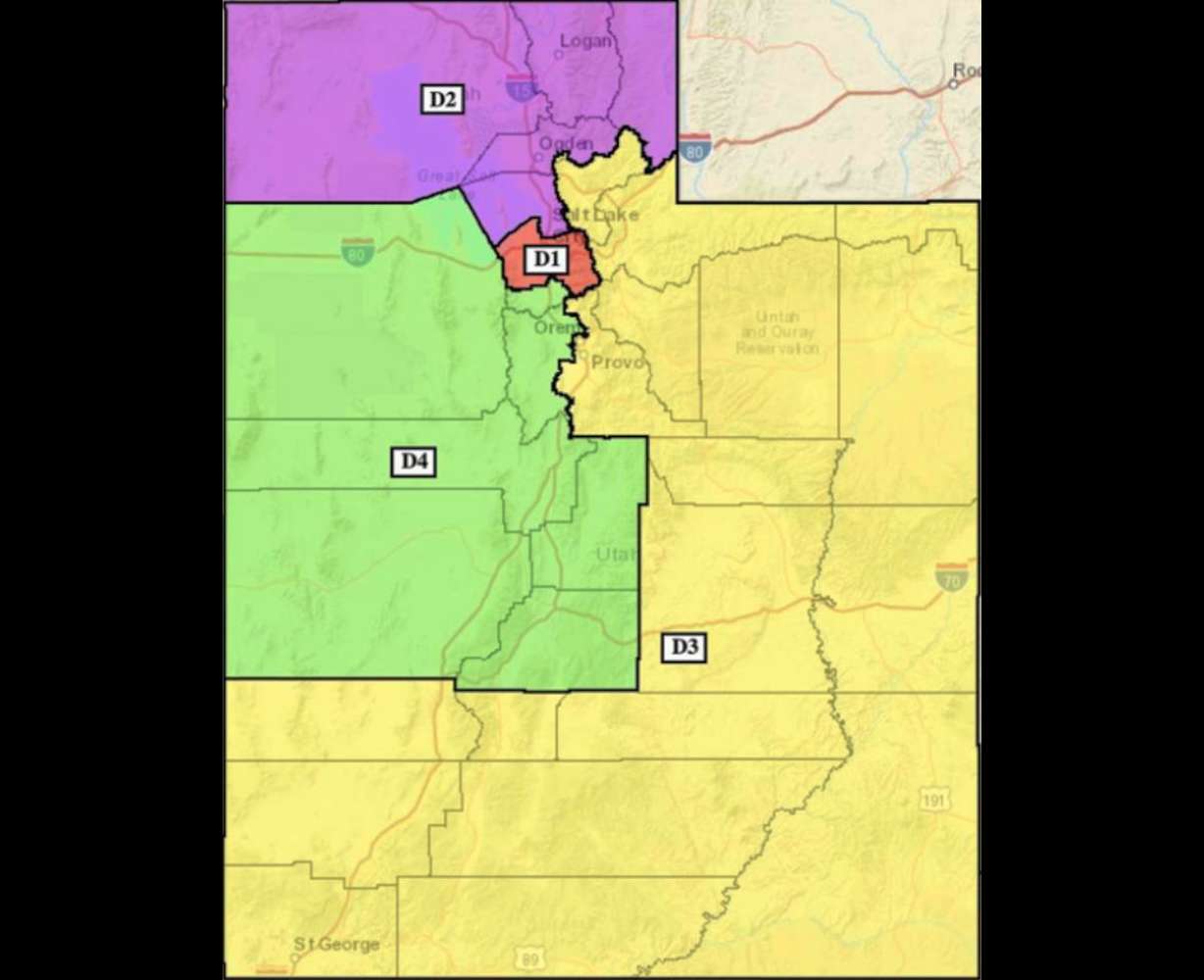
This means sitting members of Congress have been thrown into confusion about where to invest their time and money because of a ruling that intentionally created a Democratic seat in Salt Lake County, at the expense of other Utah representation, Schaerr argued.
However, Gaber pushed back on the representatives' standing, claiming that Maloy and Owens appear to be withholding campaign funds until a final court decision. Meanwhile, Democratic candidates like Ben McAdams could lose millions of dollars in donations if the map was to change.
The lieutenant governor's office said on Wednesday if the federal panel provides an order to switch back to the 2021 maps by Monday, then election officials will have enough time to update precinct boundaries before party caucus conventions in mid-March.
One solution judges suggested would be if the court could, once again, ask lawmakers to approve a Prop 4-compliant map. But Gaber said there is not enough time, and Schaerr said it is possible that the Legislature and the state court would remain at an impasse.
The judges appeared hesitant to rule in the federal redistricting case before the Utah Supreme Court has a chance to respond to the Legislature's request that justices place a stay on Gibson's ruling to allow the state to return to its 2021 congressional plan.