'%3e%3cpath%20d='M34.1406%205.85938C30.3906%202.10547%2025.3047%200%2020%200C14.6953%200%209.60938%202.10547%205.85938%205.85938C2.10938%209.61328%200%2014.6953%200%2020C0%2025.3047%202.10547%2030.3906%205.85938%2034.1406C9.61328%2037.8906%2014.6953%2040%2020%2040C25.3047%2040%2030.3906%2037.8945%2034.1406%2034.1406C37.8906%2030.3906%2040%2025.3047%2040%2020C40%2014.6953%2037.8945%209.60938%2034.1406%205.85938ZM37.0117%2023.543H31.1602V13.5391H27.6328V19.9414C28.1211%2020.6914%2028.3711%2021.582%2028.3711%2022.5625V22.625C28.3711%2023.668%2028.1172%2024.6055%2027.6328%2025.4297V26.6094H36.082C33.4883%2032.9375%2027.2891%2037.3789%2020.0039%2037.3789C10.3711%2037.3789%202.62109%2029.6289%202.62109%2020C2.62109%2010.3711%2010.3711%202.62109%2020%202.62109C29.6289%202.62109%2037.3789%2010.3711%2037.3789%2020C37.3789%2021.1484%2037.2617%2022.2656%2037.0508%2023.3477C37.0391%2023.4141%2037.0234%2023.4766%2037.0117%2023.543Z'%20fill='white'/%3e%3cpath%20d='M22.3086%2018.5352C20.4336%2018.125%2019.9531%2017.8398%2019.9766%2017.1836V17.1406C19.9766%2016.6992%2020.3477%2016.2148%2021.4023%2016.2148C22.582%2016.2148%2023.8867%2016.6797%2025.0781%2017.4766L26.8516%2015.0195C25.4453%2013.8906%2023.707%2013.3398%2021.5547%2013.3398C18.5195%2013.3398%2016.4375%2015%2016.4063%2017.4766V17.5352C16.3633%2020.2617%2018.5859%2020.9805%2021.293%2021.6016C23.0391%2021.9766%2023.5703%2022.3164%2023.5703%2022.9609L23.5469%2022.9766C23.5469%2023.3906%2023.2578%2023.7031%2022.7852%2023.8359C22.5742%2023.9062%2022.1289%2023.9727%2021.5156%2023.9727C20.7617%2023.9727%2019.7539%2023.8633%2018.6328%2023.4844C18.0898%2023.2891%2017.4727%2023.0039%2016.8047%2022.6133L20.1406%2026.625C20.2813%2026.6602%2021.0977%2026.8516%2021.7734%2026.8516C25.0039%2026.8516%2027.0859%2025.2461%2027.1094%2022.6328V22.5703C27.1602%2020.1133%2025.2148%2019.1719%2022.3086%2018.5352Z'%20fill='white'/%3e%3cpath%20d='M5.24219%2013.5664V26.6133H8.75391V23.7578L10.2969%2021.9531L14.2031%2026.6133H18.3867L12.3555%2019.5195L17.4023%2013.5664H13.4531L8.75391%2019.0586V13.5664H5.24219Z'%20fill='white'/%3e%3c/g%3e%3cdefs%3e%3cclipPath%20id='clip0_97_2430'%3e%3crect%20width='40'%20height='40'%20fill='white'/%3e%3c/clipPath%3e%3c/defs%3e%3c/svg%3e)


- Salt Lake City may ban private jails amid concerns over an ICE facility.
- The city's planning commission voted to recommend removing jails from land use tables.
- The City Council will decide on the amendment, which has some exceptions.
SALT LAKE CITY — Utah's capital city could tweak its zoning code again to potentially thwart the construction of an immigration detention facility, after the concept received a key endorsement on Wednesday
Members of the Salt Lake City Planning Commission voted unanimously to favorably recommend a zoning text amendment to remove jails and correctional facilities from the city's land use tables. It would apply to the city's light manufacturing (M-1), mixed-use district 11 (MU-11) and public land zones, where jails and correctional facilities are conditional uses.
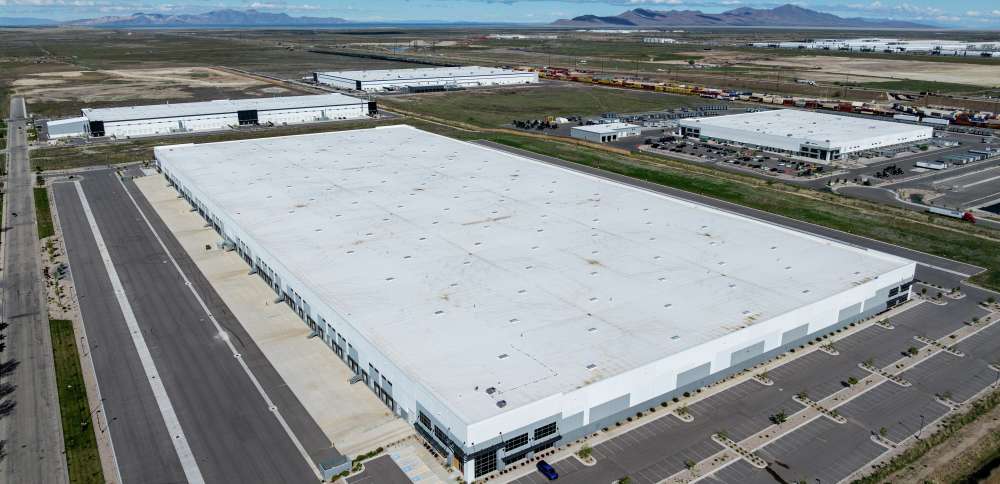
The measure, if approved by city leaders, would not apply to state and federal land that is not subject to local zoning, but it would apply to private properties, including private companies that may enter into contracts with the state or federal government, such as the proposed U.S. Immigration and Customs Enforcement facility at a Salt Lake City warehouse.
"I'm glad that our discussion surrounding the proposed and now seemingly — hopefully — tabled ICE detention facility on the west side was able to raise this sort of relatively specific technical issue," said Lilah Rosenfield, one of the city's planning commissions before the vote. "I don't feel like it's enough, but I don't think there's anything we could do that would be enough."
The Salt Lake City Planning Commission initiated the motion in March, shortly after the Department of Homeland Security finalized its purchase of an 833,000-square-foot warehouse at 6020 W. 300 South for $145.44 million. Officials later confirmed plans for an immigrant detention center housing 7,500 to 10,000 detainees.
Salt Lake City and Salt Lake County sued the federal agency over its plan in June, filing its complaint in the U.S. District Court of Utah a day before Uproar Utah, a group affiliated with the Utah Refuge Justice League, filed a separate lawsuit.
It's still unclear if the Salt Lake City ICE facility is moving forward. The New York Times reported last month that the department was looking to unload seven properties that it had acquired, including the Salt Lake City warehouse.
Department of Homeland Security officials didn't confirm or deny the report at the time, only telling KSL it plans to use existing facilities as part of the ongoing immigration crackdowns. Very little information about the facility has been made public since then.
Regardless, Salt Lake City planners reviewed the planning commission's request over the past few months, leading up to Wednesday's meeting.
Salt Lake City's conditional uses for correctional facilities generally apply to just its Northwest Quadrant, said Cassie Younger, a Salt Lake City senior planner. Utah moved its state penitentiary to the area a few years ago, and that's where the proposed ICE detention facility is located.
Under the proposal, the definition and use of jails and correctional facilities would still be listed in the land use tables, but they would no longer be allowed anywhere in the city within applicable land areas, she explained.
There was little debate in the meeting. Jeffrey Barrett, the planning commission's vice chair, called it "an appropriate move," arguing that Salt Lake City has "borne more than its share of the state's weight" in relation to correctional facilities.
The Salt Lake City Council has final say on the proposed zoning amendment. Its position is unclear, but members have spoken out about the proposed facility. In addition to the lawsuit, city leaders also adopted some emergency code changes with the center in mind.
About the same time the planning commission initiated its proposal, the City Council approved a 180-day order capping new nonresidential development from using more than 200,000 gallons of water daily, much lower than the 1 million to 2 million gallons expected to be used daily at a 7,500-person detention facility.
It provided time for the city to craft a permanent ordinance later this year.
"As mayor, a primary responsibility I have is to ensure residents have access to clean water, reliable utilities and safe infrastructure," Salt Lake City Mayor Erin Mendenhall said at the time. "Put simply, a potential high-occupancy facility interferes with those needs."