'%3e%3cpath%20d='M34.1406%205.85938C30.3906%202.10547%2025.3047%200%2020%200C14.6953%200%209.60938%202.10547%205.85938%205.85938C2.10938%209.61328%200%2014.6953%200%2020C0%2025.3047%202.10547%2030.3906%205.85938%2034.1406C9.61328%2037.8906%2014.6953%2040%2020%2040C25.3047%2040%2030.3906%2037.8945%2034.1406%2034.1406C37.8906%2030.3906%2040%2025.3047%2040%2020C40%2014.6953%2037.8945%209.60938%2034.1406%205.85938ZM37.0117%2023.543H31.1602V13.5391H27.6328V19.9414C28.1211%2020.6914%2028.3711%2021.582%2028.3711%2022.5625V22.625C28.3711%2023.668%2028.1172%2024.6055%2027.6328%2025.4297V26.6094H36.082C33.4883%2032.9375%2027.2891%2037.3789%2020.0039%2037.3789C10.3711%2037.3789%202.62109%2029.6289%202.62109%2020C2.62109%2010.3711%2010.3711%202.62109%2020%202.62109C29.6289%202.62109%2037.3789%2010.3711%2037.3789%2020C37.3789%2021.1484%2037.2617%2022.2656%2037.0508%2023.3477C37.0391%2023.4141%2037.0234%2023.4766%2037.0117%2023.543Z'%20fill='white'/%3e%3cpath%20d='M22.3086%2018.5352C20.4336%2018.125%2019.9531%2017.8398%2019.9766%2017.1836V17.1406C19.9766%2016.6992%2020.3477%2016.2148%2021.4023%2016.2148C22.582%2016.2148%2023.8867%2016.6797%2025.0781%2017.4766L26.8516%2015.0195C25.4453%2013.8906%2023.707%2013.3398%2021.5547%2013.3398C18.5195%2013.3398%2016.4375%2015%2016.4063%2017.4766V17.5352C16.3633%2020.2617%2018.5859%2020.9805%2021.293%2021.6016C23.0391%2021.9766%2023.5703%2022.3164%2023.5703%2022.9609L23.5469%2022.9766C23.5469%2023.3906%2023.2578%2023.7031%2022.7852%2023.8359C22.5742%2023.9062%2022.1289%2023.9727%2021.5156%2023.9727C20.7617%2023.9727%2019.7539%2023.8633%2018.6328%2023.4844C18.0898%2023.2891%2017.4727%2023.0039%2016.8047%2022.6133L20.1406%2026.625C20.2813%2026.6602%2021.0977%2026.8516%2021.7734%2026.8516C25.0039%2026.8516%2027.0859%2025.2461%2027.1094%2022.6328V22.5703C27.1602%2020.1133%2025.2148%2019.1719%2022.3086%2018.5352Z'%20fill='white'/%3e%3cpath%20d='M5.24219%2013.5664V26.6133H8.75391V23.7578L10.2969%2021.9531L14.2031%2026.6133H18.3867L12.3555%2019.5195L17.4023%2013.5664H13.4531L8.75391%2019.0586V13.5664H5.24219Z'%20fill='white'/%3e%3c/g%3e%3cdefs%3e%3cclipPath%20id='clip0_97_2430'%3e%3crect%20width='40'%20height='40'%20fill='white'/%3e%3c/clipPath%3e%3c/defs%3e%3c/svg%3e)


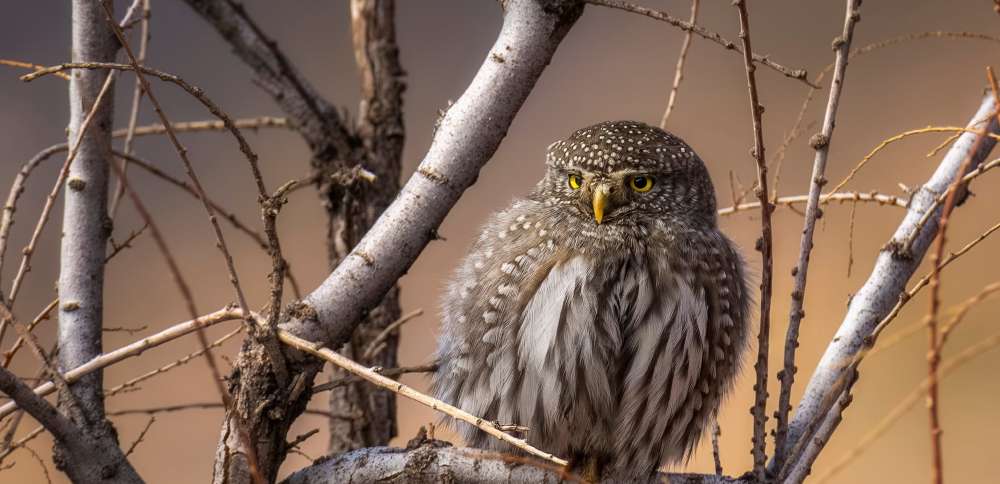
- Wildlife enthusiasts in southern Utah are excited about spotting northern pygmy owls.
- Utah photographers Chet Steele and Marnie Jeppson captured the rare bird's image.
- Steele and Jeppson emphasize respecting wildlife and avoiding stress-inducing practices like playing owl calls.
ST. GEORGE — Wildlife enthusiasts have been gathering in southern Utah to spot a rare bird of prey, not with their eyes, but with lenses that can see what the eye can't see.
In recent days, a couple of northern pygmy owls have been spotted, causing southern Utah wildlife photographers like Chet Steele and Marnie Jeppson to tiptoe at the chance to capture a photo of the rarely seen bird.
"I've never seen one in my life," said Steele, who is a Utah native and long-time wildlife photographer. "I just feel very lucky to finally get a photograph. So many people will go up and down the trail, and they don't even know that there's something rare right there."
The Utah Division of Wildlife Resources told KSL that northern pygmy owls are uncommon but not rare in Utah, adding that they are more commonly seen in winter.
A northern pygmy owl sighting is rare, likely due to its size and habitat. It is only about 6 to 7 inches in height, has brown and white feathers and nests in heavily wooded areas, often near riverbanks. The owl was also listed on Utah's Species of Greatest Conservation Need in 2022, but has since been removed from that list.
Jeppson said she grew up learning about birds and has started birding and taking photos as a hobby while she's out in nature. She said technology has really changed over the years, allowing people like her to see and take pictures of rare birds like the pygmy owl.
"There are bird-identifying apps that capture the sounds of the surrounding birds to help you have a better idea of what you're looking for," she said. "I can hear them way better than I can see them, and now I can pinpoint them. It has turned out to be really fun. It's a treasure hunt every time I go."
Both Steele and Jepson said that, with the accessibility of apps and cameras, comes a greater responsibility to respect wildlife.
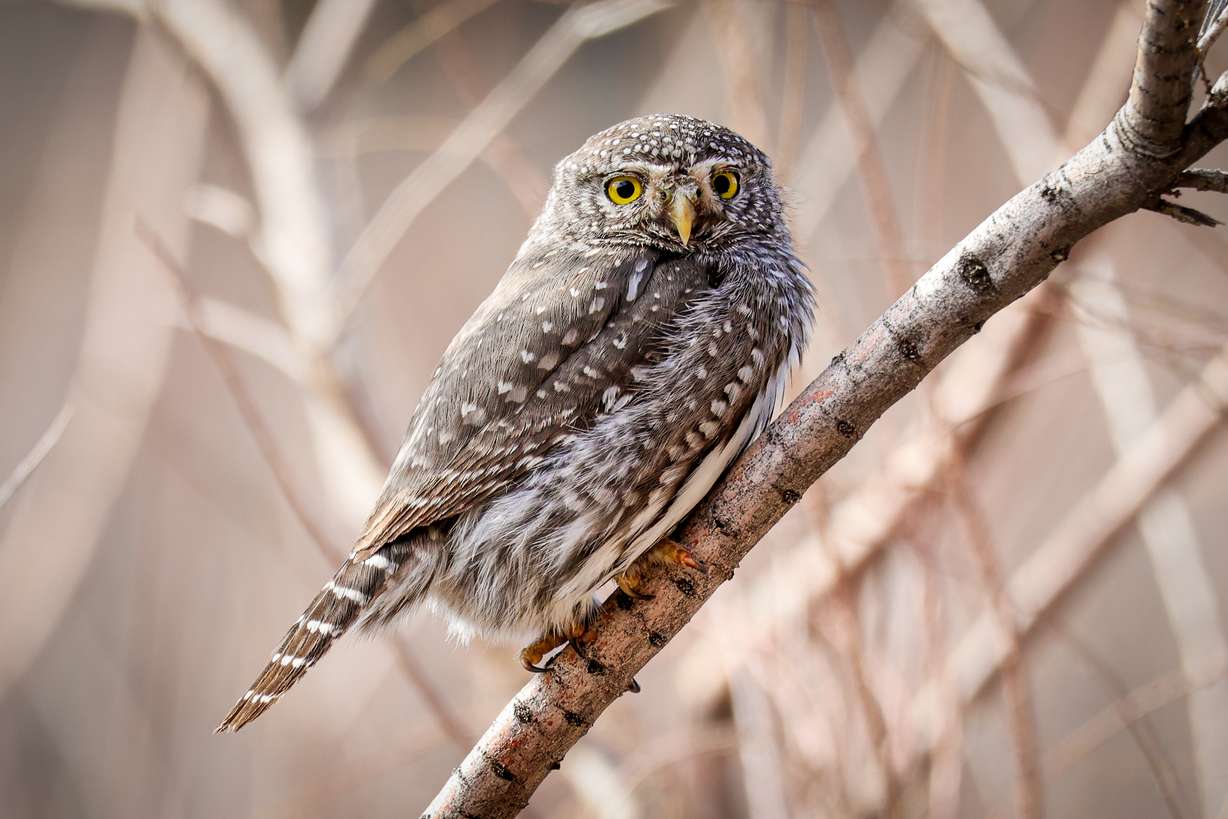
"A lot of people will harass the owl on purpose," Steele said. "There are some who will play owl calls, and that's not good. It stresses them out, and they think it's another animal coming into their territory. I always tell people to please not play the calls. … It's mating season, and they're building their nest, and we want them to be successful and not get scared away."
Steele said his goal in taking photos of wildlife, like the northern pygmy owl, is to give people a peek into nature they might not otherwise have.
"There was a man and his family who stopped by, and as he was leaving, he thanked us for sharing our art with people who aren't able to see things like this," Steele said. "I get a lot of elderly people who comment on my photos, saying, "Thank you so much for sharing your art because I can't get out of the house to go see it."
As for Jeppson, she described birding as a spiritual connection, and one she hopes to continue to do for a very long time.
"The pygmy owl is definitely my top catch," Jeppson said. "I did not realize that we had pygmy owls here. I thought they were farther north, so I was pretty excited to catch him.
"For me, birding is almost a spiritual connection that, by the time I'm done birding for the day, I'm just happy and content."