'%3e%3cpath%20d='M34.1406%205.85938C30.3906%202.10547%2025.3047%200%2020%200C14.6953%200%209.60938%202.10547%205.85938%205.85938C2.10938%209.61328%200%2014.6953%200%2020C0%2025.3047%202.10547%2030.3906%205.85938%2034.1406C9.61328%2037.8906%2014.6953%2040%2020%2040C25.3047%2040%2030.3906%2037.8945%2034.1406%2034.1406C37.8906%2030.3906%2040%2025.3047%2040%2020C40%2014.6953%2037.8945%209.60938%2034.1406%205.85938ZM37.0117%2023.543H31.1602V13.5391H27.6328V19.9414C28.1211%2020.6914%2028.3711%2021.582%2028.3711%2022.5625V22.625C28.3711%2023.668%2028.1172%2024.6055%2027.6328%2025.4297V26.6094H36.082C33.4883%2032.9375%2027.2891%2037.3789%2020.0039%2037.3789C10.3711%2037.3789%202.62109%2029.6289%202.62109%2020C2.62109%2010.3711%2010.3711%202.62109%2020%202.62109C29.6289%202.62109%2037.3789%2010.3711%2037.3789%2020C37.3789%2021.1484%2037.2617%2022.2656%2037.0508%2023.3477C37.0391%2023.4141%2037.0234%2023.4766%2037.0117%2023.543Z'%20fill='white'/%3e%3cpath%20d='M22.3086%2018.5352C20.4336%2018.125%2019.9531%2017.8398%2019.9766%2017.1836V17.1406C19.9766%2016.6992%2020.3477%2016.2148%2021.4023%2016.2148C22.582%2016.2148%2023.8867%2016.6797%2025.0781%2017.4766L26.8516%2015.0195C25.4453%2013.8906%2023.707%2013.3398%2021.5547%2013.3398C18.5195%2013.3398%2016.4375%2015%2016.4063%2017.4766V17.5352C16.3633%2020.2617%2018.5859%2020.9805%2021.293%2021.6016C23.0391%2021.9766%2023.5703%2022.3164%2023.5703%2022.9609L23.5469%2022.9766C23.5469%2023.3906%2023.2578%2023.7031%2022.7852%2023.8359C22.5742%2023.9062%2022.1289%2023.9727%2021.5156%2023.9727C20.7617%2023.9727%2019.7539%2023.8633%2018.6328%2023.4844C18.0898%2023.2891%2017.4727%2023.0039%2016.8047%2022.6133L20.1406%2026.625C20.2813%2026.6602%2021.0977%2026.8516%2021.7734%2026.8516C25.0039%2026.8516%2027.0859%2025.2461%2027.1094%2022.6328V22.5703C27.1602%2020.1133%2025.2148%2019.1719%2022.3086%2018.5352Z'%20fill='white'/%3e%3cpath%20d='M5.24219%2013.5664V26.6133H8.75391V23.7578L10.2969%2021.9531L14.2031%2026.6133H18.3867L12.3555%2019.5195L17.4023%2013.5664H13.4531L8.75391%2019.0586V13.5664H5.24219Z'%20fill='white'/%3e%3c/g%3e%3cdefs%3e%3cclipPath%20id='clip0_97_2430'%3e%3crect%20width='40'%20height='40'%20fill='white'/%3e%3c/clipPath%3e%3c/defs%3e%3c/svg%3e)


- Utah aims to become the top U.S. destination for critical mineral extraction.
- Gov. Spencer Cox's "Mission Critical" plan targets 25% of national mineral demand.
- Utah's initiatives could reduce U.S. reliance on China for essential minerals.
SALT LAKE CITY — The top power brokers in the Utah Legislature announced on Tuesday that one of their aims for the 2026 legislative session is to make Utah the No. 1 destination for critical mineral extraction and processing in the country.
By doing this, Utah may help solve the dilemma faced by President Donald Trump as he attempts to strengthen his tariff regime by reducing American dependence on China for materials that are essential to national security.
"When President Trump was negotiating with those who are in that other country, critical minerals was a big part of the tariff negotiation," state Senate President Stuart Adams said. "So what we're doing in Utah is a big solution."
On Tuesday, Adams, R-Layton, and state House Speaker Mike Schultz, R-Hooper, opened the state legislative session with promises to invest in Utah's long-term prosperity through energy, housing and critical minerals.
Cox's critical mineral plans
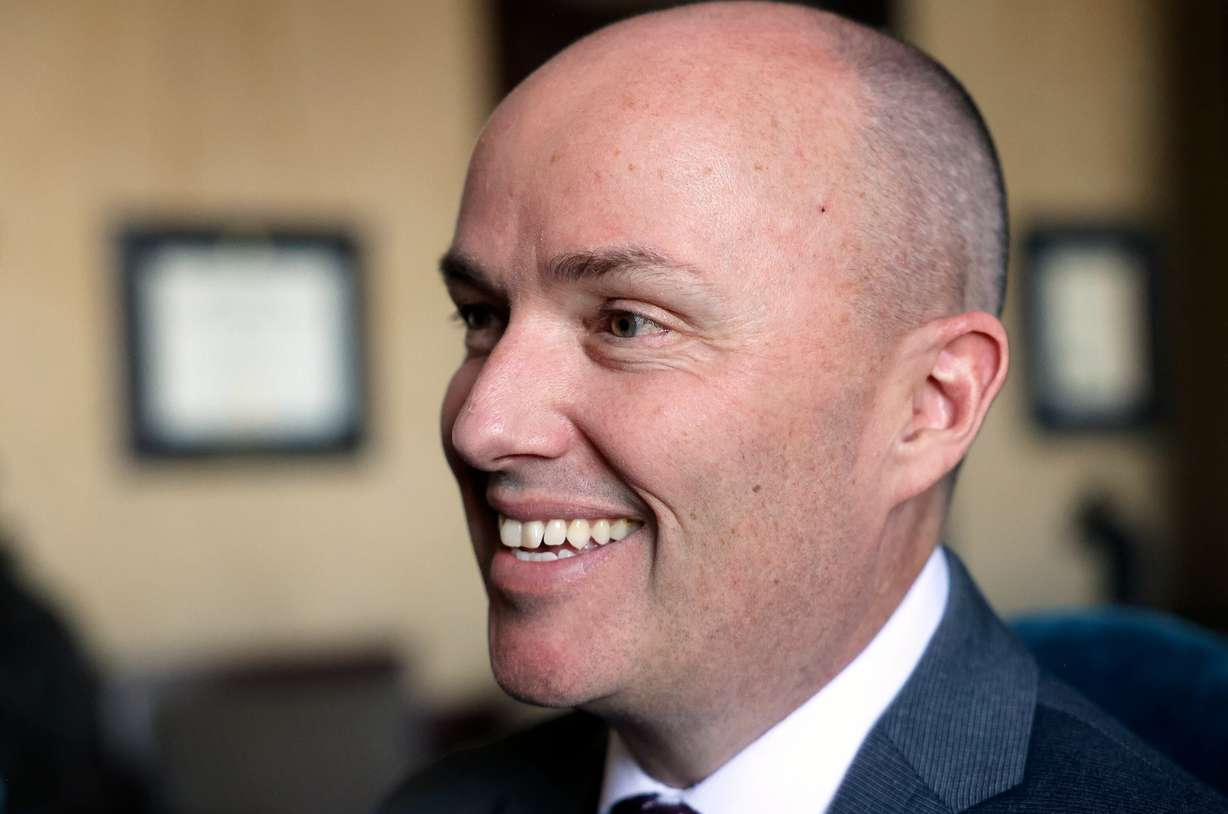
Utah Gov. Spencer Cox also unveiled big plans for critical minerals. In a document obtained by the Deseret News, the governor outlined a "strategic framework" for Utah to quickly meet 25% of the country's critical mineral demand.
In addition to capturing a quarter of the critical mineral market share, the "Mission Critical" plan seeks to cut the average permitting timeline by 50%, to less than 18 months, and to ensure at least 50% of mined minerals are processed in Utah.
The plan's objectives get even more ambitious: approving five critical mineral operations over the next 18 months, and creating a new research center that will become a federally recognized U.S. Critical Minerals National Laboratory within six years.
Associated Universities, Inc., which operates federal research facilities, identified Utah as the best location for a lab, Adams said. The state plans to partner with the organization to launch the MINES Center at the University of Utah.
Cox made the pitch for a national lab in Utah to Interior Secretary Doug Burgum several months ago, the governor told the Deseret News on Tuesday. This has been a focus for Cox for at least a year.
It played into his decision to lead trade delegations in 2025 to Canada and Australia. Now, after visiting two of the world's mining capitals, Cox said Utah is working to implement what it has done on critical minerals.
"I'm working ... on significantly lowering the time frame that it takes for permitting, in both the mining area and the processing of critical minerals," Cox said. "(And) still keeping people safe. We can do both of those things."
Why is the U.S. dependent on China?
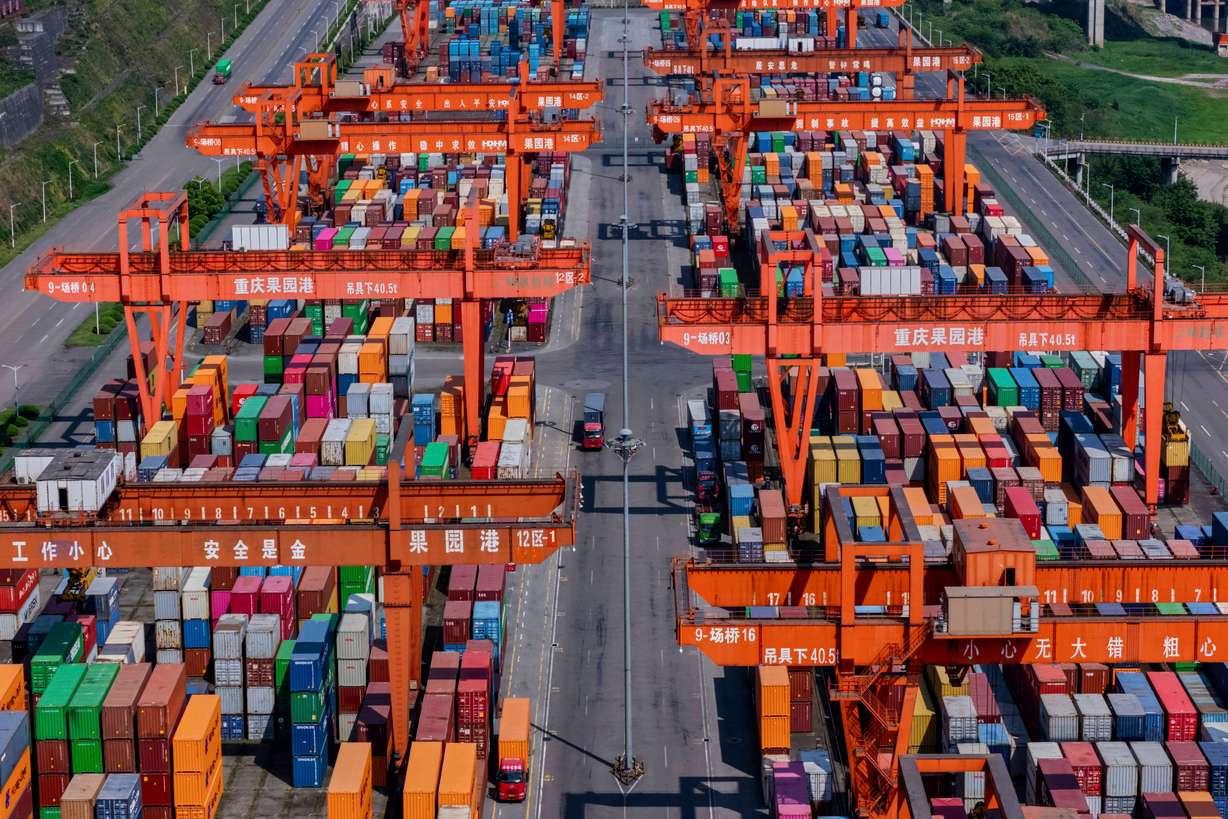
The pace at which Utah leaders are taking steps toward making Utah a critical mineral powerhouse reflects the nation's dire situation. Since Trump announced new tariffs on China, the country's leaders temporarily halted their exports of critical minerals.
For years, China has been able to use its monopoly over critical minerals to influence international policy. On Jan. 14, Trump ordered trade officials to delay tariffs on rare earths and to negotiate import agreements that do not undermine the American critical minerals industry.
The United States is 100% dependent on other nations for a dozen critical minerals, which are materials the U.S. government determines are necessary for the technology powering the economy and military, including semiconductor chips and weapons guidance systems.
China dominates the world's critical mineral supply. It leads the globe in production for 30 critical minerals, dominating 70% of rare earth mining, and more than 80% of the processing of cobalt, battery graphite and rare-earth elements globally. China supplies more than 50% of the U.S. demand for 21 minerals.
But Utah could help put an end to China's critical mineral dominance.
Why Utah?
In 2024, the Fraser Institute ranked Utah as the best place in the world for mining investment because of its policy environment and natural resources. It is the only state to produce beryllium concentrate, potassium sulfate and uintaite, and is home to 50 of the 60 critical minerals.
In December, Ionic Mineral Technologies announced the discovery of one of the country's largest deposits of rare-earth minerals in Utah County. The Silicon Ridge project is composed of the same halloysite-hosted ion-adsorption clay that provides roughly 40% of China's rare earth production.
Processing of these critical minerals could begin as soon as "this spring," Adams told the Deseret News. To unlock this potential, Adams said lawmakers will work on updating the regulatory structure to permit some state trust land for projects and to secure "probably a little bit of funding."
The "Mission Critical" plan recommends several policies for this legislative session, including the creation of a Critical Minerals Coordinating Team to guide legislative funding priorities and the passage of a resolution calling on federal partners to establish the national lab in Utah.
The plan asks lawmakers to set aside a funding stream through the state severance tax that would support the new committee and complement federal grant money. It also calls for the creation of "critical mineral processing zones" to expedite permitting and apply enhanced tax credits.
These recommendations are the result of months of collaboration between the Governor's Office, legislative leadership, state agencies, industry and academic partners, according to Utah Mining Association president Brian Somers, and function as a package to advocate for a national lab.
"Utah has all of the components needed to be a global leader on this," Somers told the Deseret News. "I really do think that Utah can take a leading role in helping to solve this problem for the U.S. and also for the industrialized world so that we're not reliant on China for these mineral supply chains."
A new vision for Utah's economy
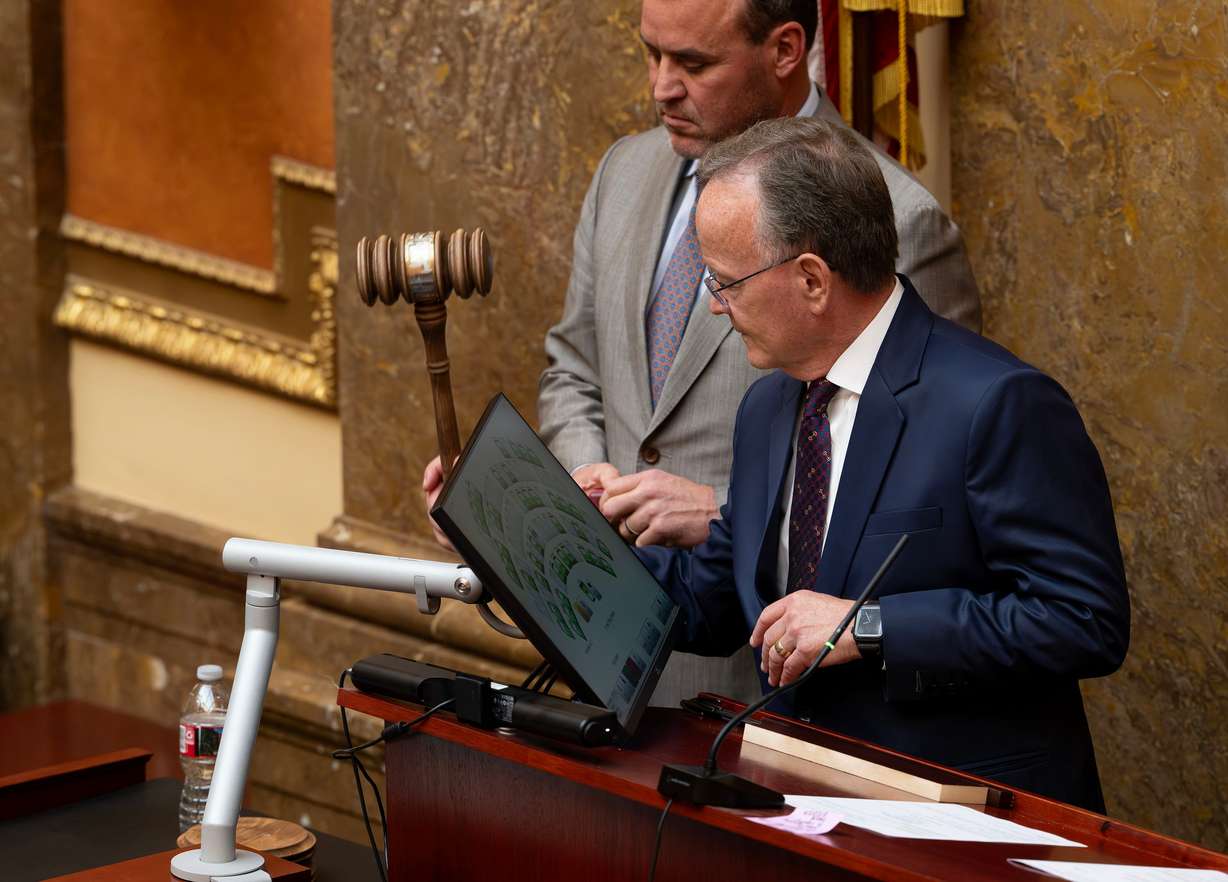
Adams and Schultz began laying the groundwork for what they hope will be an ambitious session during Tuesday's speeches to kick off the 2026 general session.
Adams welcomed in attendance Adam Cohen, the president and CEO of Associated Universities, Inc., who previously oversaw 13 of the 17 U.S. Department of Energy National Laboratories, as well as Andre Zeitoun, the founder and CEO of Ionic MT, which uncovered Utah's halloysite holdings.
"This Utah discovery will shift the entire global economic balance," Adams predicted.
Schultz urged fellow representatives to focus on policies that will benefit Utahns for many generations, not just grab headlines "for the next news cycle." Just like efforts to push for a statewide road system a century ago, Schultz said, some will challenge the state's focus on innovative investments.
But Schultz is convinced that leadership in energy, mining and processing will be central to the state's ability to weather coming disruptions from artificial intelligence. The state is "likely to lose a bunch of jobs in the state of Utah because of AI," especially in the tech sector, according to Schultz.
"What are the new and emerging areas that are going to be growing in the state of Utah?" Schultz asked. "I predict that energy and critical minerals will play a key role in being one of the leading drivers of the state's economic development down the road."
As China threatens the U.S. by "flexing its muscles," Schultz said Utah is "poised as the best state in the nation to lead out on critical minerals." Utah has been in "direct conversations" with the White House about the research lab, and the proposal is "getting a lot of traction," Schultz said.