'%3e%3cpath%20d='M34.1406%205.85938C30.3906%202.10547%2025.3047%200%2020%200C14.6953%200%209.60938%202.10547%205.85938%205.85938C2.10938%209.61328%200%2014.6953%200%2020C0%2025.3047%202.10547%2030.3906%205.85938%2034.1406C9.61328%2037.8906%2014.6953%2040%2020%2040C25.3047%2040%2030.3906%2037.8945%2034.1406%2034.1406C37.8906%2030.3906%2040%2025.3047%2040%2020C40%2014.6953%2037.8945%209.60938%2034.1406%205.85938ZM37.0117%2023.543H31.1602V13.5391H27.6328V19.9414C28.1211%2020.6914%2028.3711%2021.582%2028.3711%2022.5625V22.625C28.3711%2023.668%2028.1172%2024.6055%2027.6328%2025.4297V26.6094H36.082C33.4883%2032.9375%2027.2891%2037.3789%2020.0039%2037.3789C10.3711%2037.3789%202.62109%2029.6289%202.62109%2020C2.62109%2010.3711%2010.3711%202.62109%2020%202.62109C29.6289%202.62109%2037.3789%2010.3711%2037.3789%2020C37.3789%2021.1484%2037.2617%2022.2656%2037.0508%2023.3477C37.0391%2023.4141%2037.0234%2023.4766%2037.0117%2023.543Z'%20fill='white'/%3e%3cpath%20d='M22.3086%2018.5352C20.4336%2018.125%2019.9531%2017.8398%2019.9766%2017.1836V17.1406C19.9766%2016.6992%2020.3477%2016.2148%2021.4023%2016.2148C22.582%2016.2148%2023.8867%2016.6797%2025.0781%2017.4766L26.8516%2015.0195C25.4453%2013.8906%2023.707%2013.3398%2021.5547%2013.3398C18.5195%2013.3398%2016.4375%2015%2016.4063%2017.4766V17.5352C16.3633%2020.2617%2018.5859%2020.9805%2021.293%2021.6016C23.0391%2021.9766%2023.5703%2022.3164%2023.5703%2022.9609L23.5469%2022.9766C23.5469%2023.3906%2023.2578%2023.7031%2022.7852%2023.8359C22.5742%2023.9062%2022.1289%2023.9727%2021.5156%2023.9727C20.7617%2023.9727%2019.7539%2023.8633%2018.6328%2023.4844C18.0898%2023.2891%2017.4727%2023.0039%2016.8047%2022.6133L20.1406%2026.625C20.2813%2026.6602%2021.0977%2026.8516%2021.7734%2026.8516C25.0039%2026.8516%2027.0859%2025.2461%2027.1094%2022.6328V22.5703C27.1602%2020.1133%2025.2148%2019.1719%2022.3086%2018.5352Z'%20fill='white'/%3e%3cpath%20d='M5.24219%2013.5664V26.6133H8.75391V23.7578L10.2969%2021.9531L14.2031%2026.6133H18.3867L12.3555%2019.5195L17.4023%2013.5664H13.4531L8.75391%2019.0586V13.5664H5.24219Z'%20fill='white'/%3e%3c/g%3e%3cdefs%3e%3cclipPath%20id='clip0_97_2430'%3e%3crect%20width='40'%20height='40'%20fill='white'/%3e%3c/clipPath%3e%3c/defs%3e%3c/svg%3e)


Estimated read time: 5-6 minutes
- Erika Kirk, widow of Charlie Kirk, is requesting a speedy trial for Tyler Robinson.
- Robinson's defense seeks to exclude cameras from the courtroom, citing constitutional concerns.
- Media attorney Jeffrey Hunt opposes sealing motions, advocating for public courtroom transparency.
PROVO — The widow of Charlie Kirk has requested a speedy trial in the case against the man accused of shooting and killing her husband.
Erika Kirk's request comes as Tyler Robinson has filed his anticipated motion to keep cameras out of the courtroom, the latest in a series of pre-trial motions.
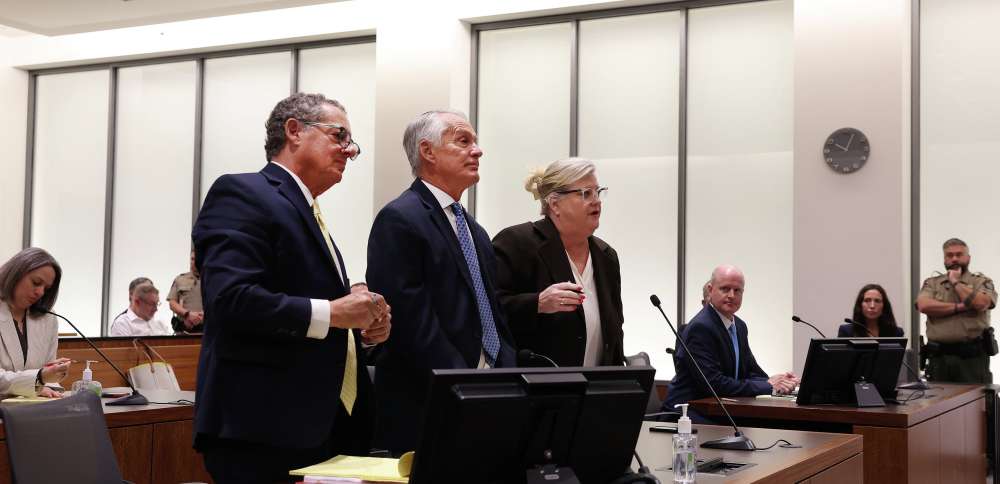
On Friday, 4th District Judge Tony Graf heard testimony on the defense's motion to have the Utah County Attorney's Office disqualified from the case because a family member of one of the prosecuting attorneys was at the Turning Point USA event on Sept. 10 at Utah Valley University when Charlie Kirk, 31, was shot.
That same day, Erika Kirk requested that her Sixth Amendment right to a speedy trial be invoked.
"Nobody believed in the importance of the United States Constitution more than Charlie Kirk. And although the United States Constitution guarantees criminal defendants many rights, it does not guarantee them the right to cause undue delay in the criminal justice process," Erika Kirk and her attorney, Jeffrey Neiman, stated in their court filing.
"The defendant in this case is entitled to a fair trial, and he must be given one, but he is not entitled to cause undue delay to the criminal justice process," the statement continues. "This court is tasked with the critically important function of ensuring the defendant has a fair trial, but this court must also do so while balancing Mrs. Kirk's right to a speedy trial and therefore this notice invokes Mrs. Kirk's rights."
During a closed hearing on Oct. 24, defense attorney Kathy Nester told Graf, "We are looking at a very long case. This case is probably going to last a long time," according to a transcript of the hearing.
Also on Friday, Robinson and his team filed a motion to keep cameras out of the courtroom, another motion requesting permission to file a 262-page "overlength motion" detailing why cameras should be excluded from the courtroom, and a third motion asking that that motion be classified as "private" — something that attorneys representing the media say they will oppose.
"We don't believe it is proper for the court to consider and decide motions that are sealed from the public, so we will be requesting that the court unseal the defense filing," said Jeffrey Hunt, who represents KSL, the Deseret News and other media outlets.
In its request to file a "motion to exclude still photographers, TV cameras and microphones from the courtroom," the defense explains "the motion details numerous violations of (or threatened violations of) Mr. Robinson's constitutional rights to due process, to a fair and impartial jury, to counsel, to be free from unreasonable searches and seizures, and to be free from cruel and unusual punishment, as required by the Fourth, Sixth, Eighth and 14th Amendments to the United States Constitution.
"These claims each require factual development and extensive legal analysis under both federal and state law. This analysis includes an in-depth briefing on relevant United States Supreme Court cases, Utah Supreme Court cases, Utah statutes, and the applicable rules. … The lengthy fact development and review of legal authority is necessary to fully brief the numerous claims in the motion."
Likewise, in their request to seal their motion to keep cameras out of the courtroom, Robinson and his team say, "The primary basis for this request is that the motion compiles a substantial number of electronic media references that evidence violations of Utah state law, violations of this court's decorum orders, and overall threaten Mr. Robinson's constitutional rights to due process, to a fair and impartial jury, to counsel, to be free from unreasonable searches and seizures, and to be free from cruel and unusual punishment.
"Requiring Mr. Robinson to essentially 'republish,' through public filing the litany of unfairly prejudicial and often times inaccurate electronic media interviews, comments, photographs (along with the necessary link citations) compounds the very issue Mr. Robinson seeks to address by the motion — limiting the overwhelming electronic media exposure in this case that fixates on every sound and image produced from the courtroom," the motion continues. "Mr. Robinson should not be forced to sacrifice his right to a fair trial in republishing prejudicial materials necessary to adequately raise the issue before the court."
The defense further argues that "Robinson is concerned that republication of the harmful materials will materially impact the case."
Hunt, however, said, "Electronic media coverage allows the public to actually see and hear what transpires in the courtroom. It is an invaluable tool for informing the public about the case and fostering public confidence and trust in the proceedings. Kicking the cameras out of the courtroom will only breed suspicion and mistrust."
Hunt and other First Amendment attorneys have argued that there has been no case in Utah in which a defendant was found to have received an unfair trial because of pretrial publicity, even though there have been many high-profile criminal cases in Utah.
Robinson, 22, is charged with capital murder and faces a possible death sentence if convicted.
On Friday, a hearing on whether the Utah County Attorney's Office should be disqualified from the case was held. Robinson's defense team contends that because one of the prosecuting attorney's adult children — a student at UVU — was at the event when Kirk was shot, the entire office could be making prosecutorial decisions based on emotional reactions and should be removed from the case.
Utah County Attorney Jeff Gray took the witness stand first on Friday. But the hearing, which started in the afternoon, was delayed several times and stretched past 5 p.m. Gray's testimony will continue on Feb. 3. Graf denied a request from the Utah County Attorney's Office to close testimony to the public, saying he would consider closing the courtroom on a witness-by-witness basis.