'%3e%3cpath%20d='M34.1406%205.85938C30.3906%202.10547%2025.3047%200%2020%200C14.6953%200%209.60938%202.10547%205.85938%205.85938C2.10938%209.61328%200%2014.6953%200%2020C0%2025.3047%202.10547%2030.3906%205.85938%2034.1406C9.61328%2037.8906%2014.6953%2040%2020%2040C25.3047%2040%2030.3906%2037.8945%2034.1406%2034.1406C37.8906%2030.3906%2040%2025.3047%2040%2020C40%2014.6953%2037.8945%209.60938%2034.1406%205.85938ZM37.0117%2023.543H31.1602V13.5391H27.6328V19.9414C28.1211%2020.6914%2028.3711%2021.582%2028.3711%2022.5625V22.625C28.3711%2023.668%2028.1172%2024.6055%2027.6328%2025.4297V26.6094H36.082C33.4883%2032.9375%2027.2891%2037.3789%2020.0039%2037.3789C10.3711%2037.3789%202.62109%2029.6289%202.62109%2020C2.62109%2010.3711%2010.3711%202.62109%2020%202.62109C29.6289%202.62109%2037.3789%2010.3711%2037.3789%2020C37.3789%2021.1484%2037.2617%2022.2656%2037.0508%2023.3477C37.0391%2023.4141%2037.0234%2023.4766%2037.0117%2023.543Z'%20fill='white'/%3e%3cpath%20d='M22.3086%2018.5352C20.4336%2018.125%2019.9531%2017.8398%2019.9766%2017.1836V17.1406C19.9766%2016.6992%2020.3477%2016.2148%2021.4023%2016.2148C22.582%2016.2148%2023.8867%2016.6797%2025.0781%2017.4766L26.8516%2015.0195C25.4453%2013.8906%2023.707%2013.3398%2021.5547%2013.3398C18.5195%2013.3398%2016.4375%2015%2016.4063%2017.4766V17.5352C16.3633%2020.2617%2018.5859%2020.9805%2021.293%2021.6016C23.0391%2021.9766%2023.5703%2022.3164%2023.5703%2022.9609L23.5469%2022.9766C23.5469%2023.3906%2023.2578%2023.7031%2022.7852%2023.8359C22.5742%2023.9062%2022.1289%2023.9727%2021.5156%2023.9727C20.7617%2023.9727%2019.7539%2023.8633%2018.6328%2023.4844C18.0898%2023.2891%2017.4727%2023.0039%2016.8047%2022.6133L20.1406%2026.625C20.2813%2026.6602%2021.0977%2026.8516%2021.7734%2026.8516C25.0039%2026.8516%2027.0859%2025.2461%2027.1094%2022.6328V22.5703C27.1602%2020.1133%2025.2148%2019.1719%2022.3086%2018.5352Z'%20fill='white'/%3e%3cpath%20d='M5.24219%2013.5664V26.6133H8.75391V23.7578L10.2969%2021.9531L14.2031%2026.6133H18.3867L12.3555%2019.5195L17.4023%2013.5664H13.4531L8.75391%2019.0586V13.5664H5.24219Z'%20fill='white'/%3e%3c/g%3e%3cdefs%3e%3cclipPath%20id='clip0_97_2430'%3e%3crect%20width='40'%20height='40'%20fill='white'/%3e%3c/clipPath%3e%3c/defs%3e%3c/svg%3e)


Estimated read time: 3-4 minutes
- AI-powered tire anomaly detectors help UDOT identify potential tire failures.
- The system flagged over two dozen flat tires on its first day of use.
- UDOT plans to expand the technology to all ports for enhanced safety measures.
SALT LAKE CITY — Semitruck and other freight vehicle tire failures can range anywhere from delays or other minor inconveniences to crashes that can become deadly, especially when they occur at high speeds, says Howard Trexler.
Yet for many years, there was no reliable way to determine whether a tire was approaching failure, despite regular inspections at ports of entry across Utah. That's changed with the in-road tire anomaly detector, a system the Utah Department of Transportation recently adopted that uses sensors, measurements and artificial intelligence to identify tires that may be on the verge of failure.
It alerts inspectors who can then focus on that tire to confirm issues.
"The tire anomaly system is a small tool that flags a tire to say — for some reason — it's different. It is up to the human element to inspect that tire and figure out if the difference is something benign ... or something that's dangerous," said Trexler, senior business analyst for UDOT's motor carrier division. "It's a stronger chance to find something."
The agency has several ports scattered across the state, located where freight vehicles typically enter the state from any of Utah's neighbors. Many of these date back to the 1950s, when the Utah Highway Patrol was tasked with inspecting trucks entering the state — although the state did have some ports of entry before that, according to the Utah Department of Public Safety.
Since then, trucks entering the state are weighed and inspected for safety. UDOT eventually took on this responsibility through a legislative change passed in 1990.
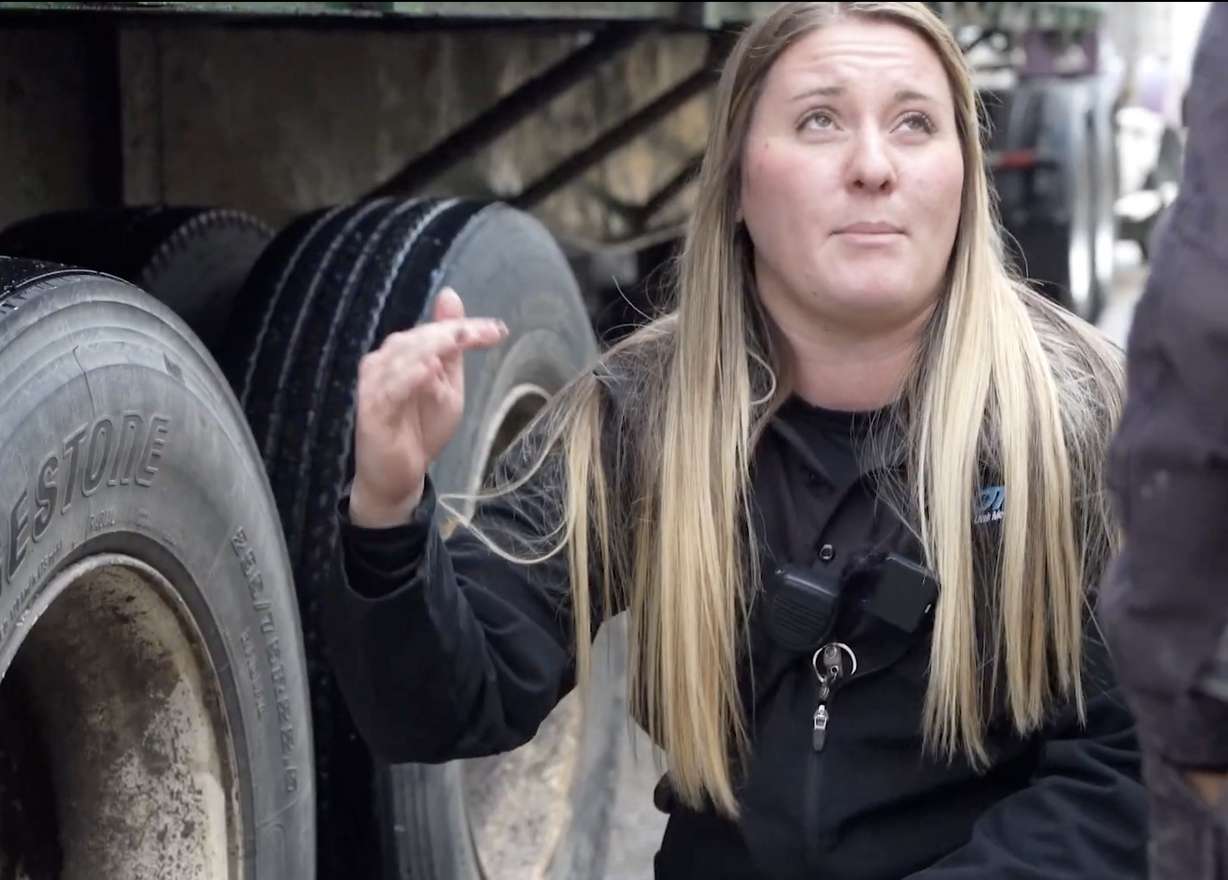
While tires are included in vehicle inspections, state transportation officials point out that it can be nearly impossible to identify impending flaws, as vehicles may have anywhere from six to 42 tires. That's why they say the new system already made a difference, alerting them to over two dozen flat tires in its first day of use at the Echo Port of Entry along I-80 in Summit County last year.
Even then, many of the tires that it identifies appear to be OK, said Cheyenne Enns, an agent for the port of entry. The defects are usually found during physical inspection, where it's clear that the tire is hollow or there's another serious problem with it.
"We were missing tires that looked like they were totally fine," she said, in a video UDOT released. "Really, the tire anomaly system has become another tool not only to make our jobs easier in the sense of finding those safety hazards, but for other ports of entry to continue proper enforcement."
UDOT awarded its motor carrier division with its "innovation of the year" distinction earlier this year for its adoption of the technology, which is now being used at five other ports of entry in the state. Utah's Daniels and Kanab ports, in Wasatch and Kane counties, are the lone holdouts for now, but the agency says it plans to add the system there, too.
State transportation officials say that they hope it can reduce crashes and other headaches.
"The safety here is to catch it ... (and) take care of the problem before it ends up being a problem on the highway," Trexler said.