'%3e%3cpath%20d='M34.1406%205.85938C30.3906%202.10547%2025.3047%200%2020%200C14.6953%200%209.60938%202.10547%205.85938%205.85938C2.10938%209.61328%200%2014.6953%200%2020C0%2025.3047%202.10547%2030.3906%205.85938%2034.1406C9.61328%2037.8906%2014.6953%2040%2020%2040C25.3047%2040%2030.3906%2037.8945%2034.1406%2034.1406C37.8906%2030.3906%2040%2025.3047%2040%2020C40%2014.6953%2037.8945%209.60938%2034.1406%205.85938ZM37.0117%2023.543H31.1602V13.5391H27.6328V19.9414C28.1211%2020.6914%2028.3711%2021.582%2028.3711%2022.5625V22.625C28.3711%2023.668%2028.1172%2024.6055%2027.6328%2025.4297V26.6094H36.082C33.4883%2032.9375%2027.2891%2037.3789%2020.0039%2037.3789C10.3711%2037.3789%202.62109%2029.6289%202.62109%2020C2.62109%2010.3711%2010.3711%202.62109%2020%202.62109C29.6289%202.62109%2037.3789%2010.3711%2037.3789%2020C37.3789%2021.1484%2037.2617%2022.2656%2037.0508%2023.3477C37.0391%2023.4141%2037.0234%2023.4766%2037.0117%2023.543Z'%20fill='white'/%3e%3cpath%20d='M22.3086%2018.5352C20.4336%2018.125%2019.9531%2017.8398%2019.9766%2017.1836V17.1406C19.9766%2016.6992%2020.3477%2016.2148%2021.4023%2016.2148C22.582%2016.2148%2023.8867%2016.6797%2025.0781%2017.4766L26.8516%2015.0195C25.4453%2013.8906%2023.707%2013.3398%2021.5547%2013.3398C18.5195%2013.3398%2016.4375%2015%2016.4063%2017.4766V17.5352C16.3633%2020.2617%2018.5859%2020.9805%2021.293%2021.6016C23.0391%2021.9766%2023.5703%2022.3164%2023.5703%2022.9609L23.5469%2022.9766C23.5469%2023.3906%2023.2578%2023.7031%2022.7852%2023.8359C22.5742%2023.9062%2022.1289%2023.9727%2021.5156%2023.9727C20.7617%2023.9727%2019.7539%2023.8633%2018.6328%2023.4844C18.0898%2023.2891%2017.4727%2023.0039%2016.8047%2022.6133L20.1406%2026.625C20.2813%2026.6602%2021.0977%2026.8516%2021.7734%2026.8516C25.0039%2026.8516%2027.0859%2025.2461%2027.1094%2022.6328V22.5703C27.1602%2020.1133%2025.2148%2019.1719%2022.3086%2018.5352Z'%20fill='white'/%3e%3cpath%20d='M5.24219%2013.5664V26.6133H8.75391V23.7578L10.2969%2021.9531L14.2031%2026.6133H18.3867L12.3555%2019.5195L17.4023%2013.5664H13.4531L8.75391%2019.0586V13.5664H5.24219Z'%20fill='white'/%3e%3c/g%3e%3cdefs%3e%3cclipPath%20id='clip0_97_2430'%3e%3crect%20width='40'%20height='40'%20fill='white'/%3e%3c/clipPath%3e%3c/defs%3e%3c/svg%3e)


Estimated read time: 6-7 minutes
- An audit of the Salt Lake County District Attorney's Office revealed inconsistent case filings.
- Auditors recommend more transparency and documentation for plea deals and diversion programs.
- The audit highlights statewide issues with performance metrics and documentation in Utah's county attorney offices.
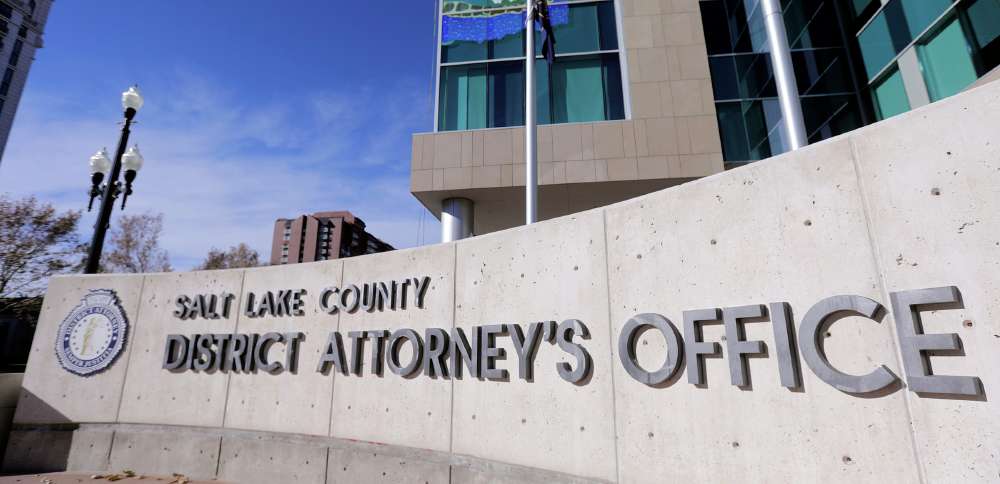
SALT LAKE CITY — A new audit involving the Salt Lake County District Attorney's Office found inconsistencies in the screening and filing of criminal cases, and a lack of documentation to analyze plea deals.
On Tuesday, the Office of the Legislative Auditor General released its findings of an audit of District Attorney Sim Gill's office. Auditors say they were asked to "evaluate the efficiency and effectiveness" of the district attorney's office.
According to the audit, the district attorney's office lacks adequate policies for its screening and filing processes. And despite the recently released "informal written guidance, this has been poorly communicated and implemented."
While the audit acknowledges that Salt Lake County has a heavier workload than other jurisdictions, and 77% of cases screened have resulted in criminal charges, auditors say the office is inconsistent in which cases they choose to file.
"We recognize the workload of screening staff is substantial, and employees are attempting to use their best judgment for each case. However, due to the volume of cases, we questioned whether the screening division used written policies to ensure consistent filings for similar cases. Office management stated that they intentionally do not use policies because they prefer to handle law enforcement referrals on a case-by-case basis. The absence of clear policies has resulted in different outcomes for similar cases during the screening process," the audit states, adding that the district attorney's screening policy "is broadly worded and focuses more on general philosophy than on specific criteria."
"Limited written policies within the DA's office have led to inconsistent applications of prosecutor discretion in both the pre-filing (charging) and post-filing phases. We recognize that each case is unique, and that justice will differ depending on the facts of each case," the audit continues. Auditors also noted that the same concerns were found at other county attorney's offices in Utah.
Auditors recommend that the district attorney's office "should regularly evaluate a sample of screening decisions. This can help the office ensure filings and declinations are consistent with office practices and policies."
On Monday, Gill unveiled a new screening dashboard to help the public better understand the screening process.
Auditors also found the district attorney needs to be more transparent in its criteria for "alternative-to-incarceration" programs, such as drug court.
"For months, staff at the DA's office prevented us from attending meetings where program admission decisions were made. This lack of transparency and the repeated delays hindered our ability to fully evaluate the diversion programs," the audit states.
Auditors further found that the Salt Lake County District Attorney's Office does not adequately address public safety when deciding who is eligible for an alternative program.
"Individuals with violent crimes are not immediately disqualified from the program. We are concerned that the program's criteria do not properly focus on individuals whose criminal activity is driven by drug dependency, while also not disqualifying those who present a public safety risk," the audit found.
As with the screening process, auditors also say there needs to be more documentation and consistency with plea deals.
"For example, we found instances where criminal charges were significantly reduced through plea deals without proper documentation or justification. We acknowledge that each case is unique and that the strength of the evidence plays a critical role in determining the final disposition. However, office leadership should strengthen oversight by establishing documented expectations to both reduce the risk of inconsistent case decisions and improve transparency," the audit states.
While auditors say plea deals can help manage large case loads, they would like to see more documentation of those deals.
"Without documentation or case notes, it is challenging to determine how cases were managed or how plea deal agreements were reached. A lack of documentation can diminish the transparency of the prosecutor's decision-making process," the audit states.
Auditors also noted that Gill's office is not the only one affected by this issue. "We could not find any offices within Utah that have strong policies and oversight mechanisms to ensure consistent documentation of plea agreements among the counties we visited," the audit says.
In fact, while auditors recommend that the district attorney "establish clear performance metrics to evaluate the office's effectiveness," the audit also found that all 29 district and county attorney offices in Utah are reluctant to use performance measures to evaluate the performance of a prosecutor.
"Historically, prosecutors' offices have rarely collected data or communicated their performance to the public using metrics. We found that county attorneys overwhelmingly believe that a prosecuting office's success cannot be measured with data. This problem is prevalent throughout the state."
In a letter signed by 27 of the 29 county and district attorneys submitted to auditors, while they support efforts to ensure accountability and effectiveness, prosecutors caution against using statistics other than to measure a prosecutor's success.
"Our offices are mindful of the risks of over-emphasizing numerical measures in a profession where success is not always reflected in a conviction or short timeline. A just outcome may involve securing a conviction and prison sentencing in one case, dismissing charges where the evidence is insufficient in another, or referring an offender to treatment court — each of which can be an equally important contribution to a fair and effective system," the letter states.
Gill's office released a statement Tuesday following the release of the audit.
"The Salt Lake County District Attorney's Office appreciates the opportunity to have worked with the Office of the Legislative Auditor through such an important exercise. The DA's office remains committed to providing transparency in our processes and continually improving our operations to maximize fairness and efficiency as we work day in and day out to achieve justice for crime victims and to keep our communities safe. We will continue to uphold our duty to seek justice in each and every one of our cases, and to do so with the recommendations of the report in mind."
The Utah Legislature's Republican majority has often butted heads with Gill, accusing the Democrat district attorney of using a light prosecutorial touch, which they say has led to crime in and around the capital city. Last year, as lawmakers approved large investments in a potential new hockey arena and Major League Baseball stadium in Salt Lake City, the Legislature passed a bill requiring the district attorney's office to report billed time in 15-minute increments to a legislative committee.
Republicans said the bill was a way to add oversight of Gill's office as a way to protect the investment in sports and entertainment.
"One of the biggest complaints I've heard from business owners and citizens in this area is that there are many people walking around Salt Lake City who are criminals and they're not being prosecuted," former Rep. Kera Birkeland, R-Morgan, said at the time.
Then-Rep. Brady Brammer, R-Highland, added: "There needs to be some level of accountability in our capital city for the prosecution of crime when it is not appropriately prosecuted."
Contributing: Bridger Beal-Cvetko