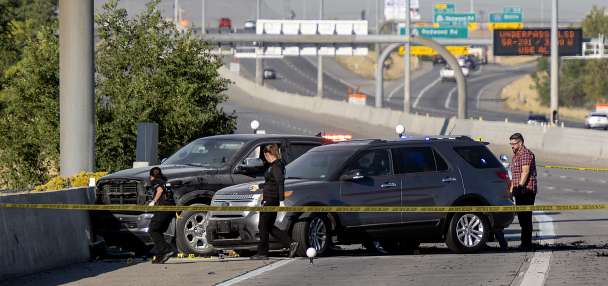
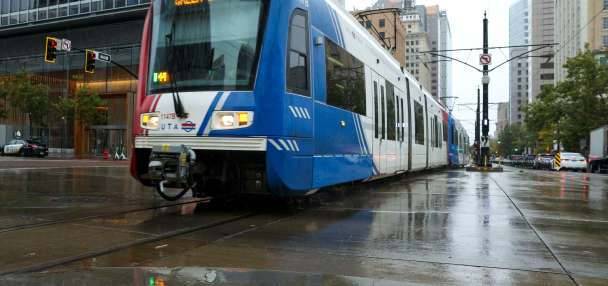
- Salt Lake City unveiled a six-point action plan to improve transportation systems.
- The plan addresses UDOT study findings, and prepares for growth and major events.
- The city says it hopes to avoid future legislation, as it implements changes.
SALT LAKE CITY — Utah's capital city says it's prepared to take "tangible action" to bolster its transportation system, proposing a series of changes leaders say go "beyond the statutory requirements" of a controversial bill that called for a study of a section of its roads.
Salt Lake City unveiled its "six-point action plan" for mobility to members of the Utah Legislature's Transportation Interim Committee on Wednesday, which is essentially its response to a Utah Department of Transportation study ordered in this year's SB195 that the agency released last month.
The city's plan outlines several proposed actions to improve mapping for "critical capacity" routes, on-street parking, internal communication, engagement before embarking on road construction projects, mitigating impacts during project construction and handling signal timing. The changes seek to prepare the city for additional growth and for major upcoming events, like the Salt Lake Temple open house in 2027 and the 2034 Olympic and Paralympic Winter Games.
"Our city is transforming quickly, and we appreciated the opportunity that SB195 gave us to pause, learn, study and plan better," said Salt Lake City Mayor Erin Mendenhall, as she presented the plan to the committee. "We want to keep welcoming more new residents and businesses, and we believe that this process sets us up to do so."
The plan includes removing highway reduction strategies — such as new bike lanes and traffic calming measures — on certain roads, while having UDOT sign off on certain projects for roads that aren't as busy as key corridors but are busier than city streets.
It also increases access during public and private construction projects. For instance, it states all city projects must ensure there's at least one lane of vehicular access in each direction. Private developers, on the other hand, must provide traffic mitigation plans for their projects and include a "holiday construction moratorium" during "peak shopping/visiting times" to improve business access.
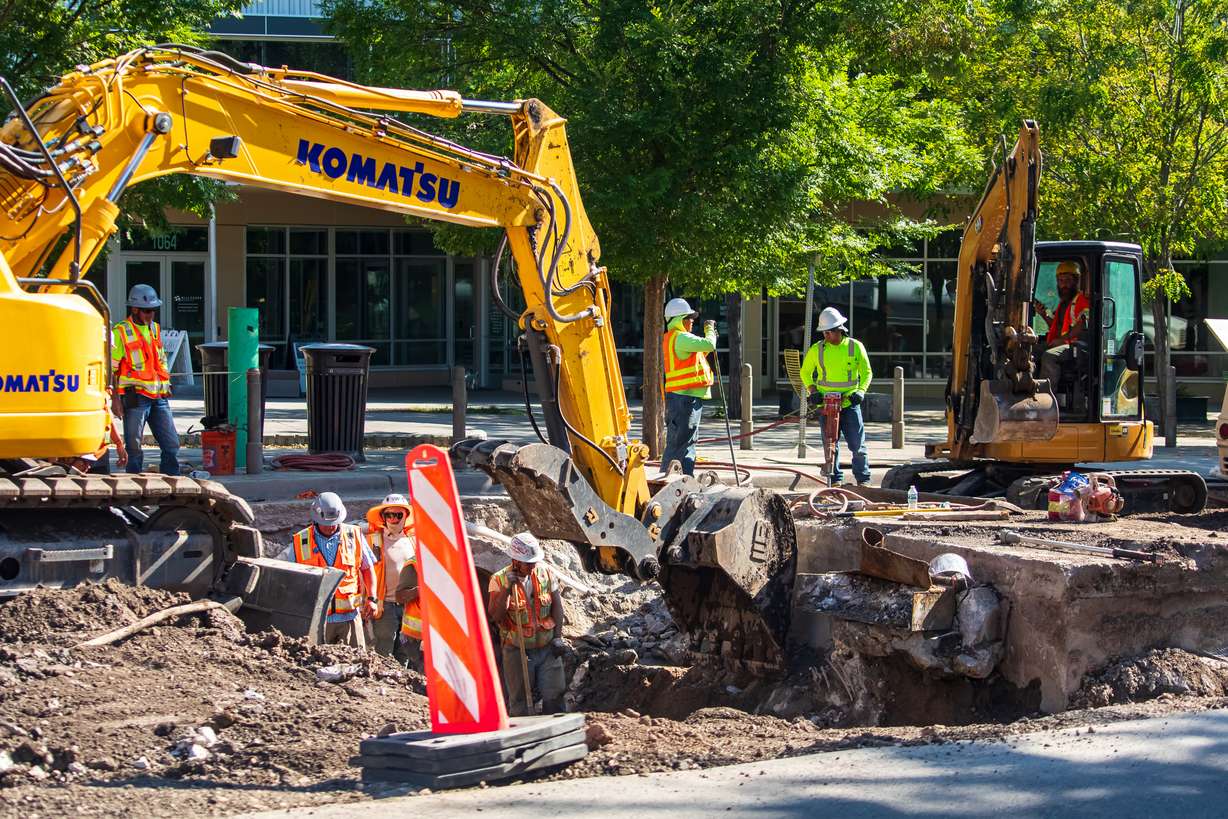
Mendenhall pointed to the recently completed construction in Sugar House that sparked years of headaches as an example of the types of what the city is looking to avoid moving forward.
"We've learned that we need to do better at mitigating the impacts of these projects in the future. ... We want to make it as easy as possible (to shop), especially during the holidays," she said.
Salt Lake City also wants to coordinate with UDOT on a plan to adjust traffic signals in the core of the city to match new patterns since the last project in 2018. The $1 million project could assist in a new world where downtown became more resident- and event-heavy after the COVID-19 pandemic.
Salt Lake City's proposed mobility changes
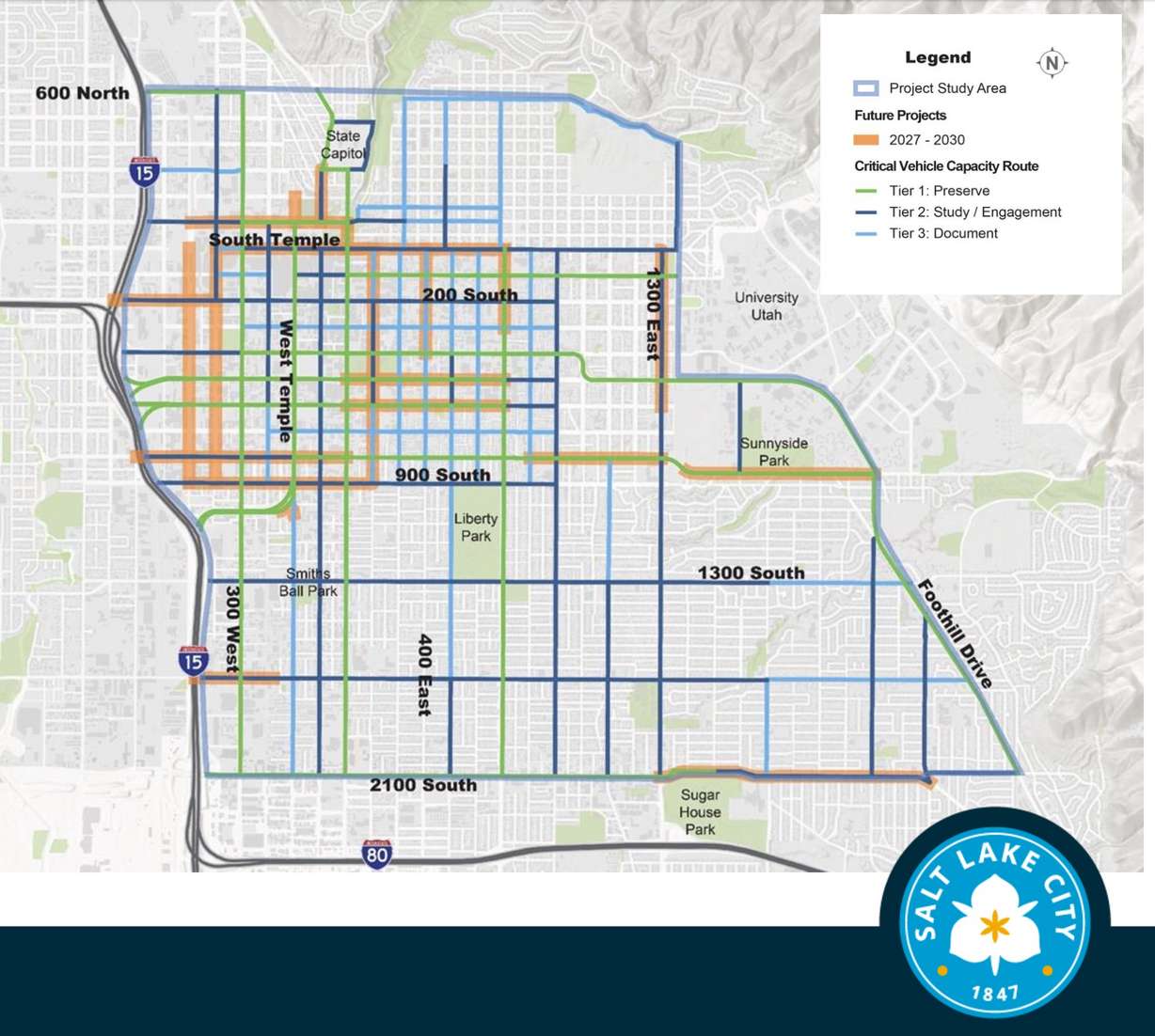
- Critical capacity routes mapping: Adopt the "Critical Vehicle Capacity Routes Map" from the UDOT study in city plans, and designate "key streets for high traffic volumes" and others where traffic calming implementations may be considered after the Salt Lake Chamber finishes gathering feedback from businesses. It will create different corridor tiers and street designations where "lane reduction" projects are considered, but some may require UDOT approval.
- Existing parking and future needs: Conduct a parking study for any project that may remove or modify on-street parking, while implementing a better parking wayfinding system and finding other ways to "optimize" parking.
- Internal communication: Improve "cross-departmental and external communication" to make sure that all roads remain sufficient for first responders and maintenance teams after any projects that alter the road.
- Early and targeted engagement: Cast a "wider net" to inform more than just residents about construction projects in the city, while adding a "department-level liaison to enhance communication" with residents. A new Business Transportation Coalition will regularly meet over "high-level vision and goals" for transportation in the city.
- Construction mitigation plans: Implementing a new construction mitigation policy for all city-led and private projects. All city projects must ensure there's at least one lane of vehicular access in each direction, while private developers must provide traffic mitigation plans for their projects. It also requires a "holiday construction moratorium" during "peak shopping/visiting times" to improve business access.
- Signal timing: Work with UDOT to apply "the best possible timing settings" for all streets. Signal timing may be adjusted to "maximize capacity in traffic flow" and fit traffic changes after new developments. More "consecutive signals" could be implemented to reduce emissions.
Mendenhall's presentation was required through SB195, which called on UDOT to study highway reduction strategies that Salt Lake City had implemented over the past few years, and for the city to submit a mobility plan to the state agency. The study ultimately zeroed in on areas west of Foothill Drive, north of 2100 South, east of I-15 and south of 600 North, following some back and forth between the city and state.
The state's study, which UDOT Director Carlos Braceras presented to the same committee on Oct. 15, generally found that the city's road projects were "more neutral." Yet, the agency offered the city multiple "considerations" to account for some of the negative feedback it received from residents, businesses and visitors over the study process, which the city's mobility plan responds to.
While supportive that Salt Lake City is looking to improve its transportation processes, especially its construction impacts, Melva Sine, president and CEO of the Utah Restaurant Association, said she would like to see ways to address post-construction traffic impacts to businesses included in future project planning.
Conversely, city resident Kyle Holland pleaded for the city and state not to have certain traffic projects "frozen in amber" because of the potential safety elements they can provide.
Ultimately, the purpose of the plan — and SB195 — was to look at every possible consideration when it comes to road projects, said Rep. Kay Christofferson, R-Lehi, the bill's floor sponsor.
"It's a bit of a balancing act between making it so that pedestrians and bicyclists can get where they want to safely, and still having streets open enough that traffic commuting in and out can get where they need to," he said.
City officials argued that those considerations were already in place, while the projects offered traffic calming projects that residents often ask for. With a new plan now out, Mendenhall said she hopes the changes put a cap on legislative intervention.
"We don't see the need for future legislation," she said.