
Estimated read time: 4-5 minutes
- Trigg Minerals' recently proposed mining antimony in Antimony, Garfield County, is raising local concerns.
- Some residents fear an environmental impact, while some residents see economic benefits.
- Antimony Mayor Kasey King says more information is needed before deciding on the project.
ANTIMONY, Garfield County — For Ole and Kenda Lindgren, the canyon behind their home is where the world slows down.
"This is my dream," Ole Lindgren said. "To live in the mountains, raise my family in a pristine area."
For 25 years, the Lindgrens have called Antimony home. They were drawn to this small Garfield County town because of its water, wildlife and silence, raising 11 kids here.
But now, the peace they moved here for feels uncertain.
"I cried about it," Kenda Lindgren said. "And I continue to cry when I think about it."

An Australian company called Trigg Minerals is looking to mine the canyon behind the Lindgrens' home for antimony, the very mineral this small town was named after.
Antimony is a critical mineral used in everything from fighter jets and ammunition to night-vision goggles and semiconductors. Because the U.S. has almost no primary antimony mines, it imports most of its supply from other countries, primarily from China.
Becoming more self-dependent is something Trigg Minerals believes it can help change for the United States.
The company says preliminary surveys show the canyon could hold one of the largest antimony deposits in the United States.
In an email responding to KSL-TV questions about its proposed operations, a Trigg Minerals spokesperson said any proposed work would take place above the canyon, not in it, and that it plans to follow all state and federal environmental regulations.
The company hopes to begin exploratory drilling by the end of this year, with possible full-scale operations starting in 2027.
While that might sound like progress for America's critical mineral independence, for the Lindgrens, it hits too close to home.
"And ask yourself, would you want that to come to your backyard? Not even the shareholders would," Ole Lindgren said.
"We are trying to fight it before it starts. Before all the permits are granted, before the permits are applied for," Kenda Lindgren said. "We want to stop it. We want to nip it in the bud."

They agree the mineral is important for U.S. self-reliance, but they worry about what mining could do to the local water supply, the wildlife, and the way of life they've built in this remote corner of Garfield County.
"I would hate to see this community destroyed by mining," Kenda Lindgren said. "I feel as if it's a fight for our lives and our livelihood."
In a town of just over 100 people, opinions are split.
Ellen and Roger Gleave, longtime residents, say they understand the risks but believe the benefits could outweigh them. They believe the mine could bring more jobs to the area, bring back families, and help revive what many consider a dying town.
"You see that school right over there? It's closed down because we have no jobs. It shut down this year," Roger Gleave said while pointing to the Antimony Elementary School. "We have no little families here. Our kids have to go to Circleville to school now. And it's going to become a retirement community where none of us can afford to live here if they don't start bringing in some jobs of some kind."
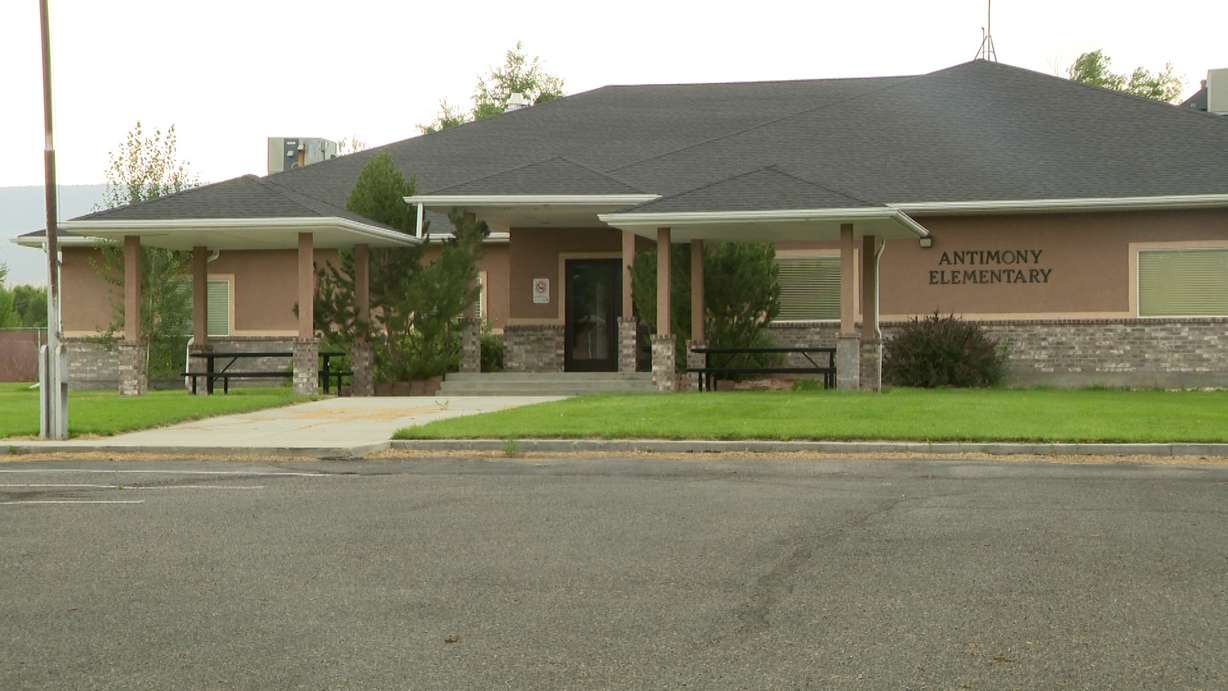
The Gleaves, and many others who attended community meetings about the mine, feel a sense of patriotism that their small town could make a big difference in the name of national defense.
"I think it's very important," Ellen Gleave said. "And we've got to try to hold our own against China."

The town's mayor, Kasey King, agrees more jobs are needed but says it's too early to know what might happen next.
"I really don't think there's enough information gathered yet," King said. "It could (be good), it could, if it is done right."

Antimony has long been considered a critical mineral for national defense, but most of the world's refined supply comes from China, Russia and Tajikistan.
The U.S. Geological Survey has identified domestic production as a strategic priority, especially for military and clean energy technologies.
Mining projects like the one Trigg proposes have also become part of a larger national conversation on how to balance resource independence with environmental protection and the impact on local communities.
For now, Antimony Canyon remains quiet, except for the sounds of nature.
"I like to hear that water over there in the stream and just the animals that are that are here, the birds that chirp, little squirrels that let you know they're here," Ole Lindgren said.
He and his wife just wonder if it'll stay that way for long.
"There's just so much to lose," Kenda Lindgren said.