'%3e%3cpath%20d='M34.1406%205.85938C30.3906%202.10547%2025.3047%200%2020%200C14.6953%200%209.60938%202.10547%205.85938%205.85938C2.10938%209.61328%200%2014.6953%200%2020C0%2025.3047%202.10547%2030.3906%205.85938%2034.1406C9.61328%2037.8906%2014.6953%2040%2020%2040C25.3047%2040%2030.3906%2037.8945%2034.1406%2034.1406C37.8906%2030.3906%2040%2025.3047%2040%2020C40%2014.6953%2037.8945%209.60938%2034.1406%205.85938ZM37.0117%2023.543H31.1602V13.5391H27.6328V19.9414C28.1211%2020.6914%2028.3711%2021.582%2028.3711%2022.5625V22.625C28.3711%2023.668%2028.1172%2024.6055%2027.6328%2025.4297V26.6094H36.082C33.4883%2032.9375%2027.2891%2037.3789%2020.0039%2037.3789C10.3711%2037.3789%202.62109%2029.6289%202.62109%2020C2.62109%2010.3711%2010.3711%202.62109%2020%202.62109C29.6289%202.62109%2037.3789%2010.3711%2037.3789%2020C37.3789%2021.1484%2037.2617%2022.2656%2037.0508%2023.3477C37.0391%2023.4141%2037.0234%2023.4766%2037.0117%2023.543Z'%20fill='white'/%3e%3cpath%20d='M22.3086%2018.5352C20.4336%2018.125%2019.9531%2017.8398%2019.9766%2017.1836V17.1406C19.9766%2016.6992%2020.3477%2016.2148%2021.4023%2016.2148C22.582%2016.2148%2023.8867%2016.6797%2025.0781%2017.4766L26.8516%2015.0195C25.4453%2013.8906%2023.707%2013.3398%2021.5547%2013.3398C18.5195%2013.3398%2016.4375%2015%2016.4063%2017.4766V17.5352C16.3633%2020.2617%2018.5859%2020.9805%2021.293%2021.6016C23.0391%2021.9766%2023.5703%2022.3164%2023.5703%2022.9609L23.5469%2022.9766C23.5469%2023.3906%2023.2578%2023.7031%2022.7852%2023.8359C22.5742%2023.9062%2022.1289%2023.9727%2021.5156%2023.9727C20.7617%2023.9727%2019.7539%2023.8633%2018.6328%2023.4844C18.0898%2023.2891%2017.4727%2023.0039%2016.8047%2022.6133L20.1406%2026.625C20.2813%2026.6602%2021.0977%2026.8516%2021.7734%2026.8516C25.0039%2026.8516%2027.0859%2025.2461%2027.1094%2022.6328V22.5703C27.1602%2020.1133%2025.2148%2019.1719%2022.3086%2018.5352Z'%20fill='white'/%3e%3cpath%20d='M5.24219%2013.5664V26.6133H8.75391V23.7578L10.2969%2021.9531L14.2031%2026.6133H18.3867L12.3555%2019.5195L17.4023%2013.5664H13.4531L8.75391%2019.0586V13.5664H5.24219Z'%20fill='white'/%3e%3c/g%3e%3cdefs%3e%3cclipPath%20id='clip0_97_2430'%3e%3crect%20width='40'%20height='40'%20fill='white'/%3e%3c/clipPath%3e%3c/defs%3e%3c/svg%3e)




Estimated read time: 2-3 minutes
- Department of Veterans Affairs employees are worried about the effects of the government shutdown.
- Union leaders expressed concerns over staffing and potential veteran care consequences.
- Disabled veterans may face care delays, while nonqualifying veterans risk higher insurance premiums.
SALT LAKE CITY — As the federal government shutdown drags on, employees at the Department of Veterans Affairs say they're not just worried about their own paychecks, they're deeply concerned about how the disruption could affect the veterans they serve.
Many VA workers are either furloughed or working without pay, and those still on the job are stretched thin. One employee reported seeing their daily caseload shoot up from around 20 to 25, to around 40 per day.
Dave Hummer, a furloughed VA worker and father of three, said he fears he may not allowed to return to work after the shutdown.
"They're talking about laying people off that are on furlough, and I'm on furlough," Hummer said. "And this is a very important mission. I help some of the most vulnerable veterans that are rated incompetent. They can't manage their own money."
Rob Johnson, president of AFGE 2199, the region's union for Veterans Affairs employees, said the shutdown is just the latest turn in what has been a very difficult year.
"This administration has really put it to us," Johnson said. "There is a vengeful side that's coming down on us."
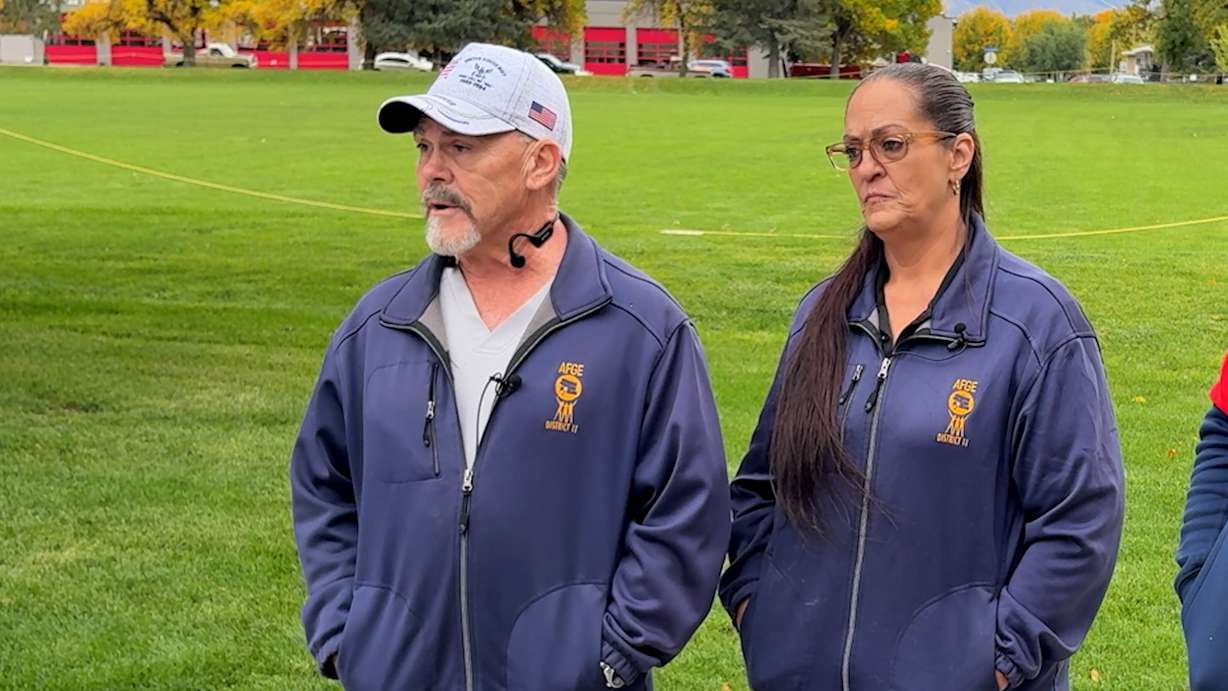
Johnson added that the strain on staff could have serious consequences for veterans.
"It's going to be detrimental to our vets," he said. "How can you possibly say that you're going to go ahead, and you're all for the veterans, and then turn around and do this?"
Teresa Salazar, a union vice president, described the current work environment as unstable and emotionally taxing.
"This is my passion. I love working for the VA," Salazar said. "But right now, it's a scary, scary, scary unstable environment where everybody is basically living on fear and intimidation, and pins and needles day to day."

She worries that delays in care will disproportionately affect disabled veterans.
"The people that are suffering in the long run are our disabled veterans, who deserve it more than anybody in this world," Salazar said.
Union representatives also pointed out that not all veterans qualify for VA health care. Those who don't may face steep increases in insurance premiums if Congress fails to reach a deal.