'%3e%3cpath%20d='M34.1406%205.85938C30.3906%202.10547%2025.3047%200%2020%200C14.6953%200%209.60938%202.10547%205.85938%205.85938C2.10938%209.61328%200%2014.6953%200%2020C0%2025.3047%202.10547%2030.3906%205.85938%2034.1406C9.61328%2037.8906%2014.6953%2040%2020%2040C25.3047%2040%2030.3906%2037.8945%2034.1406%2034.1406C37.8906%2030.3906%2040%2025.3047%2040%2020C40%2014.6953%2037.8945%209.60938%2034.1406%205.85938ZM37.0117%2023.543H31.1602V13.5391H27.6328V19.9414C28.1211%2020.6914%2028.3711%2021.582%2028.3711%2022.5625V22.625C28.3711%2023.668%2028.1172%2024.6055%2027.6328%2025.4297V26.6094H36.082C33.4883%2032.9375%2027.2891%2037.3789%2020.0039%2037.3789C10.3711%2037.3789%202.62109%2029.6289%202.62109%2020C2.62109%2010.3711%2010.3711%202.62109%2020%202.62109C29.6289%202.62109%2037.3789%2010.3711%2037.3789%2020C37.3789%2021.1484%2037.2617%2022.2656%2037.0508%2023.3477C37.0391%2023.4141%2037.0234%2023.4766%2037.0117%2023.543Z'%20fill='white'/%3e%3cpath%20d='M22.3086%2018.5352C20.4336%2018.125%2019.9531%2017.8398%2019.9766%2017.1836V17.1406C19.9766%2016.6992%2020.3477%2016.2148%2021.4023%2016.2148C22.582%2016.2148%2023.8867%2016.6797%2025.0781%2017.4766L26.8516%2015.0195C25.4453%2013.8906%2023.707%2013.3398%2021.5547%2013.3398C18.5195%2013.3398%2016.4375%2015%2016.4063%2017.4766V17.5352C16.3633%2020.2617%2018.5859%2020.9805%2021.293%2021.6016C23.0391%2021.9766%2023.5703%2022.3164%2023.5703%2022.9609L23.5469%2022.9766C23.5469%2023.3906%2023.2578%2023.7031%2022.7852%2023.8359C22.5742%2023.9062%2022.1289%2023.9727%2021.5156%2023.9727C20.7617%2023.9727%2019.7539%2023.8633%2018.6328%2023.4844C18.0898%2023.2891%2017.4727%2023.0039%2016.8047%2022.6133L20.1406%2026.625C20.2813%2026.6602%2021.0977%2026.8516%2021.7734%2026.8516C25.0039%2026.8516%2027.0859%2025.2461%2027.1094%2022.6328V22.5703C27.1602%2020.1133%2025.2148%2019.1719%2022.3086%2018.5352Z'%20fill='white'/%3e%3cpath%20d='M5.24219%2013.5664V26.6133H8.75391V23.7578L10.2969%2021.9531L14.2031%2026.6133H18.3867L12.3555%2019.5195L17.4023%2013.5664H13.4531L8.75391%2019.0586V13.5664H5.24219Z'%20fill='white'/%3e%3c/g%3e%3cdefs%3e%3cclipPath%20id='clip0_97_2430'%3e%3crect%20width='40'%20height='40'%20fill='white'/%3e%3c/clipPath%3e%3c/defs%3e%3c/svg%3e)





- Utah families face high mortgage rates and $520,000 median home prices.
- Multi-generational housing is growing, with 5% of Utah households adopting it.
- Nationwide, 17% of homes sold are multi-generational, aiding affordability challenges.
WEST JORDAN — With mortgage rates above 6% and the median home price in Utah around $520,000, house hunting can be discouraging.
But more families are looking at one specific way to try to make it work. It's called multi-generational housing.
"It's not a major market," said Dejan Eskic, housing analyst at the Kem C. Gardner Policy Institute at the University of Utah, "but it's definitely growing."
One family's story
In the far western part of West Jordan, against the Oquirrh Mountains, there's a new community called Terraine.
It's a place that finally brought an end to a yearlong house hunt for Scott Thomas and his family.
They moved away from Utah in 2021, selling their house at a time of bidding wars and multiple offers. When they came back, everything had changed. Mortgage rates were high and so were prices.
"It was a challenge finding something that was affordable for the family," said Thomas.
But they found a solution, and it's one that brings his mother-in-law, Linda Rasmussen, into the picture. They're building a home in Terraine that will have them join the statistics of multi-generational housing, which is defined as having three generations all living under one roof.

In this case, Rasmussen will live in the basement with one of her grandchildren. Thomas, his wife, and their other children will live upstairs.
"I think it'll be a good thing," Rasmussen said. "I just look at it as an adventure."
How many families do this?
Utah has been adding households that contain multiple generations. Eskic said about 5% of the state's total households — which equals roughly 60,000 — qualify as multi-generational.
Nationwide, of all the homes sold last year, 17% were bought by this demographic, according to the National Association of Realtors.
"With housing being so unaffordable, having your parents or grandparents co-sign on the loan explodes your income, and thus you can afford more home," said Eskic, the analyst at the Gardner Policy Institute.
Eskic said this arrangement can benefit first-time homebuyers or seniors looking to downsize, and it's growing in popularity across the country. A Pew Research study found the number of people living in multigenerational homes since 1971 quadrupled to over 59 million.
One way to afford a home
Back in Terraine, those building the community are not surprised that more families are seeking multi-generational living.
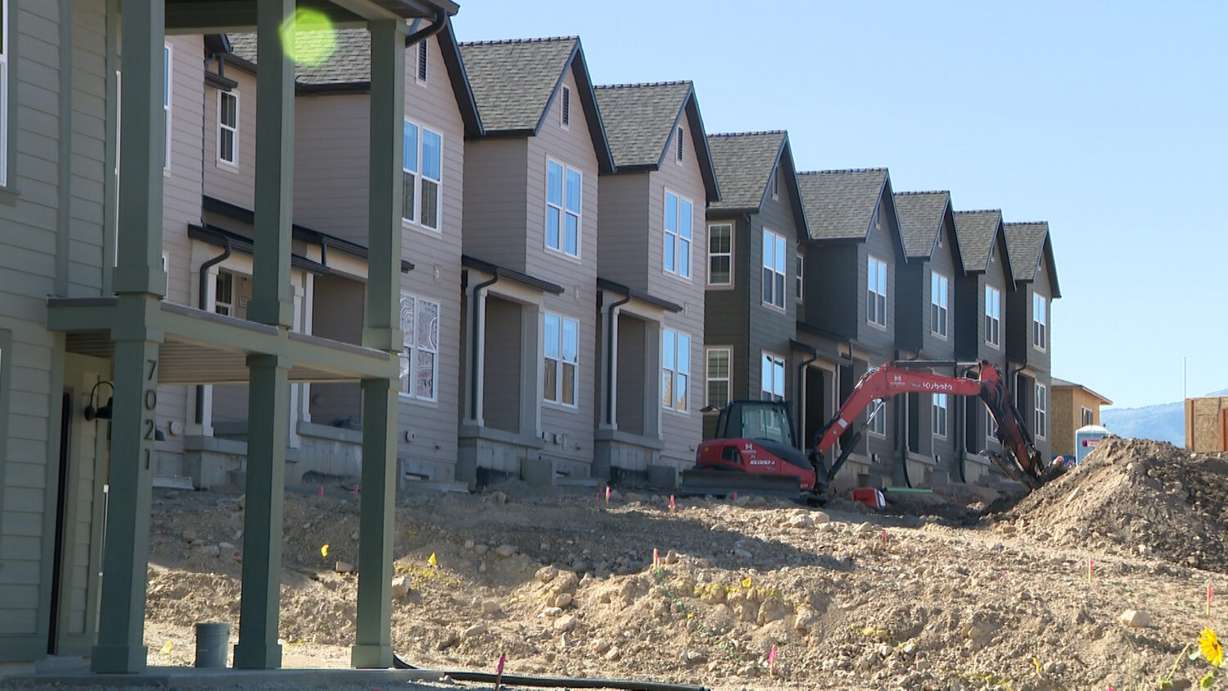
"People want to be with their family, and we kind of moved away from that," said Rachel McIllece, business manager for Third Cadence, which is developing Terraine. "It seems like that's a trend that's coming back."
Taylor Winget, sales agent at Rainey Homes — one of the builders in the community — agreed.
"In 2020 and 2021, that was not a thing at all. Everyone could afford anything, it seemed like," Winget said. "But now it's just impossible, especially for first-time homebuyers to get something."
Meanwhile, for Thomas's family, they're counting the days until December when they can move in. Rasmussen will help pay for the house, and each member of the family will have their own space.
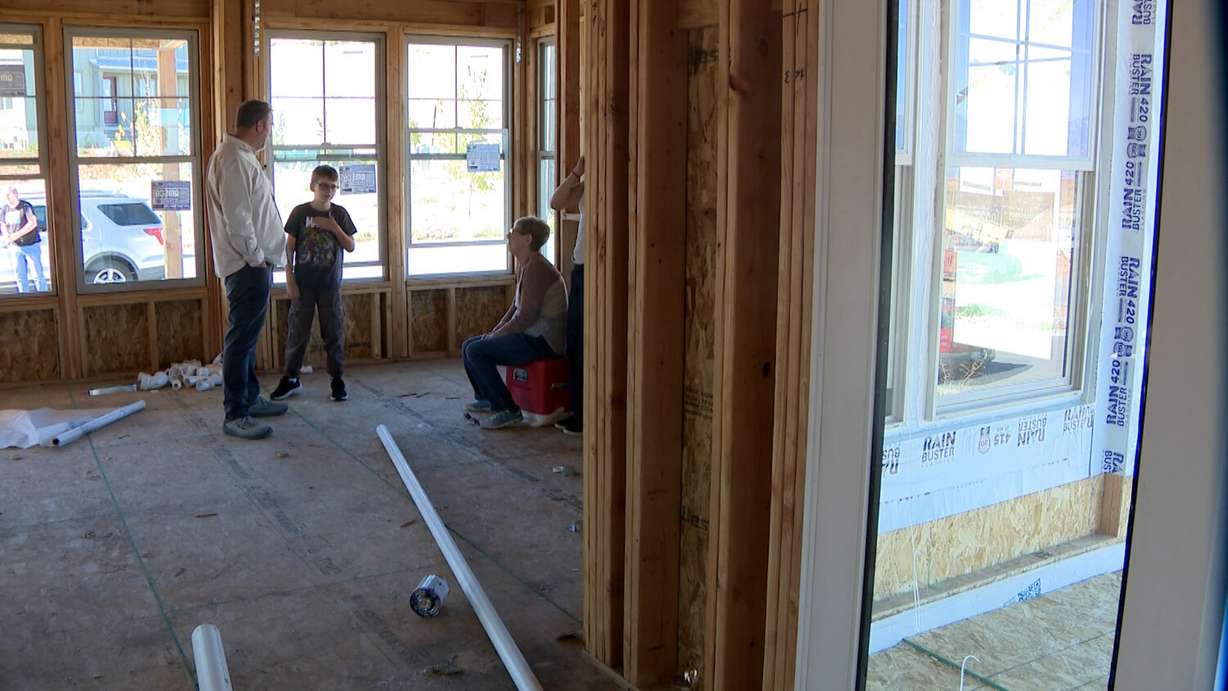
"People used to live like this a long time ago," Thomas said. "Multi-generational families were all together for pretty much their whole life, and so I think we're starting to see a return to that."
In this housing market, he added, "pricing is just out of control, and affordability is out of control, and this is a way to make it work, I think."