'%3e%3cpath%20d='M34.1406%205.85938C30.3906%202.10547%2025.3047%200%2020%200C14.6953%200%209.60938%202.10547%205.85938%205.85938C2.10938%209.61328%200%2014.6953%200%2020C0%2025.3047%202.10547%2030.3906%205.85938%2034.1406C9.61328%2037.8906%2014.6953%2040%2020%2040C25.3047%2040%2030.3906%2037.8945%2034.1406%2034.1406C37.8906%2030.3906%2040%2025.3047%2040%2020C40%2014.6953%2037.8945%209.60938%2034.1406%205.85938ZM37.0117%2023.543H31.1602V13.5391H27.6328V19.9414C28.1211%2020.6914%2028.3711%2021.582%2028.3711%2022.5625V22.625C28.3711%2023.668%2028.1172%2024.6055%2027.6328%2025.4297V26.6094H36.082C33.4883%2032.9375%2027.2891%2037.3789%2020.0039%2037.3789C10.3711%2037.3789%202.62109%2029.6289%202.62109%2020C2.62109%2010.3711%2010.3711%202.62109%2020%202.62109C29.6289%202.62109%2037.3789%2010.3711%2037.3789%2020C37.3789%2021.1484%2037.2617%2022.2656%2037.0508%2023.3477C37.0391%2023.4141%2037.0234%2023.4766%2037.0117%2023.543Z'%20fill='white'/%3e%3cpath%20d='M22.3086%2018.5352C20.4336%2018.125%2019.9531%2017.8398%2019.9766%2017.1836V17.1406C19.9766%2016.6992%2020.3477%2016.2148%2021.4023%2016.2148C22.582%2016.2148%2023.8867%2016.6797%2025.0781%2017.4766L26.8516%2015.0195C25.4453%2013.8906%2023.707%2013.3398%2021.5547%2013.3398C18.5195%2013.3398%2016.4375%2015%2016.4063%2017.4766V17.5352C16.3633%2020.2617%2018.5859%2020.9805%2021.293%2021.6016C23.0391%2021.9766%2023.5703%2022.3164%2023.5703%2022.9609L23.5469%2022.9766C23.5469%2023.3906%2023.2578%2023.7031%2022.7852%2023.8359C22.5742%2023.9062%2022.1289%2023.9727%2021.5156%2023.9727C20.7617%2023.9727%2019.7539%2023.8633%2018.6328%2023.4844C18.0898%2023.2891%2017.4727%2023.0039%2016.8047%2022.6133L20.1406%2026.625C20.2813%2026.6602%2021.0977%2026.8516%2021.7734%2026.8516C25.0039%2026.8516%2027.0859%2025.2461%2027.1094%2022.6328V22.5703C27.1602%2020.1133%2025.2148%2019.1719%2022.3086%2018.5352Z'%20fill='white'/%3e%3cpath%20d='M5.24219%2013.5664V26.6133H8.75391V23.7578L10.2969%2021.9531L14.2031%2026.6133H18.3867L12.3555%2019.5195L17.4023%2013.5664H13.4531L8.75391%2019.0586V13.5664H5.24219Z'%20fill='white'/%3e%3c/g%3e%3cdefs%3e%3cclipPath%20id='clip0_97_2430'%3e%3crect%20width='40'%20height='40'%20fill='white'/%3e%3c/clipPath%3e%3c/defs%3e%3c/svg%3e)


- Utah landlord and tenant groups oppose SB97, which removes property tax exemptions for landlords.
- Sen. Dan McCay's bill aims to incentivize more owner-occupied housing.
- Concerns include increased rents and reduced rental housing supply, impacting housing affordability.
SALT LAKE CITY — A Utah lawmaker's proposal to effectively raise property taxes on rental property owners has both landlord and tenant groups coming together to oppose it.
Several states have so-called "homestead" exemptions that allow homeowners to lower their property tax burden on owner-occupied properties. Utah is unique, however, in offering exemptions on rental properties that serve as a primary residence for tenants.
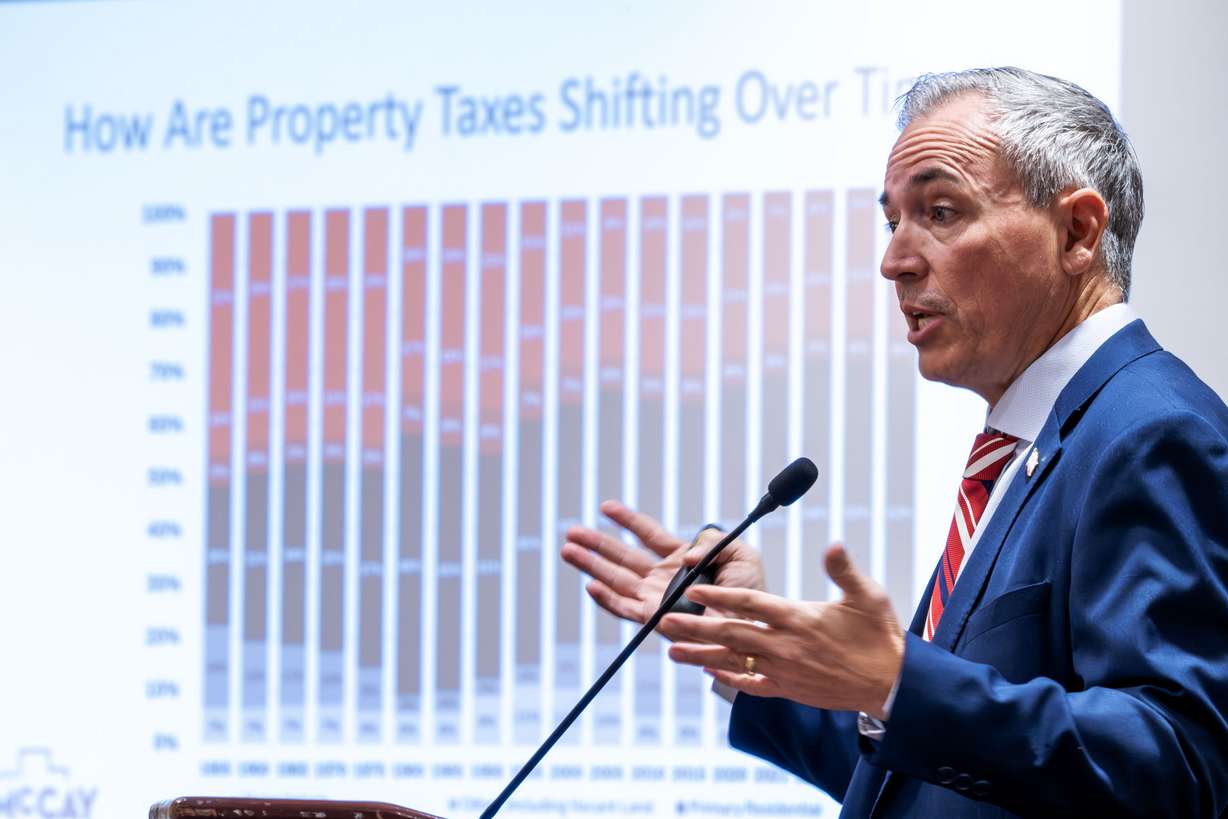
SB97, sponsored by Sen. Dan McCay, R-Riverton, would change that. It would limit the exemption to a single primary residence per household, meaning an owner could only claim it on one property. The bill also seeks to strip that exemption from businesses that own residential property.
McCay told KSL he's concerned about the increasing number of rental properties in Utah, which he attributes to the lower property taxes landlords pay. McCay owns rental properties himself and pointed out his bill "directly impacts me" by raising his property taxes.
"I'm seeing how difficult it is for young people to get into homes," McCay said. "Having a tax incentive that incentivizes rentals as opposed to ownership seems counterproductive to that goal."
He later added that changing the exemption would reduce the amount of taxes owed on single-family, owner-occupied homes.
But McCay's proposal has succeeded in uniting two groups that are often on different sides to oppose the bill, as they believe it will only shift increased costs onto renters.
"Costs of providing rental housing are already extravagant," said Paul Smith, executive director of the Rental Housing Association of Utah, which represents landlords. "Increasing costs is a bad idea because it will increase rents."
Daniel Woodruff, KSL"In a time where we're in an affordable housing crisis — renters are already pretty cost-burdened — anything that increases people's rents or day-to-day lives is something that is pretty concerning to us," added Zoe Newmann with the Utah Housing Coalition, which represents tenants.
Smith also expressed concern that removing the exemption would encourage some property owners to pivot to short-term rentals such as Airbnb, further restricting the supply of rental housing. He estimated removing the exemption would add $2,000 in additional property taxes for an average single-family rental house.
Senate GOP leaders reacted coolly to McCay's proposal, even as top lawmakers in the House have said they want to take a holistic look at property taxes this session and try to shift the burden away from residential owners.
But it remains to be seen whether McCay's bill will fit into that broader strategy.
"Obviously, the concern is that if we remove that, it's going to get directly passed on to tenants, and does that really address housing affordability?" asked Senate Majority Leader Kirk Cullimore, R-Sandy. "It's just going to increase rents throughout the state, I believe."
McCay's bill could help shift the property tax burden away from homeowners, but Senate Republicans wouldn't commit either way on the bill.
"I think it's one of the levers that's being explored and trying to address the larger scheme of property taxes in general," Cullimore told reporters Tuesday. "I'm not sure if it will have enough steam to get done this session."
McCay acknowledged the opposition to his bill from various groups, but he said it's an important conversation to have.
"My question for my colleagues is, should we continue this policy where the exemption applies to rentals, and we're getting more and more rentals?" McCay said. "That's the primary question."
The bill narrowly passed out of a Senate committee last week, but one Republican voted against it. It awaits a vote in the full Senate.