'%3e%3cpath%20d='M34.1406%205.85938C30.3906%202.10547%2025.3047%200%2020%200C14.6953%200%209.60938%202.10547%205.85938%205.85938C2.10938%209.61328%200%2014.6953%200%2020C0%2025.3047%202.10547%2030.3906%205.85938%2034.1406C9.61328%2037.8906%2014.6953%2040%2020%2040C25.3047%2040%2030.3906%2037.8945%2034.1406%2034.1406C37.8906%2030.3906%2040%2025.3047%2040%2020C40%2014.6953%2037.8945%209.60938%2034.1406%205.85938ZM37.0117%2023.543H31.1602V13.5391H27.6328V19.9414C28.1211%2020.6914%2028.3711%2021.582%2028.3711%2022.5625V22.625C28.3711%2023.668%2028.1172%2024.6055%2027.6328%2025.4297V26.6094H36.082C33.4883%2032.9375%2027.2891%2037.3789%2020.0039%2037.3789C10.3711%2037.3789%202.62109%2029.6289%202.62109%2020C2.62109%2010.3711%2010.3711%202.62109%2020%202.62109C29.6289%202.62109%2037.3789%2010.3711%2037.3789%2020C37.3789%2021.1484%2037.2617%2022.2656%2037.0508%2023.3477C37.0391%2023.4141%2037.0234%2023.4766%2037.0117%2023.543Z'%20fill='white'/%3e%3cpath%20d='M22.3086%2018.5352C20.4336%2018.125%2019.9531%2017.8398%2019.9766%2017.1836V17.1406C19.9766%2016.6992%2020.3477%2016.2148%2021.4023%2016.2148C22.582%2016.2148%2023.8867%2016.6797%2025.0781%2017.4766L26.8516%2015.0195C25.4453%2013.8906%2023.707%2013.3398%2021.5547%2013.3398C18.5195%2013.3398%2016.4375%2015%2016.4063%2017.4766V17.5352C16.3633%2020.2617%2018.5859%2020.9805%2021.293%2021.6016C23.0391%2021.9766%2023.5703%2022.3164%2023.5703%2022.9609L23.5469%2022.9766C23.5469%2023.3906%2023.2578%2023.7031%2022.7852%2023.8359C22.5742%2023.9062%2022.1289%2023.9727%2021.5156%2023.9727C20.7617%2023.9727%2019.7539%2023.8633%2018.6328%2023.4844C18.0898%2023.2891%2017.4727%2023.0039%2016.8047%2022.6133L20.1406%2026.625C20.2813%2026.6602%2021.0977%2026.8516%2021.7734%2026.8516C25.0039%2026.8516%2027.0859%2025.2461%2027.1094%2022.6328V22.5703C27.1602%2020.1133%2025.2148%2019.1719%2022.3086%2018.5352Z'%20fill='white'/%3e%3cpath%20d='M5.24219%2013.5664V26.6133H8.75391V23.7578L10.2969%2021.9531L14.2031%2026.6133H18.3867L12.3555%2019.5195L17.4023%2013.5664H13.4531L8.75391%2019.0586V13.5664H5.24219Z'%20fill='white'/%3e%3c/g%3e%3cdefs%3e%3cclipPath%20id='clip0_97_2430'%3e%3crect%20width='40'%20height='40'%20fill='white'/%3e%3c/clipPath%3e%3c/defs%3e%3c/svg%3e)




This archived news story is available only for your personal, non-commercial use. Information in the story may be outdated or superseded by additional information. Reading or replaying the story in its archived form does not constitute a republication of the story.
- Utah Gov. Spencer Cox calls for unity after Charlie Kirk's assassination.
- Cox labels the incident a 'political assassination' and urges Americans to deescalate.
- Community leaders promote peace and dialogue, highlighting the need for positive interactions.
SALT LAKE CITY — Utah Gov. Spencer Cox has been worried about politics for years. Throughout his time in office, he has offered frequent calls to "disagree better," to restore trust in institutions and see the humanity in political or ideological opponents.
Speaking at the Atlantic Festival in Washington in September of 2023, Cox issued a stark, and ultimately prescient warning, about a political environment where leaders use fear to divide Americans.
"I truly believe that we're living through kind of an 1850s experience in our country again," he said. "As you drain the trust from the system, as Jonathan Haidt said ... the end result of that is not just us hating each other in a pluralistic society, but it ends with people shooting each other.
"And that should scare all of us, and it should scare all of us into doing whatever we can to stop that, to reengage each other in positive ways."
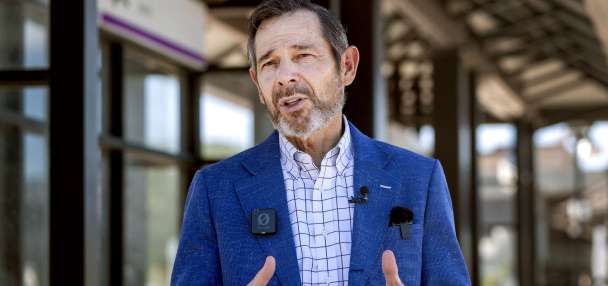
Just shy of two years later, Cox took the podium at Utah Valley University to announce the arrest of Tyler James Robinson, 22, suspected of shooting and killing conservative activist and Turning Point USA co-founder Charlie Kirk while he was speaking on campus Wednesday. After detailing the manhunt and investigation that led to Robinson's arrest, Cox again pleaded with Utahns and Americans to find a way to turn down the temperature.
The governor on Wednesday declared Kirk's killing a "political assassination," and Friday urged the nation to understand the current moment "with eyes wide open."
"This is certainly about the tragic death, assassination, political assassination of Charlie Kirk. But it is also much bigger than an attack on an individual. It is an attack on all of us," Cox said. "It is an attack on the American experiment. It is an attack on our ideals. This cuts to the very foundation of who we are, of who we have been and who we could be in better times."
"Political violence is different than any other type of violence for lots of different reasons," he continued. "One, because in the very act that Charlie championed of expression, that freedom of expression that is enshrined in our founding documents, in having his life taken in that very act makes it more difficult for people to feel like they can share their ideas, that they can speak freely."
Cox later called the incident a "watershed in American history" that could spell the end of a chapter of violence or the beginning of a much more violent chapter in American history.
"This is our moment," he said. "Do we escalate or do we find an off-ramp? And again, it's a choice. It's a choice, and every one of us gets to make that choice."
Bridge building
Cox isn't the only Utahn looking to maintain or repair the threads that hold Utahns together.
Zac Wilson and Jack Davis grew up in the same area and crossed paths as students at Brigham Young University, but the pair have landed on opposites of the political spectrum. Wilson is the former head of the Utah Young Republicans and ran in the GOP primary for Utah's 3rd Congressional District seat last year, while Davis serves as the president of the Young Democrats of Utah.
The pair spoke at the Capitol in Salt Lake City Friday afternoon to condemn the assassination of Kirk and to use the opportunity to reconnect and set an example of unity.
Wilson credited Kirk with bringing Gen Z "into the political process," and said the commentator stood for "the freedom of speech and the freedom to peacefully assemble."
"If the public square can no longer host the kind of great debates once held by (Abraham) Lincoln and (Frederick) Douglass, then we have lost sight of who we are," Wilson said.
The conservative went on to list several recent incidents of political violence targeted at both Democrats and Republicans, echoing that each was "an attack on all of us."
Wilson and Davis said they plan to meet for lunch in the coming weeks to talk about how they can continue to get young people involved in politics in a way that inspires positive interactions.
"I know we have different political views," Wilson said, "but I look forward to creating a friendship."

Davis expressed his "sincerest and most heartfelt condolences" to Kirk's family and friends.
"I truly and honestly can't imagine the pain and heartbreak that accompanies a loss like this, and we really do wish his family all the strength in the world in the coming days and weeks," he said. "It's truly a tragedy, but it's because of that pain that Zac and I are both here today."
Davis added that he and Wilson "could not be in greater agreement if we tried" on at least one issue: "Every single one of us has a fundamental right to share ideas and engage with our peers free from violence, plain and simply."
They were joined by several dozen people from local and national organizations who convened Friday as "peacemakers" to promote a better way forward in light of the recent violence. While instances of political violence can historically spiral before things get better, they said intentionally promoting peace can help diffuse the tension.
The groups launched a website Friday, turntoward.us, to offer resources for Utahns seeking ways to bridge political divides.
"Let's reflect before we act," said former GOP state lawmaker and Governing Group PAC founder Becky Edwards. "Let's lead with dignity, and let's show, starting here in Utah, that civility is not a weakness. It is the very strength that protects both our communities and our democracy."
'Log off, turn off, touch grass'
In his remarks Friday morning, Cox compared the current moment to the late 1960s, when several political assassinations rocked the nation. Today, however, brings the added complication of social media, which Cox said has helped fuel anger and has brought the violence to the forefront of the conversation in a new way.
Although most traditional news outlets, KSL included, did not publish raw cellphone video footage of the moment Kirk was shot or cut away before impact, graphic videos of Kirk being shot in the neck quickly spread on social media and have been viewed millions of times.
"If you look at true political assassinations in this country of someone of this stature, this feels a lot like the late '60s," Cox said, "and having one so gruesomely displayed on camera in all of our hands and in all of our pockets — we are not wired as human beings, biologically, historically, we have not evolved in a way that we are capable of processing those types of violent imagery."
He added: "This is not good for us. It is not good to consume. Social media is a cancer on our society right now and ... I would encourage people to log off, turn off, touch grass, hug a family member, go out and do good in your community."
While elected leaders from both parties have strongly condemned political violence, some partisans online were quick to point the finger at the other side after news of Kirk's death broke, with a handful of conservatives blaming the political left and calling for violent retribution, while some on the left celebrated the killing in light of Kirk's views on guns and LGBTQ+ rights, among other things.
Cox addressed any gleeful responses to violence on Wednesday after declaring that, "Our nation is broken."
"If anyone in the sound of my voice celebrated even a little bit at the news of this shooting, I will beg you to look in the mirror and see if you can find a better angel in there somewhere. I don't care what his politics are; I care that he was an American," the governor said. "We just need every single person in this country to think about where we are and where we want to be.
"I pray that those who hated what Charlie Kirk stood for will put down their social media and their pens and pray for his family and that all of us will try to find a way to stop hating our fellow Americans."
Those reactions are likely a small minority of Americans. Although a rising number of Americans express support for some forms of political violence, a 2022 study suggests survey evidence is often overstated in part because polling asks about hypothetical violence, not specific instances.
Mary McCord, a former federal prosecutor with an expertise in domestic terrorism, told the Atlantic she doubts many Americans are clamoring for more violence, but she expects it will continue to increase for now. She said she wished people would think about the actual repercussions of calls for violence or war against political or ideological opponents.
Americans "don't like it when they can't get strawberries in the winter," she said. "This idea of revolution. Really? Is that really what you want?"
"Civil-war talk is just that. It's talk," McCord added. "I don't see any significant fraction of the population that is at all interested in that. That doesn't mean we aren't going to have violence. And I do think it is going to increase."

'It did happen here'
Wilson and Davis both agreed that it's easy to fall into the cycle of accusation and recrimination repeated so often after tragedies in the U.S. Davis said it's one thing to lob insults online and acknowledged that he and Wilson would "probably have a different relationship if we only communicated on social media."
"I think that as we ratchet up the blame, as we ratchet up the violent rhetoric, tragedies like this only get more frequent," he told KSL.com.
Added Wilson: "The easier thing to do is to grab a weapon, hypothetically speaking, to dig into what you believe ... and double down in that. The smarter and the more difficult thing to do, frankly, is to move beyond that. ... I think especially in a time of loss like this, a time of tragedy and heartbreak, connecting with humans, ideally in person (or) over the phone is very vital — crucial — to healing and moving on."
As Utah has spent the past 48 hours in the national spotlight, Edwards said she's been "gratified" by the responses of state leaders which she said have highlighted a desire to bring the country together.
"It's a unique thing that shows the horror of the situation, the impact for free speech, how it impacts all of us," she said. "The solution for this is going to start with all of us and that kind of pull your bootstraps up toward a solution I think is very unique in Utah. And I like the little shout out that we're getting from the national news media who is showing something special happening in Utah."
Cox said he had been praying during the manhunt for Robinson that the suspect would turn out to be an outsider.
"I was praying that if this had to happen here, that it wouldn't be one of us, that somebody drove from another state, somebody came from another country," he said Friday. "Sadly, that prayer was not answered the way I had hoped for, just because I thought it would make it easier on us if we could just say, 'Hey, we don't do that here.' And indeed, Utah is a special place. ... But it did happen here, and it was one of us."
But the governor said he was proud that Utahns reacted not with violence or riots but through "vigils and prayers and people coming together to share the humanity."
"And that, ladies and gentlemen, I believe is the answer to this," he said. "We can return violence with violence. We can return hate with hate. And that's the problem with political violence is it metastasizes, because we can always point the finger at the other side, and at some point we have to find an off-ramp, or it's going to get much, much worse."