'%3e%3cpath%20d='M34.1406%205.85938C30.3906%202.10547%2025.3047%200%2020%200C14.6953%200%209.60938%202.10547%205.85938%205.85938C2.10938%209.61328%200%2014.6953%200%2020C0%2025.3047%202.10547%2030.3906%205.85938%2034.1406C9.61328%2037.8906%2014.6953%2040%2020%2040C25.3047%2040%2030.3906%2037.8945%2034.1406%2034.1406C37.8906%2030.3906%2040%2025.3047%2040%2020C40%2014.6953%2037.8945%209.60938%2034.1406%205.85938ZM37.0117%2023.543H31.1602V13.5391H27.6328V19.9414C28.1211%2020.6914%2028.3711%2021.582%2028.3711%2022.5625V22.625C28.3711%2023.668%2028.1172%2024.6055%2027.6328%2025.4297V26.6094H36.082C33.4883%2032.9375%2027.2891%2037.3789%2020.0039%2037.3789C10.3711%2037.3789%202.62109%2029.6289%202.62109%2020C2.62109%2010.3711%2010.3711%202.62109%2020%202.62109C29.6289%202.62109%2037.3789%2010.3711%2037.3789%2020C37.3789%2021.1484%2037.2617%2022.2656%2037.0508%2023.3477C37.0391%2023.4141%2037.0234%2023.4766%2037.0117%2023.543Z'%20fill='white'/%3e%3cpath%20d='M22.3086%2018.5352C20.4336%2018.125%2019.9531%2017.8398%2019.9766%2017.1836V17.1406C19.9766%2016.6992%2020.3477%2016.2148%2021.4023%2016.2148C22.582%2016.2148%2023.8867%2016.6797%2025.0781%2017.4766L26.8516%2015.0195C25.4453%2013.8906%2023.707%2013.3398%2021.5547%2013.3398C18.5195%2013.3398%2016.4375%2015%2016.4063%2017.4766V17.5352C16.3633%2020.2617%2018.5859%2020.9805%2021.293%2021.6016C23.0391%2021.9766%2023.5703%2022.3164%2023.5703%2022.9609L23.5469%2022.9766C23.5469%2023.3906%2023.2578%2023.7031%2022.7852%2023.8359C22.5742%2023.9062%2022.1289%2023.9727%2021.5156%2023.9727C20.7617%2023.9727%2019.7539%2023.8633%2018.6328%2023.4844C18.0898%2023.2891%2017.4727%2023.0039%2016.8047%2022.6133L20.1406%2026.625C20.2813%2026.6602%2021.0977%2026.8516%2021.7734%2026.8516C25.0039%2026.8516%2027.0859%2025.2461%2027.1094%2022.6328V22.5703C27.1602%2020.1133%2025.2148%2019.1719%2022.3086%2018.5352Z'%20fill='white'/%3e%3cpath%20d='M5.24219%2013.5664V26.6133H8.75391V23.7578L10.2969%2021.9531L14.2031%2026.6133H18.3867L12.3555%2019.5195L17.4023%2013.5664H13.4531L8.75391%2019.0586V13.5664H5.24219Z'%20fill='white'/%3e%3c/g%3e%3cdefs%3e%3cclipPath%20id='clip0_97_2430'%3e%3crect%20width='40'%20height='40'%20fill='white'/%3e%3c/clipPath%3e%3c/defs%3e%3c/svg%3e)





This archived news story is available only for your personal, non-commercial use. Information in the story may be outdated or superseded by additional information. Reading or replaying the story in its archived form does not constitute a republication of the story.
- Utah teachers like Courtney Wimberly now receive paid maternity leave under a new state law.
- The law offers three weeks of parental and three weeks of postpartum leave.
- Teachers must find their own substitutes and prepare lesson plans before they take leave.
DRAPER — When teacher Courtney Wimberly was in her classroom a few weeks ago preparing for this year's crop of kindergartners, she had Aug. 18 circled on her calendar.
The date signified more than just the first day of school at Oak Hollow Elementary in Draper.
"My maternity leave starts the day school starts," Wimberly told KSL-TV.

Just as planned, she gave birth to a baby girl on Aug. 18 — a milestone that also corresponds with the very early stages of a new state law. Until the legislation took effect in July, many Utah teachers had no paid maternity leave – hard to believe in 2025, in a profession so dominated by women.
"I think people are just flabbergasted in general," Wimberly said.
Previously, maternity leave was unpaid
Renée Pinkney, president of the Utah Education Association, agreed.
"Yeah, isn't that wild?" Pinkney told KSL-TV. Most people don't realize that if teachers want to have children of their own, they use sick time, then leave without pay, Pinkney said.
"And if they don't have the ability to do that," Pinkney continued, "then they leave the profession."
At the state Capitol last year, Rep. Melissa Garff-Ballard decided it was time for a change. The North Salt Lake Republican sponsored a new state law giving teachers the same leave as other state employees: three weeks of parental leave and three weeks of postpartum leave.
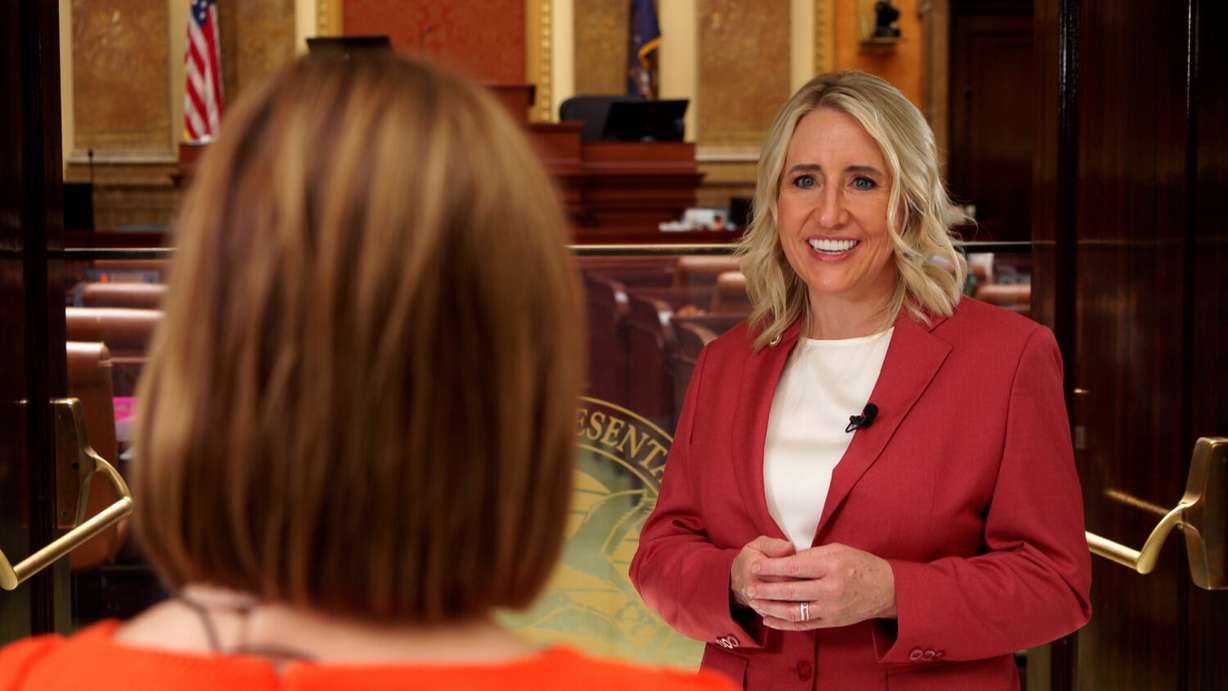
"It's time for Utah to really put our money where our priorities are and our policy where our priorities are, which is with our families," Ballard said.
The law also allows schools to have a paid leave bank, where teachers can donate unused time to their colleagues who need it.
Ballard says her goal, in part, is to reduce teacher turnover. A 2021 legislative audit found 42% of Utah teachers leave the profession in the first five years, higher than the national average.
"You may be surprised that paid parental leave is only now being offered to teachers, but Utah is not alone in that regard," said attorney David Castleberry, who specializes in employment law. In fact, the National Council on Teacher Quality reports that a 2022 analysis found just 18% of some of the country's largest school districts offered paid parental leave. By 2025, that number grew to 43%.
Castleberry said even outside the teaching profession, more employers are offering paid leave policies to attract and retain the best workers. But he said the majority still do not.
Maternity leave homework?
Even with paid maternity leave, there's still a big assignment for teachers before they can leave and have their babies. And it doesn't apply to Utah's police, firefighters or other state workers.
"I did have to get my own (substitute teacher)," Wimberly, the kindergarten teacher, explained. "They don't offer, like, a pool of really qualified long-term subs in the school district. You have to go out and find one yourself, and then create weeks of lesson plans for that sub."
During Wimberly's last pregnancy, she found a substitute, then spent 80 hours creating all the lesson plans ahead of time. Now she's done it again, while managing a toddler.
"That's just not what the rest of the community does when they're out on parental leave or maternity leave," said Ballard.
It's time for Utah to really put our money where our priorities are and our policy where our priorities are, which is with our families.
–Utah Rep. Melissa Garff-Ballard, R-North Salt Lake
In reflecting on her paid leave measure, she said opposition actually came from school administrators who questioned changing a practice that had been in place for over 100 years.
"It's about time that we take care of our teachers and employees and be able to support our families," Ballard said.
Districts might come out ahead by supporting the teachers they have, given the costs of recruiting, hiring and training new teachers. Lawmakers say it's more than that.
Over the summer break, when she met with KSL-TV, Wimberly didn't say the change was overdue – not at nine months pregnant – but she does think it will keep good teachers in the classroom.
"Really good teachers have left the teaching profession because they feel like their school districts don't support them as teachers and mothers," Wimberly said. "I believe we need to be better supported. Not only are we teaching other people's children, but we're raising the next generation of children who are going to enter our very own classrooms."