'%3e%3cpath%20d='M34.1406%205.85938C30.3906%202.10547%2025.3047%200%2020%200C14.6953%200%209.60938%202.10547%205.85938%205.85938C2.10938%209.61328%200%2014.6953%200%2020C0%2025.3047%202.10547%2030.3906%205.85938%2034.1406C9.61328%2037.8906%2014.6953%2040%2020%2040C25.3047%2040%2030.3906%2037.8945%2034.1406%2034.1406C37.8906%2030.3906%2040%2025.3047%2040%2020C40%2014.6953%2037.8945%209.60938%2034.1406%205.85938ZM37.0117%2023.543H31.1602V13.5391H27.6328V19.9414C28.1211%2020.6914%2028.3711%2021.582%2028.3711%2022.5625V22.625C28.3711%2023.668%2028.1172%2024.6055%2027.6328%2025.4297V26.6094H36.082C33.4883%2032.9375%2027.2891%2037.3789%2020.0039%2037.3789C10.3711%2037.3789%202.62109%2029.6289%202.62109%2020C2.62109%2010.3711%2010.3711%202.62109%2020%202.62109C29.6289%202.62109%2037.3789%2010.3711%2037.3789%2020C37.3789%2021.1484%2037.2617%2022.2656%2037.0508%2023.3477C37.0391%2023.4141%2037.0234%2023.4766%2037.0117%2023.543Z'%20fill='white'/%3e%3cpath%20d='M22.3086%2018.5352C20.4336%2018.125%2019.9531%2017.8398%2019.9766%2017.1836V17.1406C19.9766%2016.6992%2020.3477%2016.2148%2021.4023%2016.2148C22.582%2016.2148%2023.8867%2016.6797%2025.0781%2017.4766L26.8516%2015.0195C25.4453%2013.8906%2023.707%2013.3398%2021.5547%2013.3398C18.5195%2013.3398%2016.4375%2015%2016.4063%2017.4766V17.5352C16.3633%2020.2617%2018.5859%2020.9805%2021.293%2021.6016C23.0391%2021.9766%2023.5703%2022.3164%2023.5703%2022.9609L23.5469%2022.9766C23.5469%2023.3906%2023.2578%2023.7031%2022.7852%2023.8359C22.5742%2023.9062%2022.1289%2023.9727%2021.5156%2023.9727C20.7617%2023.9727%2019.7539%2023.8633%2018.6328%2023.4844C18.0898%2023.2891%2017.4727%2023.0039%2016.8047%2022.6133L20.1406%2026.625C20.2813%2026.6602%2021.0977%2026.8516%2021.7734%2026.8516C25.0039%2026.8516%2027.0859%2025.2461%2027.1094%2022.6328V22.5703C27.1602%2020.1133%2025.2148%2019.1719%2022.3086%2018.5352Z'%20fill='white'/%3e%3cpath%20d='M5.24219%2013.5664V26.6133H8.75391V23.7578L10.2969%2021.9531L14.2031%2026.6133H18.3867L12.3555%2019.5195L17.4023%2013.5664H13.4531L8.75391%2019.0586V13.5664H5.24219Z'%20fill='white'/%3e%3c/g%3e%3cdefs%3e%3cclipPath%20id='clip0_97_2430'%3e%3crect%20width='40'%20height='40'%20fill='white'/%3e%3c/clipPath%3e%3c/defs%3e%3c/svg%3e)


This archived news story is available only for your personal, non-commercial use. Information in the story may be outdated or superseded by additional information. Reading or replaying the story in its archived form does not constitute a republication of the story.
- USU professor Michael Twohig donated a $7,500 award to SNAC food pantry.
- Twohig's donation aims to combat food insecurity among USU students facing hunger.
- The donation includes a matching campaign to encourage further contributions to SNAC.
LOGAN — If you buy into stereotypes, the typical American college student has little to worry about besides passing finals, finding a good seat at Saturday afternoon football games and maybe staying awake during all-night study sessions — after a raucous frat party.
But the realities for many college students — including Utahns — don't mirror the stereotypes.
Some degree-seeking students are often uncertain where their next meal is coming from. They're facing food insecurity even while pursuing their education.
In Utah, several campus-based food pantries are operating alongside union buildings, libraries, classrooms and dormitories.
But food pantries don't stock themselves. Without donors — both in cash and in-kind contributions — the shelves quickly empty.
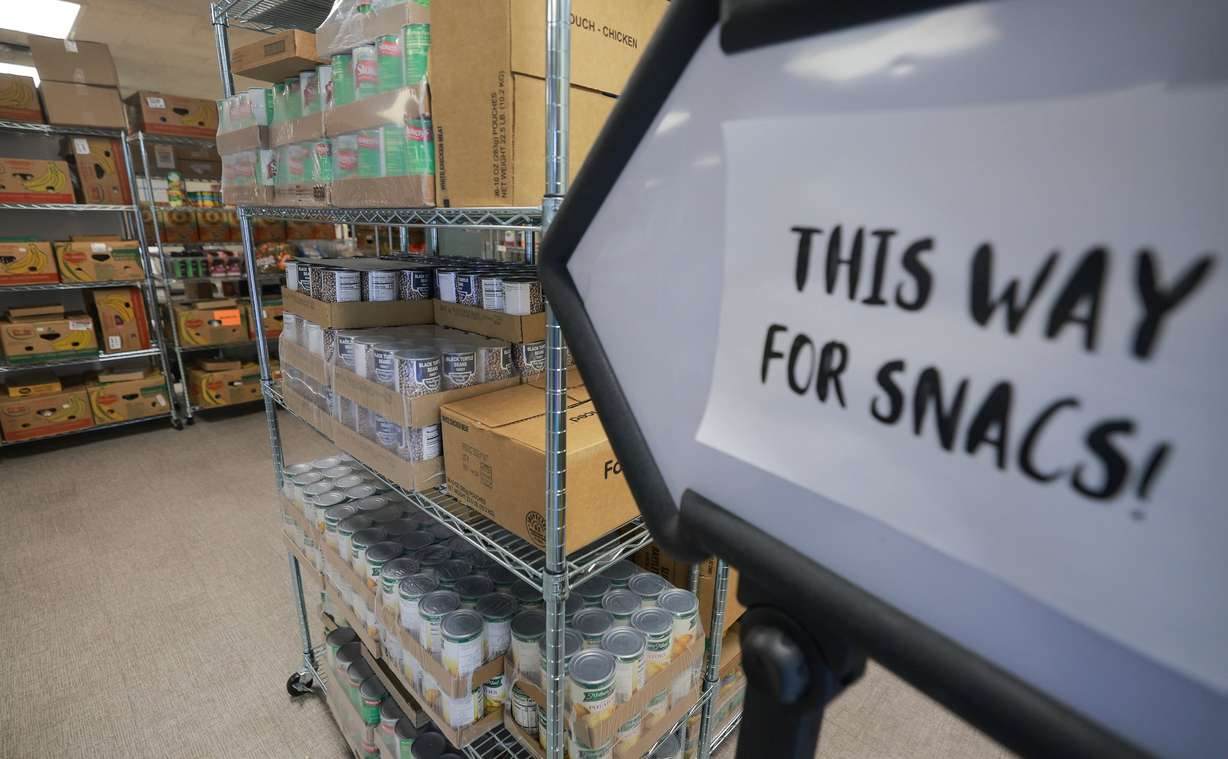
Utah State University psychology professor Michael Twohig has worked with several students budgeting their limited funds to cover tuition and housing costs. Often, there's not much left over for food.
In fact, the Logan-based institution reports that 62% of USU students experience some level of food insecurity. Hunger is part of their college experience.
So after recently receiving the school's prestigious D. Wynne Thorne Career Research Award — cash prize: $7,500 — Twohig donated his award money to USU's campus food pantry, the Student Nutrition Access Center, or SNAC.
Twohig told the Deseret News he was both honored and a bit surprised to receive one of USU's highest faculty awards. But he was also quick to add that his award-winning research was a team effort involving several graduate and undergraduate students.
"So I wanted to give the award back to something on campus," he said.
"I recognized that many people on campus helped me receive this award — so I wanted to give the money back in a way that everyone on campus could benefit from."
There are several worthwhile organizations on USU's campus that would be apt recipients of such a gift. But the professor has a personal connection to SNAC.
"Some of my Ph.D. students use SNAC — and I've heard from them how they have found it to be helpful at times when they needed to get some groceries for a particular week, for whatever reason," he said.
Besides helping to ease food insecurity for many USU students, Twohig appreciates that SNAC "reclaims" usable food — preventing it from simply ending up in the dumpster.
The school's catering/dining services, for example, set aside unused food from campus events — and then makes it available to SNAC.
SNAC workers collect the unused food, repackage it and place it in the freezer or storage for student distribution.
"So most days, there is fresh food (at SNAC) that was prepared on campus that would otherwise end up in a dumpster," Twohig said. "I really like that aspect; food is not being wasted."
Meanwhile, several Logan-area restaurants donate their unused food to SNAC — again, preventing fit-for-consumption food from ending up in the trash.
But Twohig wanted to do more than simply pass along his award check to SNAC. He's eager for others to get involved. So with USU's support, he's making his donation part of a "matching campaign" — matching every dollar donated to the campaign with a dollar from his faculty award.
The SNAC Food Pantry campaign is well underway — and Twohig said he has already matched his own gift with the donations of others.

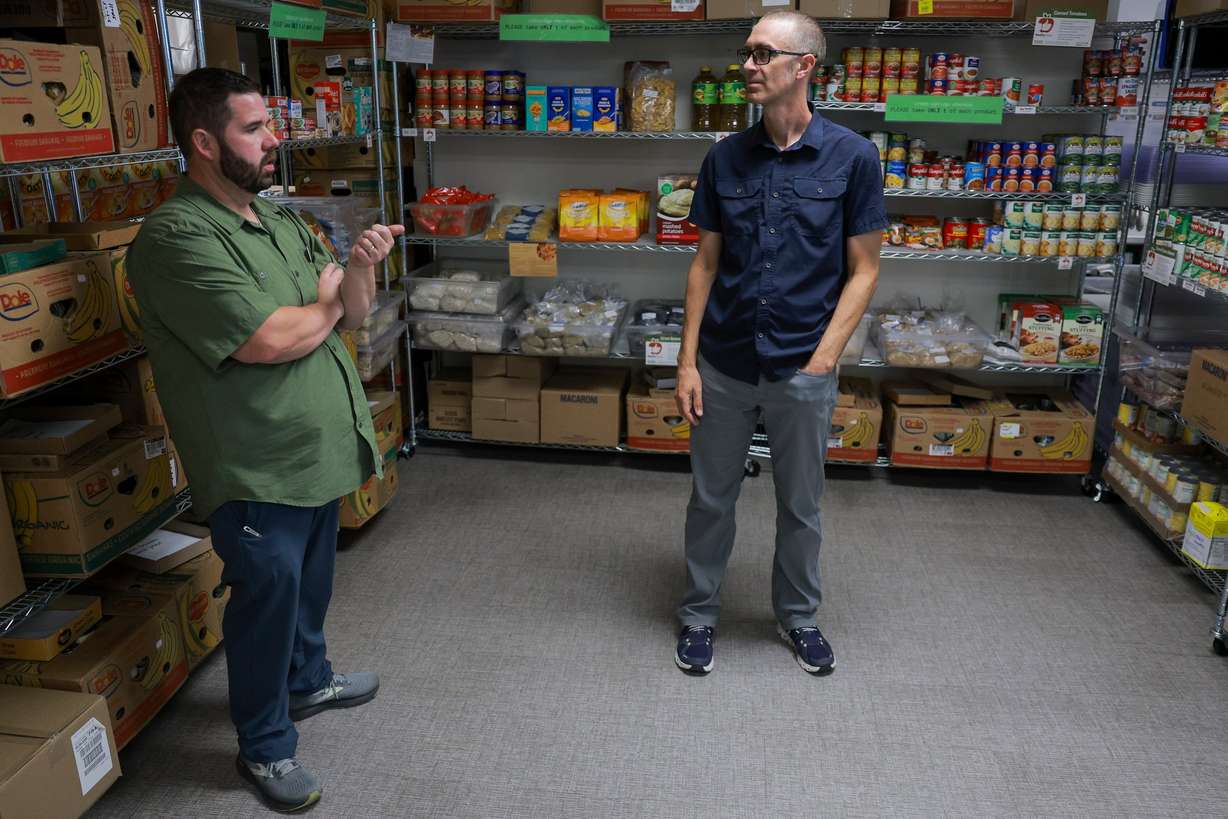
Kaylie Meccariello, SNAC's student director, told Utah State Today that Twohig's donation will help keep shelves well stocked with a variety of food products.
"Having a greater variety of food will help us reach more students," she said. "Our hope is to keep that increased variety of food consistent throughout the entire year."
A dietetics student, Meccariello has "so many memories" of studying all day and going home hungry — and then realizing she did not have sufficient food.
"That made studying so much harder," she said in a USU-produced video. "SNAC was a place for me to find help."
Meccariello added that having access to nutritious food made big differences "as far as doing homework" and in her social life.
Since working at SNAC, Meccariello said she developed more compassion "and an understanding of what the university does to help its students."
She hopes that bringing awareness to campus food insecurity will help USU students move past shame and utilize resources such as SNAC. "Allowing other people to know what we do, I think, would make all the difference in realizing that they can help in so many small ways."
Twohig added that every tax-deductible donation to SNAC, large or small, assists USU students in need.
"If it's a small amount — go for it. If it's a big amount — go for it."
Read the full story at Deseret News.

Most recent Education stories
Related topics
 Jason Swensen