'%3e%3cpath%20d='M34.1406%205.85938C30.3906%202.10547%2025.3047%200%2020%200C14.6953%200%209.60938%202.10547%205.85938%205.85938C2.10938%209.61328%200%2014.6953%200%2020C0%2025.3047%202.10547%2030.3906%205.85938%2034.1406C9.61328%2037.8906%2014.6953%2040%2020%2040C25.3047%2040%2030.3906%2037.8945%2034.1406%2034.1406C37.8906%2030.3906%2040%2025.3047%2040%2020C40%2014.6953%2037.8945%209.60938%2034.1406%205.85938ZM37.0117%2023.543H31.1602V13.5391H27.6328V19.9414C28.1211%2020.6914%2028.3711%2021.582%2028.3711%2022.5625V22.625C28.3711%2023.668%2028.1172%2024.6055%2027.6328%2025.4297V26.6094H36.082C33.4883%2032.9375%2027.2891%2037.3789%2020.0039%2037.3789C10.3711%2037.3789%202.62109%2029.6289%202.62109%2020C2.62109%2010.3711%2010.3711%202.62109%2020%202.62109C29.6289%202.62109%2037.3789%2010.3711%2037.3789%2020C37.3789%2021.1484%2037.2617%2022.2656%2037.0508%2023.3477C37.0391%2023.4141%2037.0234%2023.4766%2037.0117%2023.543Z'%20fill='white'/%3e%3cpath%20d='M22.3086%2018.5352C20.4336%2018.125%2019.9531%2017.8398%2019.9766%2017.1836V17.1406C19.9766%2016.6992%2020.3477%2016.2148%2021.4023%2016.2148C22.582%2016.2148%2023.8867%2016.6797%2025.0781%2017.4766L26.8516%2015.0195C25.4453%2013.8906%2023.707%2013.3398%2021.5547%2013.3398C18.5195%2013.3398%2016.4375%2015%2016.4063%2017.4766V17.5352C16.3633%2020.2617%2018.5859%2020.9805%2021.293%2021.6016C23.0391%2021.9766%2023.5703%2022.3164%2023.5703%2022.9609L23.5469%2022.9766C23.5469%2023.3906%2023.2578%2023.7031%2022.7852%2023.8359C22.5742%2023.9062%2022.1289%2023.9727%2021.5156%2023.9727C20.7617%2023.9727%2019.7539%2023.8633%2018.6328%2023.4844C18.0898%2023.2891%2017.4727%2023.0039%2016.8047%2022.6133L20.1406%2026.625C20.2813%2026.6602%2021.0977%2026.8516%2021.7734%2026.8516C25.0039%2026.8516%2027.0859%2025.2461%2027.1094%2022.6328V22.5703C27.1602%2020.1133%2025.2148%2019.1719%2022.3086%2018.5352Z'%20fill='white'/%3e%3cpath%20d='M5.24219%2013.5664V26.6133H8.75391V23.7578L10.2969%2021.9531L14.2031%2026.6133H18.3867L12.3555%2019.5195L17.4023%2013.5664H13.4531L8.75391%2019.0586V13.5664H5.24219Z'%20fill='white'/%3e%3c/g%3e%3cdefs%3e%3cclipPath%20id='clip0_97_2430'%3e%3crect%20width='40'%20height='40'%20fill='white'/%3e%3c/clipPath%3e%3c/defs%3e%3c/svg%3e)




This archived news story is available only for your personal, non-commercial use. Information in the story may be outdated or superseded by additional information. Reading or replaying the story in its archived form does not constitute a republication of the story.
- Jeffrey Ainsa, a former law enforcement officer, shares his PTSD journey.
- Ainsa's PTSD led him to mistake his wife for an intruder, prompting therapy.
- Now a mental health clinician, Ainsa helps others navigate trauma using personal experiences.
BLUFFDALE — Men's mental health often goes unnoticed, especially for those struggling.
One Utah man is breaking the silence about his battle with post-traumatic stress disorder and how healing led him to a new purpose: helping others.
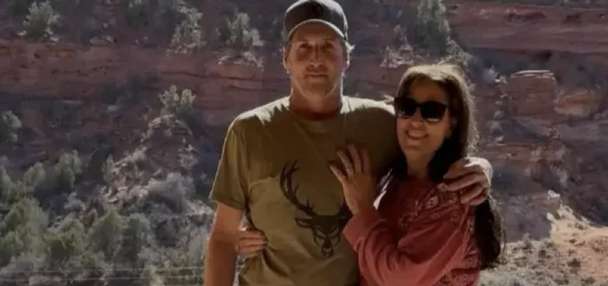
After years working in law enforcement and public safety — including time in a detention center, probation, and with a police department — Jeffrey Ainsa knew how to stay alert.
"You're always scanning and anticipating," he said. "We were working with victims of violent crimes and their families, and responding on scene to those calls. I don't think people understand the toll that takes on you."
What he didn't know was how to turn it off.
At home, the stress never stopped. His wife and children learned to give him time to decompress before interacting with him. But one night, it all came crashing down — when he mistook his wife for an intruder.
"I just saw someone move, and so I jumped out of the bed and grabbed her and threw her down," he recalled, emotional. "And so, it's a piece that I struggle still with."
That terrifying moment pushed Ainsa to seek help. Therapy taught him just how deeply PTSD had shaped his behavior — and how to slowly reclaim peace.
"PTSD still sticks with you. It comes and goes, and that's a thing that I've had to learn," he said.
Today, Ainsa is a licensed mental health clinician with evolvedMD. He uses his experience to help others navigate trauma.
"I'm really candid where I tell them, 'Guys, I'm telling you stuff to do that I struggle dealing with myself, and that I still struggle with,'" he said.
Healing didn't come all at once — it came in small steps. He now uses grounding techniques like deep breathing, tapping his feet and even recalling comforting scents.
"When I smell cinnamon, I think about when I was little, and it would snow, and my mom would make homemade cinnamon rolls. You can smell it and focus on that memory — that is a grounding exercise that brings you back to, 'You're here, you're safe, you're good.'"
Ainsa said PTSD isn't just something veterans or officers deal with. Trauma is human, and getting help shouldn't feel like weakness.
"Talk to someone about it," he said. "You don't have to live in your head. There's hope."
Suicide prevention resources
If you or someone you know is struggling with thoughts of suicide, call 988 to connect with the 988 Suicide and Crisis Lifeline.
Crisis hotlines
- Huntsman Mental Health Institute Crisis Line: 801-587-3000
- SafeUT Crisis Line: 833-372-3388
- 988 Suicide and Crisis LifeLine at 988
- Trevor Project Hotline for LGBTQ teens: 1-866-488-7386
Online resources
- NAMI Utah: namiut.org
- SafeUT: safeut.org
- Suicide and Crisis Lifeline: 988lifeline.org
- American Foundation for Suicide Prevention, Utah chapter: afsp.org/chapter/utah