'%3e%3cpath%20d='M34.1406%205.85938C30.3906%202.10547%2025.3047%200%2020%200C14.6953%200%209.60938%202.10547%205.85938%205.85938C2.10938%209.61328%200%2014.6953%200%2020C0%2025.3047%202.10547%2030.3906%205.85938%2034.1406C9.61328%2037.8906%2014.6953%2040%2020%2040C25.3047%2040%2030.3906%2037.8945%2034.1406%2034.1406C37.8906%2030.3906%2040%2025.3047%2040%2020C40%2014.6953%2037.8945%209.60938%2034.1406%205.85938ZM37.0117%2023.543H31.1602V13.5391H27.6328V19.9414C28.1211%2020.6914%2028.3711%2021.582%2028.3711%2022.5625V22.625C28.3711%2023.668%2028.1172%2024.6055%2027.6328%2025.4297V26.6094H36.082C33.4883%2032.9375%2027.2891%2037.3789%2020.0039%2037.3789C10.3711%2037.3789%202.62109%2029.6289%202.62109%2020C2.62109%2010.3711%2010.3711%202.62109%2020%202.62109C29.6289%202.62109%2037.3789%2010.3711%2037.3789%2020C37.3789%2021.1484%2037.2617%2022.2656%2037.0508%2023.3477C37.0391%2023.4141%2037.0234%2023.4766%2037.0117%2023.543Z'%20fill='white'/%3e%3cpath%20d='M22.3086%2018.5352C20.4336%2018.125%2019.9531%2017.8398%2019.9766%2017.1836V17.1406C19.9766%2016.6992%2020.3477%2016.2148%2021.4023%2016.2148C22.582%2016.2148%2023.8867%2016.6797%2025.0781%2017.4766L26.8516%2015.0195C25.4453%2013.8906%2023.707%2013.3398%2021.5547%2013.3398C18.5195%2013.3398%2016.4375%2015%2016.4063%2017.4766V17.5352C16.3633%2020.2617%2018.5859%2020.9805%2021.293%2021.6016C23.0391%2021.9766%2023.5703%2022.3164%2023.5703%2022.9609L23.5469%2022.9766C23.5469%2023.3906%2023.2578%2023.7031%2022.7852%2023.8359C22.5742%2023.9062%2022.1289%2023.9727%2021.5156%2023.9727C20.7617%2023.9727%2019.7539%2023.8633%2018.6328%2023.4844C18.0898%2023.2891%2017.4727%2023.0039%2016.8047%2022.6133L20.1406%2026.625C20.2813%2026.6602%2021.0977%2026.8516%2021.7734%2026.8516C25.0039%2026.8516%2027.0859%2025.2461%2027.1094%2022.6328V22.5703C27.1602%2020.1133%2025.2148%2019.1719%2022.3086%2018.5352Z'%20fill='white'/%3e%3cpath%20d='M5.24219%2013.5664V26.6133H8.75391V23.7578L10.2969%2021.9531L14.2031%2026.6133H18.3867L12.3555%2019.5195L17.4023%2013.5664H13.4531L8.75391%2019.0586V13.5664H5.24219Z'%20fill='white'/%3e%3c/g%3e%3cdefs%3e%3cclipPath%20id='clip0_97_2430'%3e%3crect%20width='40'%20height='40'%20fill='white'/%3e%3c/clipPath%3e%3c/defs%3e%3c/svg%3e)


This archived news story is available only for your personal, non-commercial use. Information in the story may be outdated or superseded by additional information. Reading or replaying the story in its archived form does not constitute a republication of the story.
- Utah sues Snap Inc., alleging features on the company's Snapchat app harm children.
- The lawsuit claims Snapchat's design facilitates illegal activities and lacks adequate safety measures.
- Snap defends its safety features, arguing Utah's lawsuit circumvents previous court decisions.
SALT LAKE CITY — Utah has accused the owner of the social media platform Snapchat of using "deceptive," addictive features to attract children to the app and not doing enough to protect young users' well-being and privacy.
The state made the allegations in a 90-page lawsuit filed against Snap Inc. in Utah's 3rd District Court on Monday, claiming the company has violated state laws on consumer protection and privacy. The complaint aims to stop what the state alleges is "Snap's continued use of deceptive design features that addict children; harm their mental health and well-being; and facilitate illegal drug sales, sexual exploitation, sex trafficking, the distribution of pornography and other unlawful acts."
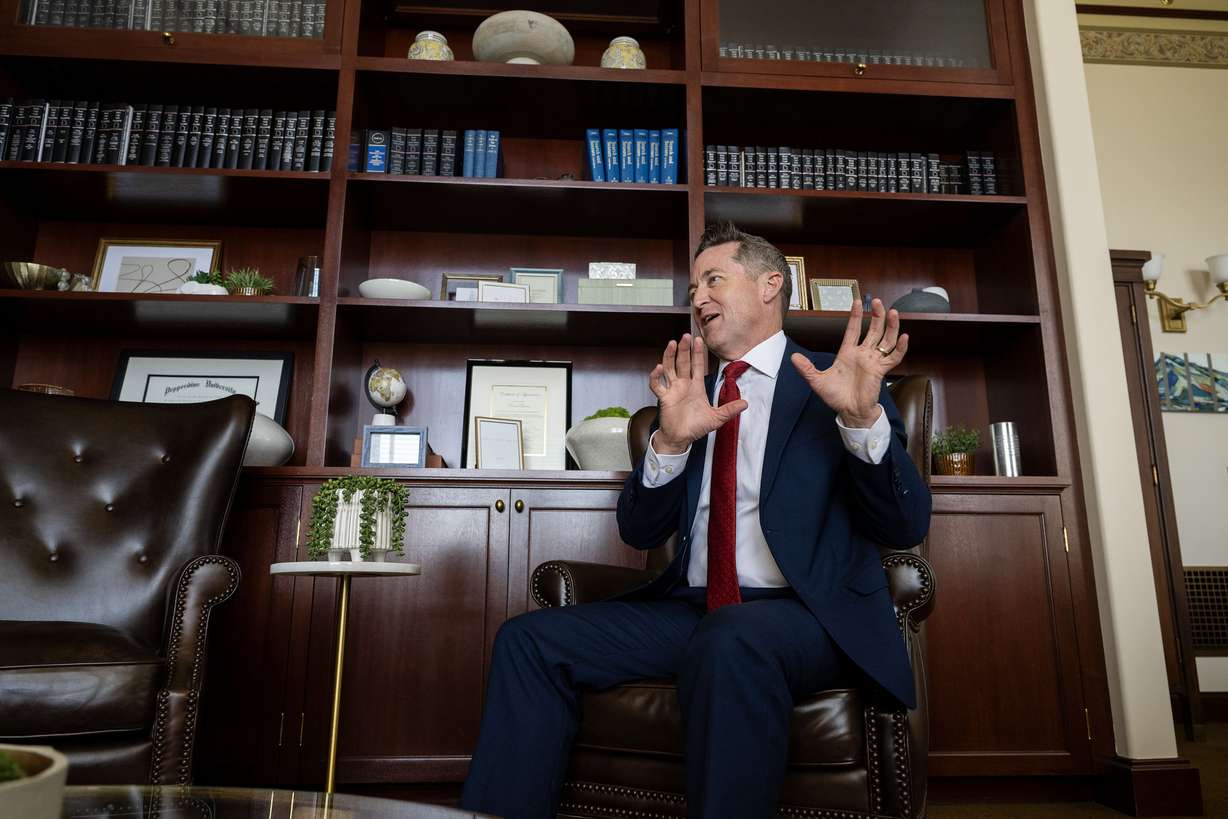
"Snapchat's features facilitate sexual predators and drug dealers' efforts to target and exploit children," said Attorney General Derek Brown, whose office filed suit on behalf of the state's Division of Consumer Protection. "We will continue to do everything in our power to protect Utah kids from exploitation. My office will not be deterred in its efforts to keep children safe online."
It's not the first legal action Utah has taken against major social media platforms in recent years, and many of the allegations in this lawsuit — including that the platform doesn't adequately verify the ages of users and that it facilitates sexual exploitation and drug sales — are similar to those made against other social media giants.
The suit against Snap differs due to the nature of the Snapchat platform, which allows users to send photos and messages that often disappear after being viewed. Utah argues the "ephemeral" nature of these messages gives users a "false sense of security ... which encourages them to share riskier content."
"This lawsuit against Snap is about accountability and about drawing a clear line: the well-being of our children must come before corporate profits," Gov. Spencer Cox said. "We won't sit back while tech companies exploit young users. It's time for commonsense protections that ensure a safer online experience for every minor."
Related:

Snapchat rolls out option to let parents see who their teens are messaging
Snapchat introduced its first parental control center on Aug. 9, 2022, nearly 10 months after an executive from the company told Congress it was developing tools aimed at helping parents keep their teens safe.A Snap company spokesperson referred KSL.com to its suite of tools for parents and safeguards for teen accounts, and the company said Utah's new app store age verification law already gives the state the ability to enforce age-related requirements.
"Snap has no higher priority than the safety of Snapchatters. We are committed to making Snapchat a safe and fun environment for our community, and have built privacy and safety features into our service from the start," a company spokesperson said. The spokesperson noted that one of Utah's laws regulating social media was temporarily blocked last year.
"Now, unable to accept the court's rejection of the state's legislation, the Utah attorney general is resorting to civil litigation as a means to circumvent the court and impose age verification requirements and age-related restrictions in ways that are unconstitutional," the Snap spokesperson added.
Utah alleges harmful features
Utah alleges that Snapchat uses several "gambling-like" features to entice children to spend more time on the app, including the ephemeral messages that encourage users to send messages daily, push notifications, beauty filters, a customized algorithm and the so-called "Snap Map," through which users can share their location with followers or the public.
Use of the map feature is "associated with increased jealousy in romantic relationships," according to a 2020 study cited in the lawsuit, based on surveys completed by 118 undergraduate students.
The lawsuit alleges that location data may still be gathered by the app even if a user activates "Ghost Mode" to hide their location from other users.
The complaint also takes issue with Snap's introduction of "My AI," a virtual chatbot built on OpenAI's Chat GPT large language model technology. Utah alleges that "Snap does not disclose that My AI lacks sufficient safety guardrails and that the feature was not sufficiently tested before release."
Related:

Snapchat's new AI chatbot is already raising alarms among teens and parents
Less than a few hours after Snapchat rolled out its My AI chatbot to all users, Lyndsi Lee, a mother from East Prairie, Missouri, told her 13-year-old daughter to stay away from the feature.Details about the launch of the feature were redacted from the court filing, along with information about Snapchat's user base in Utah. The information was obtained in response to a subpoena issued last year.
"Snap repeatedly assures the public that My AI is safe," the lawsuit states, but it claims those "statements and assurances are false and misleading."
The lawsuit also alleges that Snap knows that "it has significant issues with moderating" child sexual abuse material, and that it did not "adequately deploy safety resources or implement effective measures" after reports of sexual exploitation and harassment of young users.
Snap said the vast majority of its users use the platform to connect with friends and family and said its safety features include making accounts private by default, making friend lists private and allowing users to communicate only with mutually accepted friends or those already saved to contact lists.
The company stated that it supports Utah's app store verification app and the proposed Kids Online Safety Act, and prioritizes making the platform safe for users.
The lawsuit accuses Snap of violating Utah's Consumer Sales Practices Act and Utah Consumer Privacy Act and asks a judge to block the company from further violating the laws. It also seeks damages and civil penalties "well in excess of $300,000" from Snapchat, along with attorneys' fees and other court costs.