
Estimated read time: 2-3 minutes
This archived news story is available only for your personal, non-commercial use. Information in the story may be outdated or superseded by additional information. Reading or replaying the story in its archived form does not constitute a republication of the story.
- Fallon Williams, living with a congenital heart defect, urges women to prioritize health.
- Her daughter also has a similar heart defect, highlighting potential hereditary concerns.
- Williams advocates for awareness, emphasizing regular health checks and knowing vital health metrics.
SANDY — Fallon Williams is a busy mom of two who is also living with a cardiac condition.
"I'm very, very tired throughout the day," she said. "I try really hard just to listen to my body and don't overexert myself."
Williams was born with an atrioventricular canal defect, a congenital heart defect where a hole between the heart chambers prevents proper blood flow. Her condition led to several surgeries and placed limitations on her childhood.
"I wanted to play soccer, and I couldn't," she said. "I just felt like the condition was ruling my life."
Heart disease remains the leading cause of death in the U.S., and millions of adults and children are living with heart defects.
While Williams didn't think the condition was hereditary, her daughter was also diagnosed with a similar heart defect and underwent open-heart surgery at the age of 3.
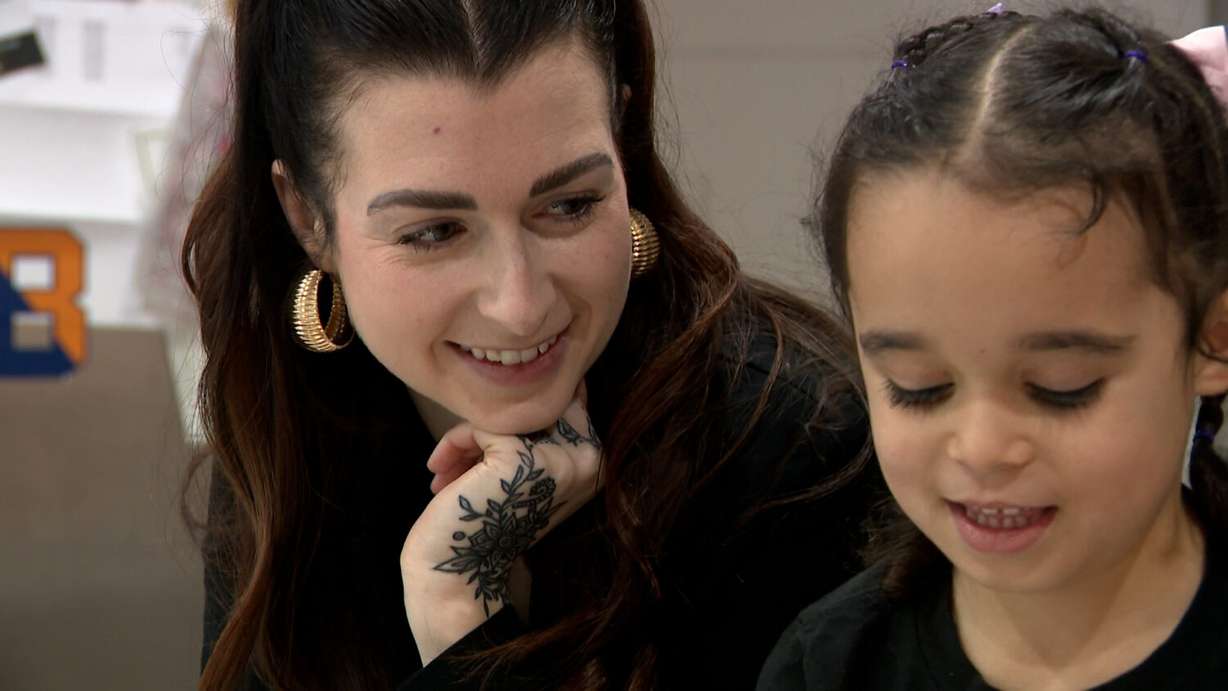
"It was really hard just to see her go through something that I know how it can affect your life," she said. "I didn't want her to go through the same things of not being able to play soccer if she wanted to or not be able to go play dodgeball with her friends. I just didn't want her to have those same limitations that I have."
Congenital heart defects are the most common type of birth defect, affecting nearly 40,000 U.S. babies per year.
Williams' journey hasn't been easy, but she and her family are navigating the challenges.
Fallon has been able to strengthen her heart through medication and through fitness — she even now teaches indoor cycling.
"I feel like anything is possible, even with these heart conditions," she said.
She wants other women to make their health a priority.
"Cardiac defects are the number one killer of women. Women wear so many hats, and we don't always take time for ourselves, especially mothers," she said. "Make sure that you know your numbers. Your blood pressure numbers, your resting heart rate, your heart rate when you're working out, if any of those seem off, just go to the doctor. Just get yourself checked out, because you never know if you could be one of those numbers in those statistics."
Williams was nominated to be a Woman of Impact with the American Heart Association, where she is helping raise money for heart health research. Learn more about her campaign here.

Photos
Most recent Health stories
Related topics
 Emma Benson