Estimated read time: 4-5 minutes
- The American Red Cross of Utah offers free A1C testing for blood donors.
- Elevated A1C levels were found in 1 in 5 donors, indicating diabetes risk.
- The Red Cross faces a severe nationwide blood shortage, especially in platelets and type O.
SALT LAKE CITY — Rolling up a sleeve to donate blood in March could benefit you while you're helping someone else.
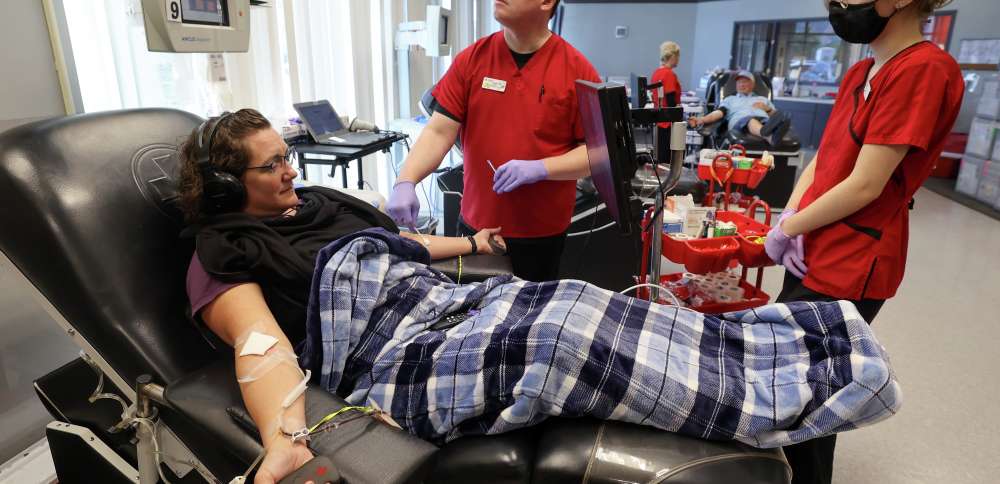
This month, the American Red Cross of Utah is providing blood donors with free A1C blood sugar testing, which screens for diabetes and prediabetes. The organization's previous data suggests that as many as 1 in 5 donors have elevated A1C levels. Many of them may not know they have an elevated risk for developing diabetes.
The American Red Cross gathered data nationally during three testing periods last year, providing 920,000 blood donors with their A1C readings: Among those with elevated blood sugar levels, 80% were in the prediabetic range.
The Red Cross has long checked other aspects of health, including gathering a health history and getting a blood pressure reading, "but adding the A1C is somewhat of a game changer for some," Heidi Ruster, regional CEO for Utah and Nevada, told Deseret News. "A lot of people don't, for whatever reason, get checkups on a regular basis, so this gives them a heads up to take action accordingly."
The American Diabetes Association in 2023 suggested that both nationally and locally, just over 30% of adults have prediabetes — and knowing it early could provide time to make lifestyle changes to head off full-blown diabetes. By the numbers, in Utah, the association estimates 653,000 adults are prediabetic, while more than 191,000 have been diagnosed with diabetes and another roughly 51,000 have not been diagnosed, but have the condition.
Good eating habits, plenty of physical activity and maintaining a healthy weight are three lifestyle changes that can head off diabetes for those at elevated risk.
The blood supply

The American Red Cross gathers and distributes about 40% of the nation's blood supply, according to Keith Paul, regional communications director. He said the Red Cross supports more than 2,500 hospitals and transfusion centers nationwide. In Utah, about 45 hospitals depend on Red Cross donations to meet their patient needs.
"To maintain adequate supplies, the Red Cross must collect about 12,500 blood donations and 3,000 platelet donations nationwide every day," he said.
Blood donations are always needed and there's tremendous turnover. Nationally, the American Red Cross is reporting a "severe blood and platelet shortage" that is particularly serious in terms of platelets and type O (negative or positive), A negative and B negative blood.
"The reality is only 3% of those who are eligible to give blood give in the U.S.," she said.
In Utah, a blood shortage is not quite as dire, Ruster said, as supplies have leveled up a bit since the predictable holiday-season shortages, which are always perilous. She said Utahns tend to be generous, but local Red Cross blood supplies still fall below the level needed to meet demand multiple times a year.
In 2025, Utah had 4,281 blood drives and collected 138,395 blood units. Of those, northern Utah collected 39,595 blood units, central and southern Utah collected 50,614 blood units and Greater Salt Lake collected 48,187 blood units, Paul said.
The total was higher than in 2024, when 131,510 units of blood were collected. And in 2023, across Utah, the Red Cross collected just 122,049 units of blood.
A regular supply of blood donations is needed because whole blood lasts up to 42 days, and platelets are only good for five days.
"That's why we're always asking, because we've always got to renew the blood supply on a very regular basis to make sure it's there for people in need," said Ruster.
Donors can provide whole blood every 56 days, while platelet donations can be made every 14 days if the donor is healthy. Platelets are different because they are separated out and the rest of the blood is put back in the donor.
Making the most of your blood type

The Red Cross reports that those with Type O-negative or Type B-negative blood have the greatest impact if they give whole blood or make a "power red" donation, which takes two units of red blood cells at a time, but returns saline, plasma and platelets to the donor.
Those with AB blood are encouraged to donate plasma, as they are the "universal" plasma donor. Everyone else can donate whole blood or platelets to make a difference. And platelets and plasma can be donated at the same time, up to once every 28 days. A platelet donation can also be made in between the combined donation, on a weekly basis, up to 24 times a year.
Unfrozen plasma is good for five days, while frozen plasma is viable for 12 months. Plasma is a major need for cancer, trauma and burn patients.
There are a few reasons someone may be turned away from donating, based on U.S. Food and Drug Administration requirements. Those include feeling ill, having low iron and being on a medication that requires a waiting period to donate. Travel to certain malaria-endemic countries can also require a waiting period.
Appointments are encouraged and Ruster said that would-be donors can use the "RapidPass" to answer health history questions online the day of their donation to speed up the process.

Most recent Health stories
Related topics
 Lois M. Collins