Estimated read time: 4-5 minutes
This archived news story is available only for your personal, non-commercial use. Information in the story may be outdated or superseded by additional information. Reading or replaying the story in its archived form does not constitute a republication of the story.
- Oluwole Adegboruwa received a 30-year prison sentence for the dark web drug trafficking of over 300,000 oxycodone pills.
- He was ordered to forfeit over $20 million, among the largest in the history of the U.S. Attorney's Office for the District of Utah.
- A Utah woman prompted the investigation, after she told the DEA she almost died taking pills purchased from Adegboruwa, likely tainted with fentanyl.
SALT LAKE CITY — A Las Vegas man found guilty of operating a multimillion-dollar dark web drug trafficking operation selling oxycodone pills across the county was sentenced Wednesday to 30 years in prison.
His sentencing followed a previous court order to forfeit over $20 million, court documents show.
"This is among the largest forfeitures in the history of the U.S. Attorney's Office for the District of Utah," Charlotte Dennis, a spokeswoman for the IRS Criminal Investigation agency, said in a statement.
Oluwole Adegboruwa, 54, of Las Vegas, was the main defendant in an "ongoing large-scale national narcotics distribution conspiracy," court documents say. A Salt Lake federal jury found Adegboruwa guilty of seven charges in May: engaging in a continuing criminal enterprise, conspiracy to distribute oxycodone, conspiracy to distribute oxycodone, two counts of distribution of oxycodone, use of U.S. mail in furtherance of a drug trafficking offense, and conspiracy to commit money laundering.
The man was previously convicted of felony fraud, admitting to embezzling money from a nonprofit organization, court records show.
"Jurors convicted Adegboruwa under what is commonly referred to as the 'kingpin statute' for organizing a continuing criminal enterprise and directing at least five others in the drug distribution conspiracy," according to a U.S. attorney's office spokesperson.
Adegboruwa was sentenced Wednesday to supervised release for life, along with the staggering forfeiture and three decades in prison. His co-defendant Enrique Isong, 49, from Los Angeles, was also found guilty of federal crimes related to drug trafficking and was sentenced in October to 10 years imprisonment and three years of supervised release.
Court documents show Adegboruwa brought in more than $9 million from selling narcotics on the dark web, the portion of the internet not indexed by search engines and not viewable in standard web browsers.
A jury required the man to forfeit over $380,000 in cash, the dollar value of a 2017 Dodge Charger, and 26 money orders worth a total of $9,400. He has also been ordered to forfeit cryptocurrency holdings, now worth more than $15 million.
In a sentencing memo, prosecutors wrote, "the jury heard clear and compelling evidence that (Adegboruwa) distributed in excess of 300,000 oxycodone 30 mg pills.
"Simply put, the amount of narcotics discussed at trial was massive."
The investigation began in March 2018 when a Utah woman said she bought oxycodone on the dark web from a seller called King Odua, after receiving intel from the Dutch National Police via Europol.
The Utah woman told a DEA agent she became addicted to painkillers after she was prescribed Lortab, morphine, oxycodone and Oxycontin at the same time following shoulder surgery "that did not go well," according to the complaint.
After buying two batches of "fake and ineffective" oxycodone pills from one vendor on a dark web market "HANSA," the woman found "King Odua" advertising next-day shipping to Utah, the complaint said.
She bought six packages, according to court documents, that were shipped between baseball cards or in CD cases to hide the shape. The sixth order "seemed very potent," the complaint stated, and the woman passed out at a friend's house after taking two pills.
Luckily, her friend was a nurse, who used "vigorous sternum rubs to revive her," later telling the woman "she was completely unresponsive," and her "face turned blue for several minutes," likely because the pills "were fake and probably did contain fentanyl," investigators say.
Prosecutors say they do "not believe that (Adegboruwa) was seeking to sell fentanyl-laced pills but was engaging in willful blindness by making purchases from dark-web vendors, not testing his product and then sending it out into the marketplace."
The man used dark web sites that have since been shut down by law enforcement, including Hansa, Dream Market, Wall Street Market and Alphabay, court documents show.
The Utah woman "racked up $5,000-$6,000 in debt purchasing pills online during a short, approximately one-month long period," as pills were $29 each, the complaint says. As a cooperating witness, she was not charged in the investigation.
Investigators were able to identify Adegboruwa through FedEx customer records, online reviews for his dark web selling account, surveillance video and credit cards, according to court documents, while making undercover purchases and intercepting packages.
Drug poisoning deaths are the leading cause of injury death in the state, according to the Utah Department of Health and Human Services — more than firearms, falls and motor vehicle crashes. "Ten Utahns die each week from drug overdose," according to the department's website.
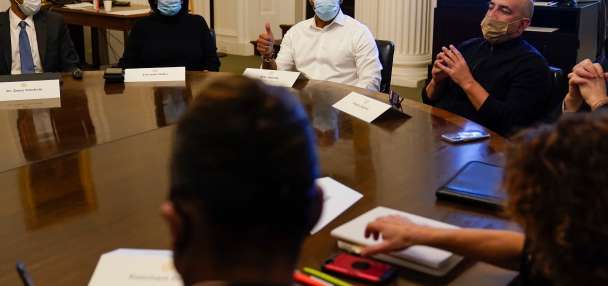
A research coordinator with the state Office of the Medical Examiner, Megan Broekemeier, speaking at the first Fentanyl Task Force meeting on Thursday, said drug overdoses are on the rise, with 606 deaths across Utah last year, the highest on record.
The number represents a 14% increase from 2022, she said, largely driven by fentanyl.

Most recent Police & Courts stories
Related topics
 Collin Leonard