Estimated read time: 3-4 minutes
This archived news story is available only for your personal, non-commercial use. Information in the story may be outdated or superseded by additional information. Reading or replaying the story in its archived form does not constitute a republication of the story.
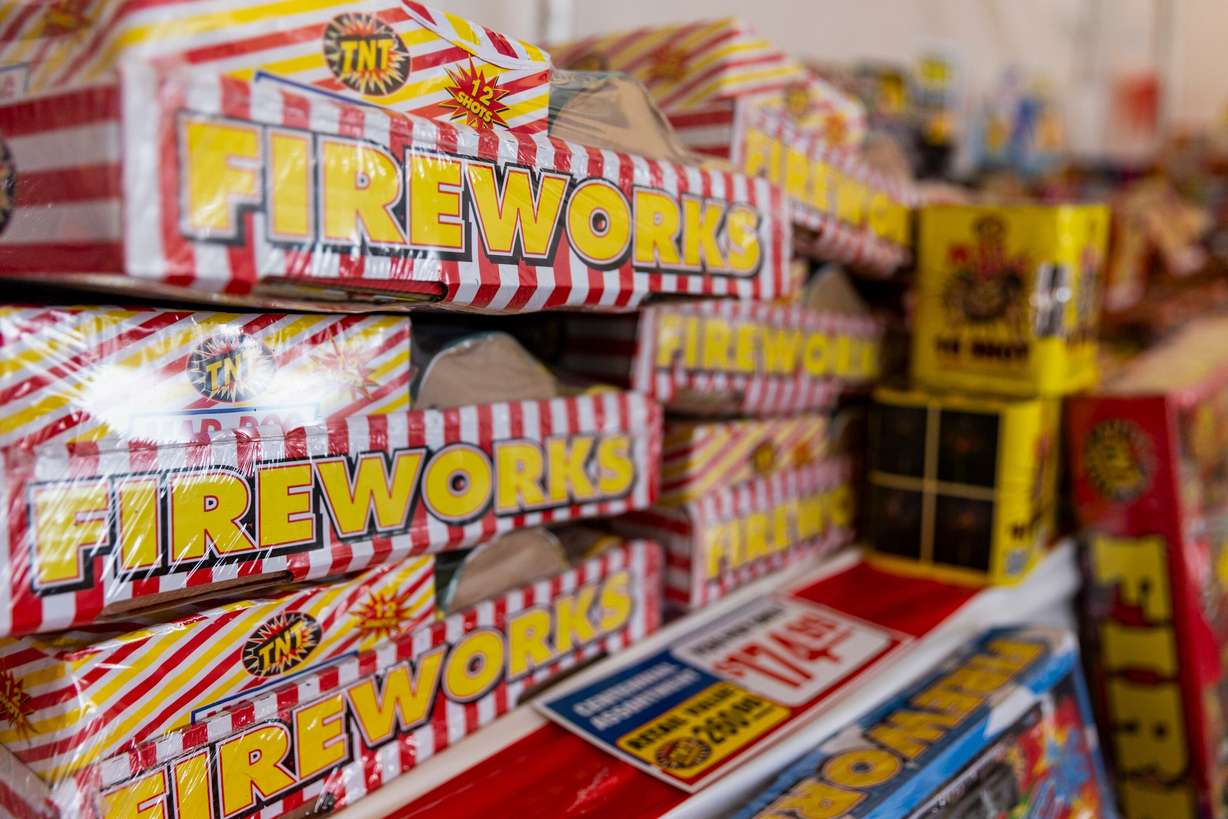
SALT LAKE CITY — Celebrating the Fourth of July holiday with the backyard version of rockets' red glare and bombs bursting in air is going to be somewhat more costly this year, continuing a trend that goes back to 2019 even as per capita fireworks consumption is down dramatically.
According to a report from the American Pyrotechnics Association, the cost of fireworks in the U.S. rose by some 50% from 2019 to 2022, driven mostly by steep increases in the cost of shipping. Most consumer-level fireworks, about 90%, are manufactured and exported by China. But even as the shipping snarls that drove up freight costs amid pandemic conditions have mostly been resolved, prices have continued to rise amid ongoing inflationary conditions.
Here's where to watch fireworks in Utah this Fourth of July week
Get ready for some powerful pyrotechnics the week of Independence Day throughout Utah.Why do fireworks cost more?
The U.S. International Trade Commission reports the price of fireworks shot up from $1.13 per pound in 2021 to $1.61 in the first four months of this year. That represents a jump of 42%, and while it's a reflection of wholesale pricing, those costs are passed on to consumers who purchase mass-market fireworks products.
Adding to higher costs for consumers, according to a report from Boston University business professor Jay Zagorsky published by The Conversation last week, are higher labor costs for those who operate the fireworks stands that pop up this time of year in communities across the country.
And while fireworks prices have risen profoundly over the past few years, their popularity among U.S. celebrators has declined sharply.
How much do Americans use fireworks?
Using trade commission data, Zagorsky computed U.S. per capita fireworks import rates, calculated in pounds, going back to 2010. In that year, the U.S. per capita import measure was about two-thirds of a pound per person. In 2019, that rate was three-quarters of a pound per person. Then, the stats took a dramatic turn.
"During the COVID-19 pandemic, when people were stuck in their homes and social distancing was common, fireworks use shot up," Zagorsky wrote. "This makes sense: Setting off pyrotechnics is an outdoor activity where the product instructions explicitly state people igniting them should stand far away from others. In 2021 and 2022, fireworks usage almost doubled to 1.35 pounds per American."
While we're only halfway through the 2024 calendar year, Zagorsky notes most of what will be blown up over the Independence Day holiday has already been imported and the U.S. per capita consumption level has plummeted back to about where it was in 2010.
Zagorsky believes there are multiple factors at play behind the tide shift, including fewer bored people stuck at home amid public health restrictions; the return of commercial fireworks displays that have abated overall consumer desire to light it yourself; and the simple economics of mass-market fireworks, which are now considerably more expensive than they were just a few short years ago.
If you're planning on shelling out for your own fireworks this year, a reminder that Utah state law limits their use to July 2 through July 5 for the Fourth of July holiday and July 22 through July 25 for Pioneer Day. The legal period is 11 a.m. to 11 p.m. those days, and up until midnight on the day of each holiday. Some jurisdictions have additional rules and limitations, so check with your local municipality to find what applies in your neighborhood.

Where you can and can't launch fireworks in Utah this year
Launching fireworks is once again legal in Utah for the Fourth of July, but communities have restrictions, including where fireworks are and aren't legal.