Estimated read time: 7-8 minutes
This archived news story is available only for your personal, non-commercial use. Information in the story may be outdated or superseded by additional information. Reading or replaying the story in its archived form does not constitute a republication of the story.
SALT LAKE CITY — Utah Division of Wildlife Resources identified a total of 1,056 fish and wildlife that were illegally harvested in 2023, at a value of over $619,000. National estimates suggest that represents just 3% of the total impact poachers may have had in the state.
In addition to the monetary value of those animals, the overall impact on the ecosystem at large is difficult to measure.
Jason Anderson has been a wildlife conservation officer in Utah for just over three years. He said few poaching cases would ever be prosecuted without help from the public.
"It can't be overstated, the value of what the public provides for the cases that we do solve," Anderson said.
In fact, he said, it is very rare that he happens upon evidence of an illegal kill that may lead to an investigation. There is simply too much ground to cover, too many calls to respond to and most poaching cases originate deep in Utah's vast wilderness.
Anderson also points out, not all illegal harvests are intentional acts. When wildlife officers interact with the public and check for fishing and hunting licenses, opportunities allow for better education for hunters and fishermen regarding regulations and limits in the state.
In addition to the discretion with which wildlife officers are empowered, Utah law considers a difference between an illegal harvest, which may or may not be intentional, and the wanton destruction of wildlife an intentional and felonious act. Penalties can range from a citation and/or a fine, to a criminal prosecution and restitution.
Catching an animal killer
In a recent Utah County case, Anderson investigated a tip from an acquaintance of a suspect believed to be transporting a dead deer outside of hunting season. Not being a hunter, the person initially assumed they couldn't possibly know whether anything was wrong.
They had witnessed more deer and antelope being brought home by this individual in the weeks that followed. The person decided to call the Utah Division of Wildlife Resources, still assuming there may be a valid reason for the hunter's activities. The tip was made anonymously.
Anderson was armed only with a photo showing the home and open garage of the person believed to have been poaching, to begin his investigation. Typically, wildlife officers hope to be led to gut piles and partial remains of animals that can then exhibit a time of death, DNA, collection of bullets and shell casings, tire tracks and footprints that can help build a forensic case against a poacher.
This person had been careful to take the entire animal home, leaving no trace of evidence in the field.

Anderson began scouring social media accounts of the suspected poacher for clues as to where he liked to recreate, what vehicles he owned and, possibly, weapons used. A case can be blown by speaking to a person too soon without any evidence, no matter how circumstantial, that can be used to question them with greater purpose and potentially catch the offender in lies.
A photo posted on social media led Anderson to a specific mountainside in Utah County where the poaching might have occurred. Using visual seasonal and terrain clues in multiple photos, Anderson began to piece together a timeline that could be compared to the tip he received.
Armed with this additional information, Anderson set about finding the home of the suspect, which meant driving through neighborhoods that matched the photo provided by the tipster. Once the home was located, he found the man no longer lived there.
Interviews with people living in neighboring homes led to stories of gifted meat and the previous resident frequently grilling game meat. One former neighbor pointed Anderson to where the man was now living.
When all was said and done, multiple members of the public helped Anderson solve a case — over many months of investigation — that involved illegally hunting multiple deer and antelope at night. The poacher had used headlights to illuminate a mountainside and a high-powered air rifle to avoid the loud percussions of a traditional hunting rifle.
Poacher in city limits
An initial tip came from someone associated with a hunting party where poaching was believed to have been occurring. The tipster had known the man for years, but the members of the hunting party wanted to remain anonymous. The man, as hunters often and legally do, had been scouting a large trophy mule deer buck in preparation for hunting season. As the season ended, he was very upset the expected harvest of this deer had not occurred.
As Anderson began his investigation, the members of his hunting party decided to come forward. As sportsmen, they didn't want him to enjoy the spoils of something they have legally invested considerable time and money pursuing.
The members of the hunting party provided screenshots of texts and other communications where the hunter laid out a plan to take the deer, which had become an obsession, out of season. In those communications to friends and family the poacher asked for their silence.
Those involved in the plan helped to track and kill the deer, then left it until dark to return and process it and prepare to transport it under the cover of darkness. Those soon-to-be tipsters took note of details that would later help Anderson.
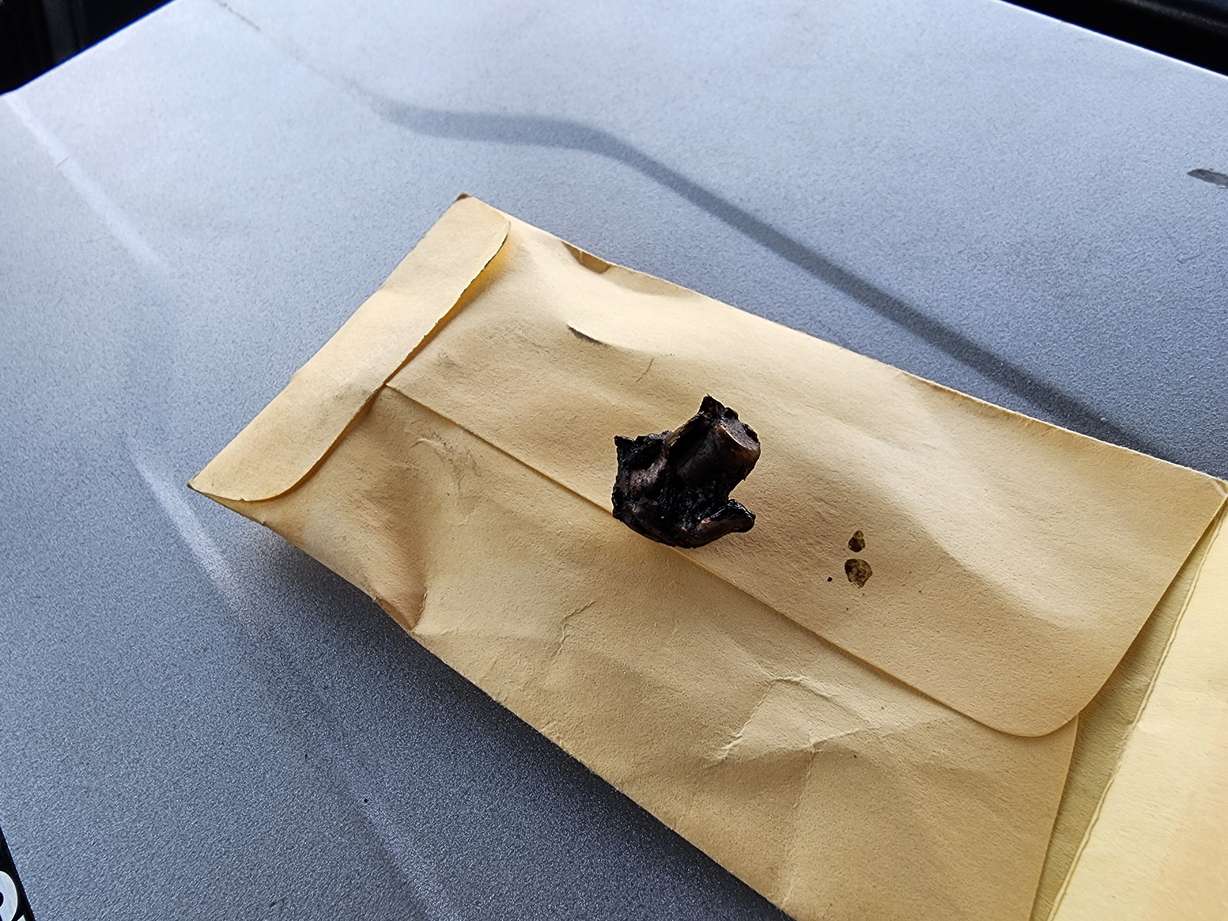
He spoke to homeowners near the suspected kill site in the mountains near Salt Lake City, and one mentioned a blood trail and drag marks a dog had found behind his home. Using that as a starting point, Anderson hiked to a bone and gut pile that would further the investigation.
The homeowner also provided Ring camera footage showing part of a vehicle passing by that would prove helpful.
Anderson then learned the man had paid individuals to help herd the desired deer to a particular place on the mountain, to save the time needed to track and chase it. What started as a single tipster, and had grown to four, now involved too many for Anderson to handle alone.
With other investigators assisting, the tipsters continued to communicate with the man pursuing the deer and gather more evidence. On a final attempt to find more physical evidence, prior to confronting the hunter, Anderson drove by his home and saw a massive set of deer antlers drying between two chairs in the yard.
The antlers would match the photos provided by tipsters, taken shortly after the deer was harvested. The poacher had been sitting by the deer in the photos.
He knocked on the door and the hunter was not home at the time, but the person who answered confirmed the deer belonging to those antlers had been brought home by the man, who then pulled into the driveway in the vehicle matching the Ring camera footage.
The man admitted to taking the deer but denied any illegal activity. Little did he know, but warrants were already in the works for phone and email accounts.
"This case could not have been made without the public — the number of hands that ended up being a part of what the case turned into was the largest scope of tipsters and investigators I've ever been a part of," Anderson said, regarding a separate poaching case in Salt Lake County.
Frustration over that one elusive deer led the man to take multiple deer, illegally. It came down to many public tipsters, a dog's discovery, surveillance camera footage, even a taxidermist, providing information that allowed Anderson to bring a successful case to prosecutors.
The suspects in the two cases have been prosecuted and are awaiting sentencing. Details of the cases that could identify the suspects, and negatively impact the judicial process, have been excluded.
Utahns are encouraged to call 1-800-662-3337 to report poaching cases.