'%3e%3cpath%20d='M34.1406%205.85938C30.3906%202.10547%2025.3047%200%2020%200C14.6953%200%209.60938%202.10547%205.85938%205.85938C2.10938%209.61328%200%2014.6953%200%2020C0%2025.3047%202.10547%2030.3906%205.85938%2034.1406C9.61328%2037.8906%2014.6953%2040%2020%2040C25.3047%2040%2030.3906%2037.8945%2034.1406%2034.1406C37.8906%2030.3906%2040%2025.3047%2040%2020C40%2014.6953%2037.8945%209.60938%2034.1406%205.85938ZM37.0117%2023.543H31.1602V13.5391H27.6328V19.9414C28.1211%2020.6914%2028.3711%2021.582%2028.3711%2022.5625V22.625C28.3711%2023.668%2028.1172%2024.6055%2027.6328%2025.4297V26.6094H36.082C33.4883%2032.9375%2027.2891%2037.3789%2020.0039%2037.3789C10.3711%2037.3789%202.62109%2029.6289%202.62109%2020C2.62109%2010.3711%2010.3711%202.62109%2020%202.62109C29.6289%202.62109%2037.3789%2010.3711%2037.3789%2020C37.3789%2021.1484%2037.2617%2022.2656%2037.0508%2023.3477C37.0391%2023.4141%2037.0234%2023.4766%2037.0117%2023.543Z'%20fill='white'/%3e%3cpath%20d='M22.3086%2018.5352C20.4336%2018.125%2019.9531%2017.8398%2019.9766%2017.1836V17.1406C19.9766%2016.6992%2020.3477%2016.2148%2021.4023%2016.2148C22.582%2016.2148%2023.8867%2016.6797%2025.0781%2017.4766L26.8516%2015.0195C25.4453%2013.8906%2023.707%2013.3398%2021.5547%2013.3398C18.5195%2013.3398%2016.4375%2015%2016.4063%2017.4766V17.5352C16.3633%2020.2617%2018.5859%2020.9805%2021.293%2021.6016C23.0391%2021.9766%2023.5703%2022.3164%2023.5703%2022.9609L23.5469%2022.9766C23.5469%2023.3906%2023.2578%2023.7031%2022.7852%2023.8359C22.5742%2023.9062%2022.1289%2023.9727%2021.5156%2023.9727C20.7617%2023.9727%2019.7539%2023.8633%2018.6328%2023.4844C18.0898%2023.2891%2017.4727%2023.0039%2016.8047%2022.6133L20.1406%2026.625C20.2813%2026.6602%2021.0977%2026.8516%2021.7734%2026.8516C25.0039%2026.8516%2027.0859%2025.2461%2027.1094%2022.6328V22.5703C27.1602%2020.1133%2025.2148%2019.1719%2022.3086%2018.5352Z'%20fill='white'/%3e%3cpath%20d='M5.24219%2013.5664V26.6133H8.75391V23.7578L10.2969%2021.9531L14.2031%2026.6133H18.3867L12.3555%2019.5195L17.4023%2013.5664H13.4531L8.75391%2019.0586V13.5664H5.24219Z'%20fill='white'/%3e%3c/g%3e%3cdefs%3e%3cclipPath%20id='clip0_97_2430'%3e%3crect%20width='40'%20height='40'%20fill='white'/%3e%3c/clipPath%3e%3c/defs%3e%3c/svg%3e)




Estimated read time: 5-6 minutes
This archived news story is available only for your personal, non-commercial use. Information in the story may be outdated or superseded by additional information. Reading or replaying the story in its archived form does not constitute a republication of the story.
SALT LAKE CITY — An initiative that seeks to reverse Utah's state flag from being implemented into code next month failed to receive enough signatures by the state's deadline, but the fight over the issue might not be over.
The initiative received 81,992 valid signatures by the Thursday deadline, Utah Lieutenant Governor's Office officials reported Friday afternoon. Organizers were required to collect 134,298 signatures from registered Utah voters, including a certain percentage of signatures from 26 of the state's 29 senate districts to get the initiative onto this year's ballot.
The office noted that there were nearly 100,000 signatures submitted to the state, but 13,110 signatures were determined to be invalid and another 4,023 were unverified.
The announcement isn't much of a surprise, as leaders of the group behind the measure acknowledged Tuesday that they didn't believe they would gather enough signatures by the Thursday deadline; however, they argued loopholes in the initiative process hampered their efforts, which is why they filed a lawsuit over it last week.
Gov. Spencer Cox, on the other hand, shrugged off the lawsuit earlier Thursday, saying he believes the state will prevail in the case. Lawyers representing Lt. Gov. Deidre Henderson insist the group had plenty of time to gather signatures and they question the timing of the measure.
A federal judge on Monday set a Feb. 23 deadline for the state to formally respond to a motion for an expedited preliminary injunction in the case before a hearing is scheduled, according to federal court records.
How we got here
Utah lawmakers established a new state flag during the 2023 legislative session, completing a nearly two-year process. The final bill, SB31, also designates that the state's old design — one that had been mostly untouched since 1911 — will serve as the historical flag moving forward. It is set to go into law next month after it was delayed by an oddity in the state's flag laws.
The initiative opposing the new design, Restoring the Utah State Flag, emerged in May 2023, a month after an attempt to hold a referendum on the bill failed. It would reverse the bill and put future flag changes up to a public vote rather than going through the Legislature. Organizers argued that having two flags is divisive and that the process eliminated public opinion.
The lawsuit — filed by initiative organizer Tracie Halvorsen and Are You Listening Yet PAC — centers on issues that organizers say went unaddressed when reported to the state.
Halvorsen alleges that the Utah Lieutenant Governor's Office took 25 days to release a fiscal note on the measure, which it needed before signatures could be collected. She noted that it would have cost $0 to implement, and fiscal notes on bills proposed during the legislative session can be completed in "just days." The group argues that additional holdups also chipped away at its time to collect signatures.
From there, she said there appeared to be an "inconsistent understanding" of the signature-gathering law among county clerks, which led to setbacks and some signatures going unverified. The group believes that many of the invalid signatures were "arbitrarily" tossed because of differing opinions among county clerks about the law.
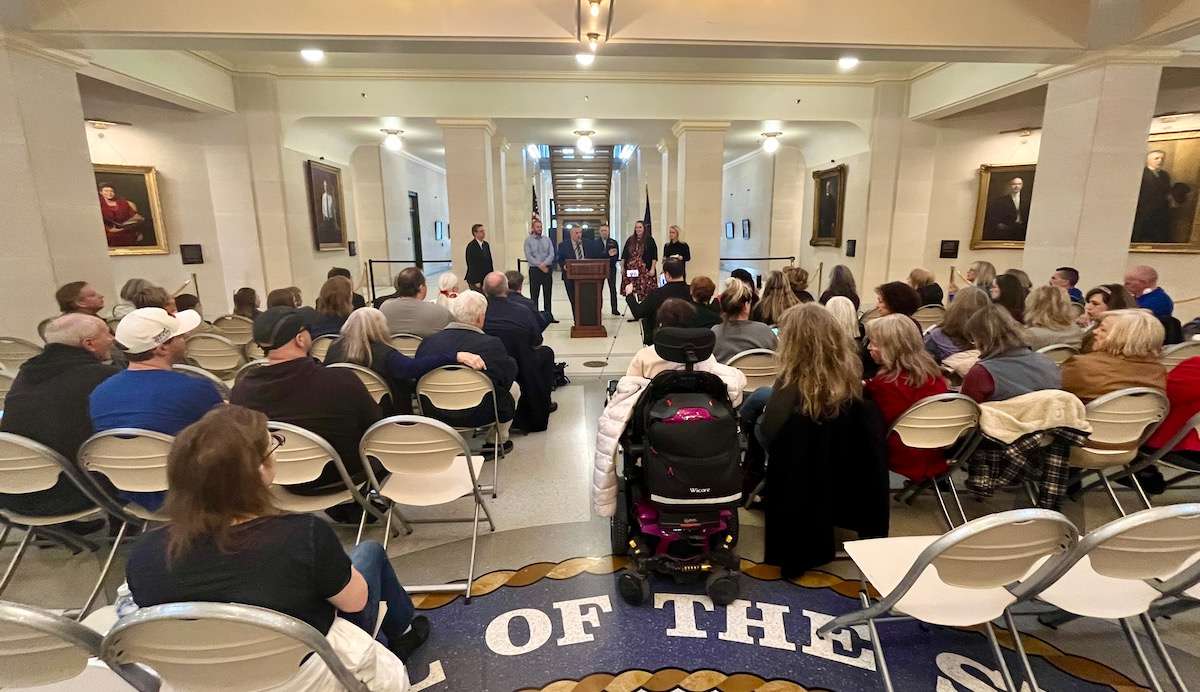
Halvorsen claims many initiative backers weren't informed their signatures were dropped and laws on the books prevent them from signing again. On top of that, she said there's "no reason" why Feb. 15 is the initiative deadline date for an election held in November. The group points to changes to deadlines Utah made after Robert Kennedy Jr. sued the state last year over ballot issues as an example that the deadlines can be amended.
It built up into claims included in the lawsuit.
"It's not just a flag. It's about the people's voice and how we're not being listened to," Halvorsen said. "They made this process so hard."
The state's response
The state has yet to formally respond in court, but Cox didn't appear to be bothered by it when KSL.com asked him about it during his monthly news conference Thursday morning.
"I think it's a tremendous waste of resources and very disappointing," the governor said, standing in front of an image of the new flag. "I feel very confident that the lawsuit — like everything they've tried so far — will fail."

What the state has responded to was a request to speed up an injunction hearing on the case. Lawyers representing Henderson opposed the idea, questioning in a motion Monday why the lawsuit was filed now "despite over eight months of actively participating in the initiative process."
While organizers contend they brought these issues up with the state before, the election's office lawyers also brought into question the timing of an "attack (on) the statutory process they elected to use in their attempt."
Organizers explained to KSL.com that the timing had nothing to do with the deadline. They said it took time for them to gather enough funds to have a law firm on retainer.
What happens next?
A judge agreed with the state on the timing to speed up the hearing, giving the state until Feb. 23 before the process moves forward instead of holding the hearing as early as this week.
If left untouched, last year's SB31 officially goes into law on March 9.
There's also an effort in this year's legislative session that would effectively codify the initiative. However, a House committee voted last week to hold HB436, sponsored by Rep. Phil Lyman, R-Blanding. Lawmakers on the committee, including at least two who signed the initiative, expressed concerns about implementing a bill if the initiative fails.
"I feel like we need to do more to hear people of Utah, but I don't want to go back and dig this up again and again," said Rep. Brett Garner, R-West Valley City.
Halvorsen said Tuesday that she doubts the committee will revisit the bill by the end of the session on March 1. She added that the group will continue to collect signatures while the case continues in court.
Contributing: Bridger Beal-Cvetko