'%3e%3cpath%20d='M34.1406%205.85938C30.3906%202.10547%2025.3047%200%2020%200C14.6953%200%209.60938%202.10547%205.85938%205.85938C2.10938%209.61328%200%2014.6953%200%2020C0%2025.3047%202.10547%2030.3906%205.85938%2034.1406C9.61328%2037.8906%2014.6953%2040%2020%2040C25.3047%2040%2030.3906%2037.8945%2034.1406%2034.1406C37.8906%2030.3906%2040%2025.3047%2040%2020C40%2014.6953%2037.8945%209.60938%2034.1406%205.85938ZM37.0117%2023.543H31.1602V13.5391H27.6328V19.9414C28.1211%2020.6914%2028.3711%2021.582%2028.3711%2022.5625V22.625C28.3711%2023.668%2028.1172%2024.6055%2027.6328%2025.4297V26.6094H36.082C33.4883%2032.9375%2027.2891%2037.3789%2020.0039%2037.3789C10.3711%2037.3789%202.62109%2029.6289%202.62109%2020C2.62109%2010.3711%2010.3711%202.62109%2020%202.62109C29.6289%202.62109%2037.3789%2010.3711%2037.3789%2020C37.3789%2021.1484%2037.2617%2022.2656%2037.0508%2023.3477C37.0391%2023.4141%2037.0234%2023.4766%2037.0117%2023.543Z'%20fill='white'/%3e%3cpath%20d='M22.3086%2018.5352C20.4336%2018.125%2019.9531%2017.8398%2019.9766%2017.1836V17.1406C19.9766%2016.6992%2020.3477%2016.2148%2021.4023%2016.2148C22.582%2016.2148%2023.8867%2016.6797%2025.0781%2017.4766L26.8516%2015.0195C25.4453%2013.8906%2023.707%2013.3398%2021.5547%2013.3398C18.5195%2013.3398%2016.4375%2015%2016.4063%2017.4766V17.5352C16.3633%2020.2617%2018.5859%2020.9805%2021.293%2021.6016C23.0391%2021.9766%2023.5703%2022.3164%2023.5703%2022.9609L23.5469%2022.9766C23.5469%2023.3906%2023.2578%2023.7031%2022.7852%2023.8359C22.5742%2023.9062%2022.1289%2023.9727%2021.5156%2023.9727C20.7617%2023.9727%2019.7539%2023.8633%2018.6328%2023.4844C18.0898%2023.2891%2017.4727%2023.0039%2016.8047%2022.6133L20.1406%2026.625C20.2813%2026.6602%2021.0977%2026.8516%2021.7734%2026.8516C25.0039%2026.8516%2027.0859%2025.2461%2027.1094%2022.6328V22.5703C27.1602%2020.1133%2025.2148%2019.1719%2022.3086%2018.5352Z'%20fill='white'/%3e%3cpath%20d='M5.24219%2013.5664V26.6133H8.75391V23.7578L10.2969%2021.9531L14.2031%2026.6133H18.3867L12.3555%2019.5195L17.4023%2013.5664H13.4531L8.75391%2019.0586V13.5664H5.24219Z'%20fill='white'/%3e%3c/g%3e%3cdefs%3e%3cclipPath%20id='clip0_97_2430'%3e%3crect%20width='40'%20height='40'%20fill='white'/%3e%3c/clipPath%3e%3c/defs%3e%3c/svg%3e)


Estimated read time: 5-6 minutes
This archived news story is available only for your personal, non-commercial use. Information in the story may be outdated or superseded by additional information. Reading or replaying the story in its archived form does not constitute a republication of the story.
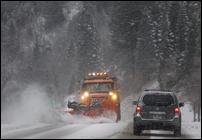
SALT LAKE CITY — Wintry weather and snow squalls are continuing to impact Utah as car crashes total in the hundreds since the onset of snow Friday.
Utah Highway Patrol Sgt. Cameron Roden confirmed that approximately 280 car crashes occurred from Friday to Sunday. Two of those were fatalities. Utah Highway Patrol responded to 101 crashes on Tuesday and 156 on Wednesday. On Thursday, troopers had responded to 25 crashes as of 6 a.m.
More Utah traffic impacts from snow expected Wednesday
A second wave of snow, including another possible snow squall, is expected to arrive in Utah Wednesday afternoon.What to know about safe driving in the winter
As Utah continues to face wintry weather conditions, Roden offered some advice to drivers to help them try to stay safe while commuting.
The No. 1 tip he emphasized is driving slower than usual.
"Watch your speed," Roden said "That is the No. 1 thing that causes crashes in bad weather, whether the roads be icy or snowy or even just wet. Going too fast for those conditions is what causes most crashes."
Roden explained that driving too quickly can make it difficult to control your car. "If you have to react to any type of hazard, whether someone loses control in front of you and you have to react to that, or you have to brake suddenly, or you have to do anything and you're going too fast, it's much easier to lose control when it comes to speed."
Posted speed limits are set for typical, dry conditions, he said. Driving below the speed limit can be important to help avoid crashes.
Increasing your following distance is also something to keep in mind while driving. "Giving yourself that extra space will help you to avoid running into the snow or the person in front."
If you run into a snow squall, visibility can dramatically drop in a short period of time. Roden's best advice is to avoid driving during that time. "With diminished visibility, it's just hard to drive, period. It's hard to see other cars around you. It's hard to see if you're staying within your lane."
Say you're driving as a squall comes on. Roden said the best option might be to exit the freeway and wait out the squall before driving to your destination.
It's also important to watch out for black ice, which Roden explained could pop up on the roads whenever there's been moisture. After the snow has been cleared, some drivers might think they can return to normal speeds, but Roden said that's not the case. He's seen drivers lose control of their cars after sliding on ice.
Another potential driving hazard to look out for is snow on your car. He emphasized that clearing off windows and the top of your car is critical. "If you get on the freeway and start traveling at higher speeds, a lot of the time that snow can fly off and cause visibility issues for others that may be driving behind you."
One time when Roden was driving, he said he had some snow on top of his car. He had to brake and the snow slid down onto the windshield and pinned the blades down. His wipers were unable to clear the snow and it made it difficult for him to see until he pulled over and cleared it off. To avoid it becoming a hazard to yourself, you need to clear off the snow, he said.
Before you even get on the road, there are safety tips to follow. First, check your tires. Roden explained that if your tires are bald, maintaining control on snowy roads is harder. He also advised that you ensure your headlights are working, your wipers are clearing snow properly and that you make sure you have the right washer fluid.
"If your washer fluid is not meant for freezing temperatures and you use that washer fluid, it freezes to your windshield," Roden said. "And that can cause some visibility issues."
10 things to check before a snowstorm
Here are 10 things to evaluate before a snowstorm to help you remain safe.
- Is the tire pressure on your cars at the proper level?
- Does your car battery need to be replaced?
- Is there a blanket, a flashlight, shovel, snow brush, extra clothing and battery booster cables in your vehicle in case of emergency?
- Do you have water bottles and jugs in your house?
- How much food, especially nonperishables, do you have in your home?
- Do you have a plan and supplies (such as flashlights or generators) in the case of a power outage?
- Do you have enough of the medication you may need?
- Do you have enough food for your pets?
- Do you have enough diapers and formula for your baby?
- Have you checked your carbon monoxide detector?
Snow squalls
A snow squall is different than just any snowstorm. It's an intense bout of snow that is accompanied by high, gusty winds and whiteout conditions. These weather occurrences obscure visibility, making it difficult to see, and bring additional difficulties when driving. It's different than a blizzard in that the snow only continues for an hour or so.
A winter weather advisory was issued by the National Weather Service in Salt Lake City. It's expected to impact the Tooele and Rush valleys, the northern Wasatch Front, Salt Lake Valley, Utah Valley, eastern Juab/Millard counties and Sanpete Valley. The advisory is in place until 5 a.m. Thursday.
It's important to note that the winter weather is expected to continue through the weekend. The Salt Lake City area is forecast to see snow every day from Wednesday until Sunday, followed by two days without snow. Then, on Wednesday of next week, there is likely to be a mix of rain and snow.
Other parts of the country are experiencing snowy weather, with more on the horizon.
"The deadly storm that's raking the Eastern U.S. this week is the opening act for what's to come over the next week: A potential 'bomb cyclone' blizzard for the Midwest, an arctic blast courtesy of the polar vortex, and possibly the first real East Coast snowstorm in years," USA Today reported.