'%3e%3cpath%20d='M34.1406%205.85938C30.3906%202.10547%2025.3047%200%2020%200C14.6953%200%209.60938%202.10547%205.85938%205.85938C2.10938%209.61328%200%2014.6953%200%2020C0%2025.3047%202.10547%2030.3906%205.85938%2034.1406C9.61328%2037.8906%2014.6953%2040%2020%2040C25.3047%2040%2030.3906%2037.8945%2034.1406%2034.1406C37.8906%2030.3906%2040%2025.3047%2040%2020C40%2014.6953%2037.8945%209.60938%2034.1406%205.85938ZM37.0117%2023.543H31.1602V13.5391H27.6328V19.9414C28.1211%2020.6914%2028.3711%2021.582%2028.3711%2022.5625V22.625C28.3711%2023.668%2028.1172%2024.6055%2027.6328%2025.4297V26.6094H36.082C33.4883%2032.9375%2027.2891%2037.3789%2020.0039%2037.3789C10.3711%2037.3789%202.62109%2029.6289%202.62109%2020C2.62109%2010.3711%2010.3711%202.62109%2020%202.62109C29.6289%202.62109%2037.3789%2010.3711%2037.3789%2020C37.3789%2021.1484%2037.2617%2022.2656%2037.0508%2023.3477C37.0391%2023.4141%2037.0234%2023.4766%2037.0117%2023.543Z'%20fill='white'/%3e%3cpath%20d='M22.3086%2018.5352C20.4336%2018.125%2019.9531%2017.8398%2019.9766%2017.1836V17.1406C19.9766%2016.6992%2020.3477%2016.2148%2021.4023%2016.2148C22.582%2016.2148%2023.8867%2016.6797%2025.0781%2017.4766L26.8516%2015.0195C25.4453%2013.8906%2023.707%2013.3398%2021.5547%2013.3398C18.5195%2013.3398%2016.4375%2015%2016.4063%2017.4766V17.5352C16.3633%2020.2617%2018.5859%2020.9805%2021.293%2021.6016C23.0391%2021.9766%2023.5703%2022.3164%2023.5703%2022.9609L23.5469%2022.9766C23.5469%2023.3906%2023.2578%2023.7031%2022.7852%2023.8359C22.5742%2023.9062%2022.1289%2023.9727%2021.5156%2023.9727C20.7617%2023.9727%2019.7539%2023.8633%2018.6328%2023.4844C18.0898%2023.2891%2017.4727%2023.0039%2016.8047%2022.6133L20.1406%2026.625C20.2813%2026.6602%2021.0977%2026.8516%2021.7734%2026.8516C25.0039%2026.8516%2027.0859%2025.2461%2027.1094%2022.6328V22.5703C27.1602%2020.1133%2025.2148%2019.1719%2022.3086%2018.5352Z'%20fill='white'/%3e%3cpath%20d='M5.24219%2013.5664V26.6133H8.75391V23.7578L10.2969%2021.9531L14.2031%2026.6133H18.3867L12.3555%2019.5195L17.4023%2013.5664H13.4531L8.75391%2019.0586V13.5664H5.24219Z'%20fill='white'/%3e%3c/g%3e%3cdefs%3e%3cclipPath%20id='clip0_97_2430'%3e%3crect%20width='40'%20height='40'%20fill='white'/%3e%3c/clipPath%3e%3c/defs%3e%3c/svg%3e)


Estimated read time: 5-6 minutes
This archived news story is available only for your personal, non-commercial use. Information in the story may be outdated or superseded by additional information. Reading or replaying the story in its archived form does not constitute a republication of the story.
LOS ANGELES — Norman Lear, the writer, director and producer who revolutionized prime-time television with such topical hits as "All in the Family" and "Maude" and propelled political and social turmoil into the once-insulated world of sitcoms, has died. He was 101.
Lear died Tuesday night in his sleep, surrounded by family at his home in Los Angeles, said Lara Bergthold, a spokeswoman for his family.
A liberal activist with an eye for mainstream entertainment, Lear fashioned bold and controversial comedies that were embraced by TV sitcom viewers who long had to watch the evening news to find out what was going on in the world. His shows helped define prime-time comedy in the 1970s and after, launched the careers of such young performers as Rob Reiner and Valerie Bertinelli and made Carroll O'Connor, Bea Arthur and Redd Foxx among others into middle-aged superstars.
His signature production was "All in the Family," which was immersed in the headlines of the day, while also drawing upon Lear's childhood memories of his tempestuous father. Racism, feminism, and the Vietnam War were flashpoints in the sitcom featuring blue-collar conservative Archie Bunker, played by O'Connor, and liberal son-in-law Mike Stivic (Reiner). Jean Stapleton co-starred as Archie's befuddled, but good-hearted wife, Edith, and Sally Struthers played the Bunkers' daughter, Gloria, who often clashed with Archie on behalf of her husband.
At the start of the 1970s, top-rated shows still included such old-fashioned programs as "Here's Lucy," "Ironside" and "Gunsmoke." CBS, Lear's primary network, would soon enact its "rural purge" and cancel such standbys as "The Beverly Hillbillies" and "Green Acres." The groundbreaking sitcom "The Mary Tyler Moore Show," about a single career woman in Minneapolis, debuted on CBS in Sept. 1970, just months before "All in the Family" started.
But ABC passed on "All in the Family" twice and CBS was initially reluctant to take on the daring series, Lear would say. When the network finally aired "All in the Family," it began with a disclaimer: "The program you are about to see is 'All in the Family.' It seeks to throw a humorous spotlight on our frailties, prejudices, and concerns. By making them a source of laughter we hope to show, in a mature fashion, just how absurd they are."
By the end of 1971, "All In the Family" was No. 1 in the ratings and Archie Bunker was a pop culture fixture, with President Richard Nixon among his fans. Some of his putdowns became catchphrases, whether calling his son-in-law "Meathead," or his wife "Dingbat." He would also snap at anyone who dared occupy his faded orange-yellow wing chair, the centerpiece of the Bunker home in the New York City borough of Queens and eventually an artifact in the Smithsonian's National Museum of American History.
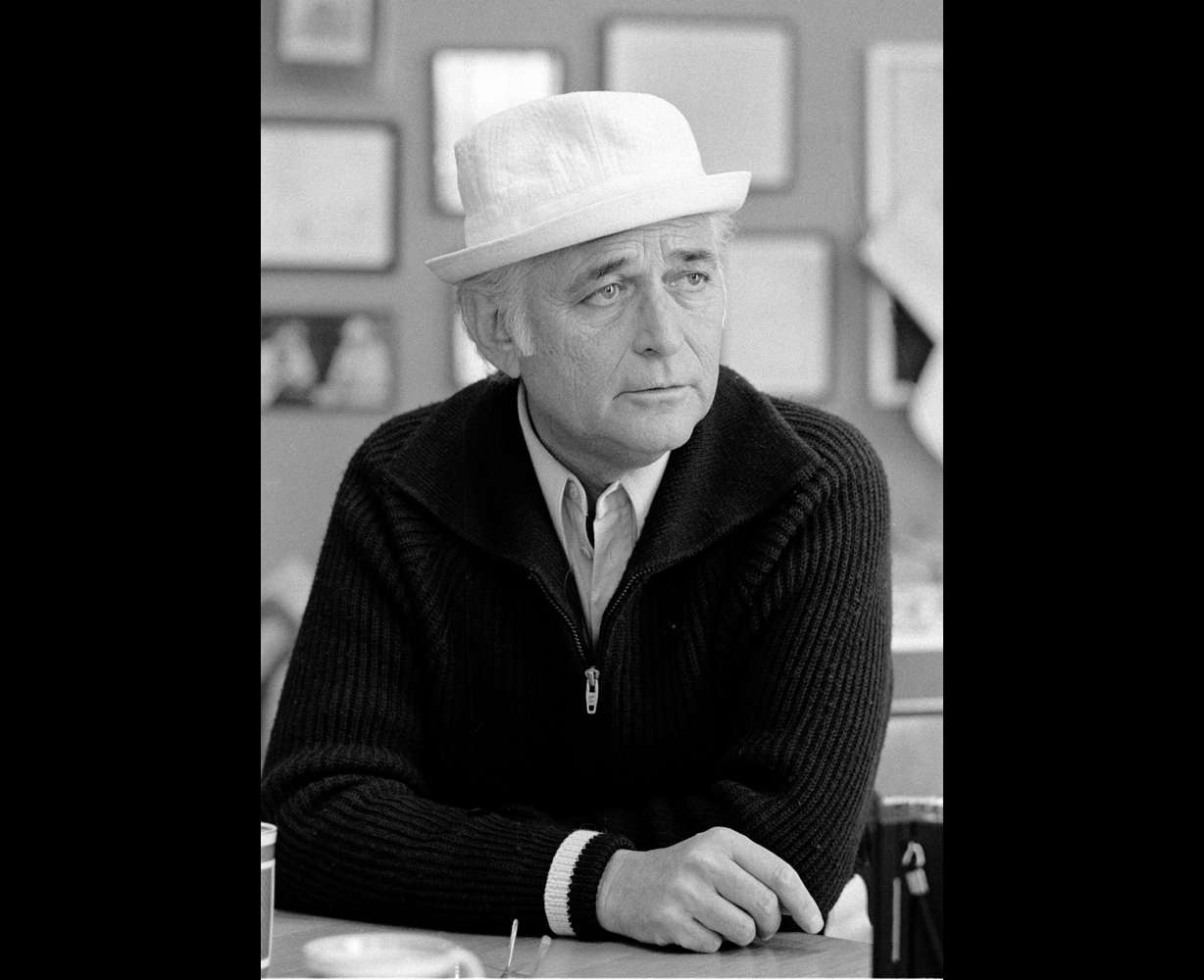
"All in the Family," based on the British sitcom, "Til Death Us Do Part," was the No. 1-rated series for an unprecedented five years in a row and earned four Emmy Awards as best comedy series, finally eclipsed by five-time winner "Frasier" in 1998.
Hits continued for Lear and then-partner Bud Yorkin, including "Maude" and "The Jeffersons," both spinoffs from "All in the Family" and both the same winning combination of one-liners and social conflict.
Lear and Yorkin also created "Good Times," about a working-class Black family in Chicago; "Sanford & Son," a showcase for Foxx as junkyard dealer Fred Sanford; and "One Day at a Time," starring Bonnie Franklin as a single mother and Bertinelli and Mackenzie Phillips as her daughters.
In the 1974-75 season, Lear and Yorkin produced five of the top 10 shows. Around the same time, "All in the Family" led off one of TV's greatest evening lineups, a Saturday slate from CBS that also featured the non-Lear hits "M(asterisk)A(asterisk)S(asterisk)H," "The Mary Tyler Moore Show," "The Bob Newhart Show" and "The Carol Burnett Show."
Lear founded the nonprofit, liberal advocacy group People for the American Way in 1980 in response to the growing strength of conservative religious groups. In a 1992 interview with Commonweal magazine, Lear said he acted because he felt people such as Jerry Falwell and Pat Robertson were "abusing religion."
In 1984, he was lauded as the "innovative writer who brought realism to television" when he became one of the first seven people inducted into the National Academy of Television Arts and Sciences' Hall of Fame. He later received a National Medal of Arts and was honored at the Kennedy Center. In 2020, he won an Emmy as executive producer of "Live In Front of a Studio Audience: 'All In the Family' and 'Good Times'.'"
Lear managed to beat the tough TV odds to an astounding degree. At least one of his shows placed in prime-time's top 10 for 11 consecutive years (1971-82).

He married his third wife, psychologist Lyn Davis, in 1987 and the couple had three children. (Frances Lear, who went on to found the now-defunct Lear's magazine with her settlement, died in 1996 at age 73.)
Lear was born in New Haven, Conn. on July 27, 1922, to Herman Lear, a securities broker who for a time went to prison for selling fake bonds, and Jeanette, a homemaker who helped inspire Edith Bunker. Norman Lear would remember family life as a kind of sitcom, full of quirks and grudges, "a group of people living at the ends of their nerves and the tops of their lungs," he explained during a 2004 appearance at the John F. Kennedy Presidential LIbrary in Boston.
In his later years, Lear joined with Warren Buffett and James E. Burke to establish The Business Enterprise Trust, honoring businesses that take a long-term view of their effect on the country.
He also founded the Norman Lear Center, based at the University of Southern California's Annenberg School for Communication, which explores the relationship between entertainment, commerce and society. In 2014, he published the memoir "Even This I Get to Experience."